
 chinahuijue@gmail.com
 +1 (702) 204-9855
Solar Inverter Reliability in Humid Climates: IP65 Protection Guide
Solar Inverter Reliability in Humid Climates: Moisture Protection, IP65 Design and Best Practices
Quick Answer
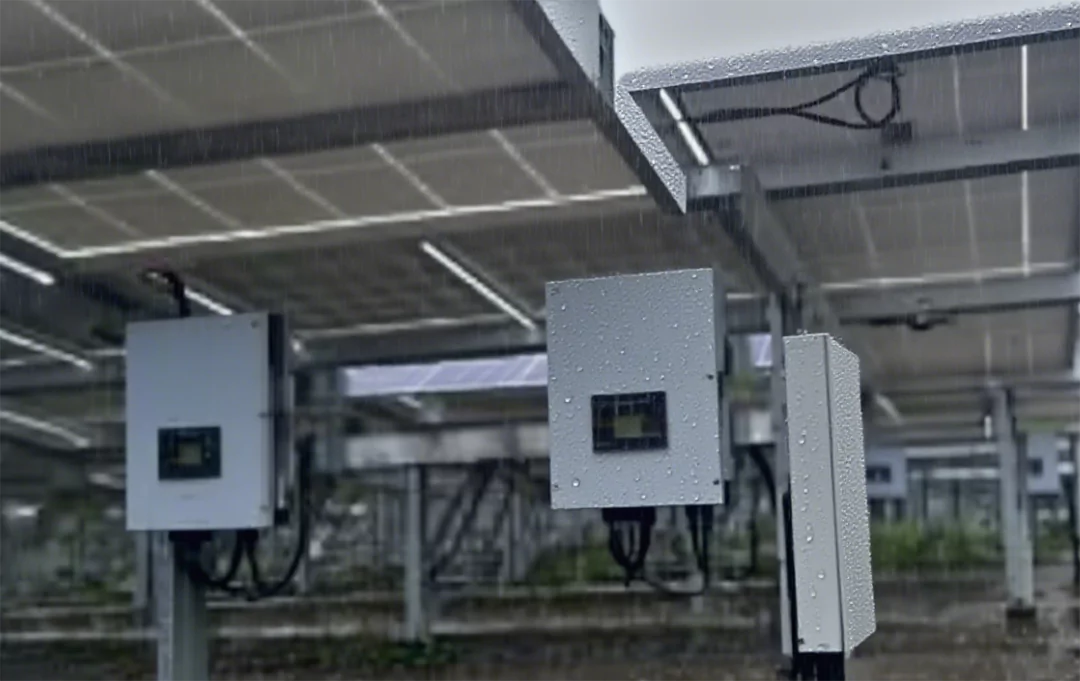
Solar inverters are the core components of photovoltaic (PV) systems, converting DC electricity generated by solar panels into usable AC power. However, in tropical, coastal, and high-humidity regions, moisture, condensation, corrosion, and insulation degradation can significantly affect inverter performance and lifespan.
For areas such as Africa, Southeast Asia, South America, and coastal regions of Europe, selecting a reliable solar inverter for humid climates with IP65 or higher protection, moisture-resistant design, and proper installation practices is essential for long-term system stability.
Huijue Group provides solar inverter and energy storage solutions designed for challenging environments, helping residential, commercial, and off-grid users achieve reliable power generation even under high humidity and extreme weather conditions.
Why Does High Humidity Affect Solar Inverter Performance?
In recent years, many regions worldwide have experienced increasingly challenging climate conditions.
Southern China, Southeast Asia, Africa, and tropical coastal areas often face:
- High humidity levels above 80–90%
- Heavy rainfall seasons
- Salt spray near coastal environments
- Large temperature differences between day and night
While these conditions create challenges for all outdoor electrical equipment, solar inverters are particularly sensitive because they contain complex electronic components, circuit boards, power modules, and control systems.
A solar inverter must continuously operate outdoors for more than 10 years, making environmental protection a critical factor in system reliability.
How Does Humidity Damage Solar Inverters?
Humidity does not usually cause immediate failure. Instead, long-term exposure gradually affects internal components and reduces operational reliability.
1. Condensation Can Cause Short Circuits
When temperature changes rapidly, water vapor inside the inverter may condense into tiny droplets on:
- Circuit boards
- Electronic components
- Electrical connections
These moisture particles can create unexpected conductive paths, causing:
- Short circuits
- System alarms
- Automatic shutdown
- Permanent damage to electronic components
For commercial and industrial solar systems, inverter failure can directly reduce energy production and increase maintenance costs.
2. Moisture Reduces Electrical Insulation Performance
Solar inverters rely on insulation materials to maintain electrical safety.
However, when insulation materials absorb moisture, their resistance decreases.
This may result in:
- Increased leakage current
- Lower conversion efficiency
- Higher safety risks
- Potential electrical faults
For large-scale PV projects, maintaining insulation reliability is especially important because a single inverter failure can affect multiple solar strings.
3. Humidity Accelerates Corrosion
High humidity environments accelerate oxidation of metal components, including:
- Connectors
- Terminals
- Screws
- Internal metal structures
Over time, corrosion may cause:
- Loose electrical connections
- Increased resistance
- Heat generation
- Reduced equipment lifespan
This problem is particularly common in coastal areas where humidity combines with salt particles in the air.
What Makes a Solar Inverter Suitable for Humid Climates?
A high-quality solar inverter designed for humid environments requires multiple layers of protection.
IP65 Waterproof Solar Inverter Protection
One of the most important indicators of outdoor inverter reliability is the IP protection rating.
Many outdoor solar inverters use IP65 protection, which means:
- The first digit “6”:
Completely dust-tight protection - The second digit “5”:
Protection against water jets from different directions
An IP65 solar inverter helps prevent:
- Rainwater intrusion
- Dust contamination
- Moisture accumulation
- Outdoor environmental damage
For tropical countries, islands, farms, and remote locations, IP65 or higher protection is becoming an important purchasing requirement.
Moisture-Resistant PCB Protection Technology
Inside a solar inverter, the circuit board is one of the most sensitive components.
Advanced manufacturers apply protective coatings to PCB surfaces.
These coatings act like an invisible protective layer by:
- Preventing moisture absorption
- Reducing corrosion risks
- Improving electrical insulation
- Increasing long-term reliability
This technology is especially valuable for:
- Tropical regions
- Coastal installations
- Off-grid solar systems
- Industrial PV projects
Intelligent Monitoring and Environmental Control
Modern solar inverters are becoming smarter.
Some advanced systems include:
- Temperature monitoring
- Humidity detection
- Remote communication
- Fault alerts
- Performance analysis
These functions allow operators to identify potential problems before failures occur.
For commercial users, intelligent monitoring reduces downtime and improves operation efficiency.
Solar Inverter Applications in Humid Regions
Africa: Reliable Solar Power for Remote and Off-Grid Areas
Many African countries experience:
- Unstable grid supply
- High solar radiation
- Dust and humidity challenges
- Limited maintenance access
Countries such as:
- Nigeria
- Kenya
- Ghana
- South Africa
are rapidly adopting solar energy systems for:
- Residential backup power
- Telecom base stations
- Commercial facilities
- Remote communities
For these applications, a durable solar inverter for Africa climate conditions should provide:
- High environmental protection
- Stable operation
- Easy maintenance
- Battery compatibility
Southeast Asia: Tropical Climate Requires Strong Protection
Countries including:
- Thailand
- Vietnam
- Philippines
- Indonesia
experience high humidity, heavy rainfall, and long-term exposure to moisture.
Solar systems in these markets require:
- Waterproof inverter design
- Corrosion-resistant materials
- Reliable cooling systems
- Remote monitoring capability
Europe and Coastal Areas
Although Europe generally has moderate humidity, coastal regions and countries with frequent rainfall also require reliable outdoor solar equipment.
Applications include:
- Residential rooftop solar
- Commercial PV systems
- Agricultural solar projects
For these environments, selecting the right inverter protection level helps ensure long-term energy production.
Best Installation Practices for Solar Inverters in Humid Environments
Even the best solar inverter requires proper installation.
1. Choose a Dry and Ventilated Installation Location
Avoid installing inverters in:
- Flood-prone areas
- Poor ventilation spaces
- Direct water exposure locations
Recommended locations:
- Shaded outdoor walls
- Ventilated equipment rooms
- Dedicated electrical cabinets
2. Regularly Check Sealing Components
Over time, seals and cable glands may age.
Regular inspection should include:
- Door seals
- Cable connections
- Waterproof covers
- Mounting points
Small gaps can become entry points for moisture.
3. Improve Ventilation and Heat Dissipation
High humidity combined with high temperature increases equipment stress.
Good installation practices include:
- Maintaining airflow around the inverter
- Avoiding enclosed hot spaces
- Cleaning ventilation openings regularly
How Huijue Group Designs Reliable Solar Inverter Solutions
As a professional energy storage and solar solution manufacturer, Huijue Group focuses on developing reliable systems for global markets.
Our solutions are designed for:
- Residential solar systems
- Commercial and industrial PV projects
- Off-grid applications
- Telecom power systems
- Hybrid energy storage projects
Key advantages include:
High Environmental Adaptability
Designed for demanding conditions including:
- High humidity
- Extreme temperatures
- Remote locations
Intelligent Energy Management
Integration with energy storage systems enables:
- Solar self-consumption
- Battery charging optimization
- Backup power management
- Remote monitoring
Complete PV + Storage Solutions
Huijue provides integrated solutions including:
- Solar inverter systems
- Lithium battery storage
- Energy storage cabinets
- EMS energy management platforms
For more information about our solar and energy storage solutions, visit our solar energy storage solution page.
How to Choose the Right Solar Inverter for Humid Areas?
Before purchasing, B2B buyers should evaluate:
1. Protection Rating
Check whether the inverter supports:
- IP65 or higher protection
- Outdoor installation
- Dust and water resistance
2. Battery Compatibility
For hybrid solar systems, confirm:
- Lithium battery communication support
- BMS compatibility
- Expandable storage capacity
3. Remote Monitoring Capability
Professional projects should consider:
- Cloud monitoring
- Fault notification
- Energy management functions
4. Manufacturer Experience
Choose suppliers with:
- Solar system engineering experience
- Production capability
- OEM/ODM services
- International project support
FAQ: Solar Inverter in Humid Climate
Can solar inverters work in high humidity?
Yes. High-quality outdoor solar inverters with IP65 or higher protection can operate reliably in humid environments. Proper installation and regular maintenance are also important.
What is the best solar inverter for tropical climates?
The best choice is usually an IP65-rated solar inverter with moisture-resistant PCB protection, strong cooling design, and intelligent monitoring features.
Does humidity reduce solar inverter lifespan?
Yes. Long-term exposure to moisture can accelerate corrosion, insulation degradation, and electronic component aging. Proper protection significantly improves inverter lifespan.
Is IP65 enough for outdoor solar inverters?
For most outdoor solar installations, IP65 provides excellent protection against dust and water jets. However, extremely harsh environments may require additional protection.
How can I protect my solar inverter from rain and moisture?
Recommended methods include:
- Installing under shelter when possible
- Maintaining ventilation
- Checking cable seals regularly
- Selecting waterproof solar inverter models
Why choose Huijue solar inverter solutions?
Huijue Group provides integrated solar and energy storage solutions with professional engineering support, customized system design, and reliable products for global residential, commercial, and industrial applications.
Conclusion
In humid climates, solar inverter reliability depends on more than conversion efficiency. Moisture protection, waterproof design, intelligent monitoring, and proper installation all play essential roles in ensuring long-term performance.
From Africa and Southeast Asia to coastal Europe and global off-grid markets, reliable solar power systems require equipment designed for real-world environmental challenges.
Choosing a professional solar inverter manufacturer with complete system capabilities helps businesses and homeowners achieve safer, smarter, and more sustainable energy solutions.