
 chinahuijue@gmail.com
 +1 (702) 204-9855
Solid-State Battery & Robotics in 2026: Energy Storage Breakthroughs, Applications & Market Outlook
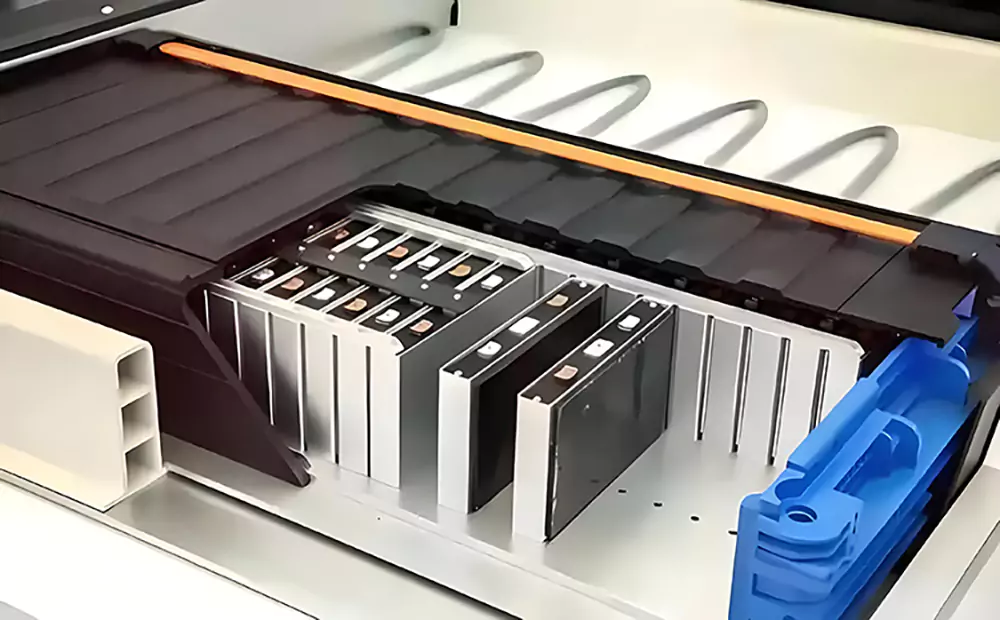
Quick Answer: Solid-State Battery vs. Conventional Batteries (2026)
| Parameter | Solid-State Battery | LFP (LiFePO4) | NMC (Lithium Nickel Manganese Cobalt) |
|---|---|---|---|
| Energy density (cell) | 400-500 Wh/kg | 160-200 Wh/kg | 250-300 Wh/kg |
| Energy density (pack) | 300-380 Wh/kg | 140-160 Wh/kg | 200-240 Wh/kg |
| Cycle life | 8,000-10,000 cycles | 6,000-8,000 cycles | 3,000-5,000 cycles |
| Safety (thermal runaway) | None (non-flammable) | Low risk | Moderate-high risk |
| Operating temperature | -40°C to 80°C | -20°C to 60°C | -20°C to 55°C |
| Fast charging | 10-15 min (80%) | 1-2 hours (80%) | 30-40 min (80%) |
| Cell cost (2026) | CNY 1.2-2.0/Wh | CNY 0.35-0.55/Wh | CNY 0.45-0.65/Wh |
| Commercial maturity | Pilot / early commercial | Mature (mass production) | Mature (mass production) |
| Best for | Premium EVs, aerospace, safety-critical storage | Grid storage, commercial ESS, residential | Consumer electronics, EVs |
1. Technology Breakthrough: Core Advantages of Solid-State Batteries
The fundamental innovation in solid-state batteries is the replacement of liquid or gel electrolytes with solid electrolyte materials—typically sulfides (Li6PS5Cl), oxides (LLZO), or polymers. This architectural shift delivers cascading performance benefits across energy density, safety, and longevity.
1.1 Solid Electrolyte Types Comparison
| Type | Ionic Conductivity (mS/cm) | Stability | Manufacturing Difficulty | Key Players |
|---|---|---|---|---|
| Sulfide-based | 10-25 (highest) | Low (air-sensitive) | High (requires dry room) | Toyota, QuantumScape, Qingtao |
| Oxide-based (LLZO) | 0.1-1.0 | High (air-stable) | Moderate (sintering required) | Samsung SDI, MIT spin-offs |
| Polymer-based | 0.01-0.1 (lowest) | High (flexible) | Low (roll-to-roll compatible) | Bolloré, ProLogium |
| Composite (sulfide + polymer) | 1-5 | Moderate | Moderate | Weilan New Energy, SES AI |
1.2 Performance Gains: Detailed Benchmarks
| Metric | Conventional Li-ion (LFP) | Semi-Solid-State | Full Solid-State | Improvement vs LFP |
|---|---|---|---|---|
| Gravimetric energy density | 180 Wh/kg | 280 Wh/kg | 450 Wh/kg | +55% / +150% |
| Volumetric energy density | 360 Wh/L | 500 Wh/L | 800 Wh/L | +39% / +122% |
| Cycle life (80% DoD) | 6,500 cycles | 7,500 cycles | 9,000 cycles | +15% / +38% |
| Self-discharge rate | 2-3%/month | 1-2%/month | 0.5-1%/month | 50-75% reduction |
| Thermal stability | Safe up to 270°C | Safe up to 350°C | Safe up to 500°C+ | +30% / +85% |
| Charging speed (0-80%) | 60-120 min | 30-45 min | 10-15 min | 50-75% faster |
A landmark example is the solid-state battery energy storage power station co-developed by Shiming Technology and Suzhou Qingtao, which achieves 30% higher energy density and a cycle life exceeding 8,000 cycles compared to conventional lithium batteries—ensuring more stable and efficient energy storage services over the same usage period.
1.3 Safety: Eliminating Thermal Runaway
| Safety Test | LFP Battery | NMC Battery | Solid-State Battery |
|---|---|---|---|
| Nail penetration | Smoke, no fire | Fire, explosion risk | No reaction |
| External short circuit | Temporary temperature rise | Significant temperature rise | Minimal temperature change |
| Overcharge | Swelling, gas release | Fire risk | Safe shutdown |
| High temperature (150°C) | Thermal runaway begins | Thermal runaway at 130°C | Stable, no degradation |
| Crush test | Case deformation | Fire risk | Deformation only |
With non-flammable, leak-free solid electrolytes, solid-state batteries fundamentally eliminate thermal runaway risks associated with traditional lithium batteries. This reliability is critical for large-scale energy storage systems installed in urban environments, commercial buildings, and residential settings.
2. Application Landscape: Where Solid-State Batteries Are Deployed
2.1 Application Suitability Matrix
| Application | Current Status | Key Advantage | Timeline for Scale | Market Size (2030 est.) |
|---|---|---|---|---|
| Grid-scale energy storage | Pilot projects | Safety + cycle life | 2027-2029 | $8-12B |
| Commercial & industrial ESS | Early deployments | Safety + space efficiency | 2026-2028 | $5-8B |
| Residential ESS | Prototype stage | Safety + compact size | 2028-2030 | $3-5B |
| Premium EVs | Pilot production | Range + fast charging | 2026-2027 | $20-30B |
| Low-speed / micro-EVs | Early commercial | Cost-effective (semi-solid) | 2025-2026 | $5-8B |
| Communication base stations | Deployed (1,000+ sites) | Safety + backup duration | 2025-2026 (ongoing) | $2-4B |
| Robotics & drones | Niche / R&D | Energy density + weight | 2027-2029 | $3-5B |
| Consumer electronics | Pilot (foldable phones) | Flexible form factor | 2026-2027 | $5-8B |
2.2 Energy Storage Systems: Grid Integration & Microgrids
As solar and wind power capacities expand, the demand for energy storage to address intermittency grows. Solid-state systems enhance grid efficiency and reliability through higher energy density per unit area—critical for space-constrained substations and urban installations.
| System Type | Capacity | Current Tech (LFP) | Future Solid-State Equivalent | Space Savings |
|---|---|---|---|---|
| Distributed residential | 5-15 kWh | 0.5 m² footprint | 0.25 m² footprint | 50% |
| Commercial C&I | 50-200 kWh | 2 m² footprint | 1.2 m² footprint | 40% |
| Container utility | 1-5 MWh | 40ft container | 25ft container | 37% |
| Grid substation | 10-50 MWh | 200 m² installation | 130 m² installation | 35% |
In remote areas or islands, solid-state batteries can integrate with distributed energy sources to build self-sufficient microgrids, delivering stable power to local communities without the fire risk associated with conventional lithium systems.
2.3 Electric Vehicles: Range Revolution
| Parameter | Current NMC EV | Semi-Solid EV | Full Solid-State EV (projected) |
|---|---|---|---|
| Battery capacity | 75 kWh | 100 kWh | 120 kWh |
| Vehicle weight (battery) | 500 kg | 380 kg | 280 kg |
| Range (WLTP) | 500-600 km | 800-900 km | 1,000-1,200 km |
| Charging time (10-80%) | 30-40 min | 20-25 min | 10 min |
| Battery cost | $9,000 | $18,000 | $25,000 (→$12,000 by 2030) |
| Cycle life | 1,500-2,000 cycles | 2,500-3,500 cycles | 4,000-5,000 cycles |
Toyota’s prototype solid-state battery offering 1,200 km of range after a 10-minute charge exemplifies the technology’s potential to eliminate “range anxiety” and accelerate EV adoption globally.
2.4 Communication Base Stations: 5G Power Backbone
With 5G proliferation, energy demands for base stations have surged 3-5x compared to 4G. Solid-state systems provide reliable backup power while reducing operational costs and fire risks in dense urban deployments.
| Parameter | Lead-Acid (legacy) | LFP (current standard) | Semi-Solid (deployed) | Full Solid-State (future) |
|---|---|---|---|---|
| Backup duration | 2-4 hours | 4-8 hours | 6-10 hours | 8-12 hours |
| Cycle life | 300-500 cycles | 2,000-3,000 cycles | 4,000-5,000 cycles | 6,000-8,000 cycles |
| Footprint | Large (2 m²) | Medium (1 m²) | Compact (0.7 m²) | Ultra-compact (0.5 m²) |
| Weight | 200-400 kg | 80-150 kg | 50-80 kg | 35-50 kg |
| Operating temp | -10°C to 40°C | -20°C to 60°C | -30°C to 70°C | -40°C to 80°C |
| Fire risk | Low (acid leak risk) | Low | Very low | None |
| 10-year TCO | CNY 80,000 | CNY 45,000 | CNY 55,000 | CNY 50,000 (projected) |
Weilan New Energy’s semi-solid-state batteries are already deployed in 1,000+ communication base stations in Dongguan, supporting greener and safer 5G infrastructure.
3. Market Outlook: The Rise of a Trillion-Dollar Industry
3.1 Global Market Projections (2024-2030)
| Year | Global Shipments (GWh) | Revenue ($B) | Avg Cell Cost (CNY/Wh) | Key Milestone |
|---|---|---|---|---|
| 2024 | 7 | $2.5 | 2.5-3.5 | First semi-solid EV launches |
| 2025 | 15 | $5.0 | 2.0-3.0 | Base station deployments scale |
| 2026 | 28 | $9.0 | 1.2-2.0 | Pilot grid storage projects |
| 2027 | 42 | $14.0 | 1.0-1.5 | Toyota solid-state EV launch |
| 2028 | 55 | $18.0 | 0.8-1.2 | Commercial ESS adoption begins |
| 2029 | 60 | $20.0 | 0.6-0.9 | Cost parity with NMC for premium apps |
| 2030 | 65+ | $22.0+ | 0.5-0.8 | Mass production scale achieved |
3.2 Market Segmentation by Application (2030 Projection)
| Segment | Share | Volume (GWh) | Revenue ($B) | Growth Driver |
|---|---|---|---|---|
| Electric vehicles | 55% | 36 | $12.1 | Premium EV range requirements |
| Energy storage (grid + C&I) | 20% | 13 | $4.4 | Safety regulations + renewable integration |
| Consumer electronics | 10% | 6.5 | $2.2 | Foldable/wearable device growth |
| Communication base stations | 5% | 3.25 | $1.1 | 5G expansion globally |
| Robotics & drones | 5% | 3.25 | $1.1 | Industrial automation + delivery drones |
| Aerospace & defense | 3% | 2.0 | $0.7 | Satellite + deep-sea applications |
| Others | 2% | 1.3 | $0.4 | Emerging applications |
3.3 Regional Market Distribution
| Region | 2026 Market Share | 2030 Projected Share | Key Players | Primary Applications |
|---|---|---|---|---|
| China | 45% | 40% | Qingtao, Weilan, CATL, BYD | EVs, base stations, grid storage |
| Japan | 20% | 18% | Toyota, Panasonic, Murata | Premium EVs, electronics |
| USA | 15% | 20% | QuantumScape, Solid Power, SES | EVs, defense, aerospace |
| South Korea | 12% | 12% | Samsung SDI, LG Energy Solution | EVs, electronics |
| Europe | 5% | 7% | Northvolt, Saft | EVs, grid storage |
| Others | 3% | 3% | Various | Emerging markets |
4. Key Players & Competitive Landscape
| Company | Country | Technology Type | Key Achievement | Commercial Status | Target Application |
|---|---|---|---|---|---|
| Toyota | Japan | Sulfide | 1,200 km range, 10-min charge prototype | Pilot production 2027 | Premium EVs |
| QuantumScape | USA | Oxide | 24-layer solid-state cell, 800+ cycles | Pilot line operational | EVs |
| Suzhou Qingtao | China | Sulfide composite | Solid-state storage station with Shiming | Early commercial | Energy storage |
| Weilan New Energy | China | Semi-solid (oxide) | 1,000+ base station deployments | Commercial (semi-solid) | Base stations, EVs |
| Samsung SDI | South Korea | Sulfide | 900 Wh/L pouch cell prototype | Pilot 2027 | EVs, electronics |
| CATL | China | Sulfide + condensed matter | Condensed battery 500 Wh/kg | Pilot production | EVs, aviation |
| BYD | China | Semi-solid | Blade battery semi-solid variant | R&D stage | EVs |
5. Cost Analysis & Economics
5.1 Cost Breakdown: Solid-State vs. LFP Cell
| Cost Component | LFP Cell (CNY/Wh) | Solid-State Cell (CNY/Wh) | Cost Premium | Reason for Difference |
|---|---|---|---|---|
| Cathode material | 0.12 | 0.25 | +108% | High-Ni cathode required |
| Anode (graphite → Li metal) | 0.05 | 0.15 | +200% | Lithium metal anode cost |
| Electrolyte | 0.03 (liquid) | 0.20 (solid) | +567% | Solid electrolyte synthesis complexity |
| Separator | 0.02 | 0.00 (integrated) | -100% | Not needed in solid-state |
| Current collectors | 0.03 | 0.03 | 0% | Same materials |
| Manufacturing/overhead | 0.10 | 0.37 | +270% | Low yield, batch process |
| Total cell cost | 0.35 | 1.00 | +186% | — |
5.2 System-Level Cost Comparison (200 kWh Commercial ESS)
| Cost Component | LFP System (CNY) | Solid-State System (CNY) | Difference |
|---|---|---|---|
| Battery cells | 70,000 | 200,000 | +186% |
| BMS + control | 15,000 | 15,000 | 0% |
| Thermal management | 20,000 | 5,000 | -75% (minimal cooling needed) |
| Fire suppression | 12,000 | 2,000 | -83% (no fire risk) |
| Cabinet/structure | 25,000 | 18,000 | -28% (smaller footprint) |
| Inverter + electrical | 30,000 | 30,000 | 0% |
| Installation | 15,000 | 12,000 | -20% |
| Total system cost | 187,000 | 282,000 | +51% |
| Cost per kWh | CNY 935/Wh | CNY 1,410/Wh | +51% |
5.3 20-Year TCO Comparison
| TCO Component (200 kWh, 20 years) | LFP System | Solid-State System | Savings |
|---|---|---|---|
| Initial investment | CNY 187,000 | CNY 282,000 | -CNY 95,000 |
| Battery replacement (Year 10) | CNY 140,000 | CNY 0 (no replacement needed) | +CNY 140,000 |
| Thermal system maintenance | CNY 30,000 | CNY 5,000 | +CNY 25,000 |
| Fire insurance premium (20yr) | CNY 24,000 | CNY 4,000 | +CNY 20,000 |
| Space rental savings (20yr) | CNY 0 | CNY 60,000 | +CNY 60,000 |
| Energy throughput (20yr) | 1.4 GWh | 1.8 GWh (+29%) | Higher revenue |
| 20-year total cost | CNY 381,000 | CNY 291,000 | -CNY 90,000 (-24%) |
| LCOS (CNY/kWh) | CNY 0.27/kWh | CNY 0.16/kWh | -41% |
Despite higher upfront costs, solid-state systems achieve 24% lower 20-year TCO due to eliminated replacement costs, reduced safety infrastructure, and higher energy throughput.
6. Challenges & R&D Frontiers
| Challenge | Description | Current Status | Expected Resolution | Key R&D Players |
|---|---|---|---|---|
| Interface resistance | Solid-solid contact creates high impedance at electrode-electrolyte boundary | Active research | 2027 (composite interface layers) | MIT, Stanford, Qingtao |
| Dendrite penetration | Lithium dendrites can crack solid electrolytes at high current | Partially solved (pressure application) | 2026-2027 | Harvard, QuantumScape |
| Manufacturing scale | Batch processes limit throughput; dry room requirements | Pilot lines only | 2028 (roll-to-roll) | Toyota, Samsung SDI |
| Material cost | Solid electrolyte precursors (Li2S, GeO2) expensive | High | 2029 (alternative materials) | CATL, Weilan |
| Pressure requirements | Some solid cells need external pressure for contact | 10-30 MPa needed | 2027 (self-standing designs) | ProLogium, SES |
| Low-temperature performance | Sulfide electrolytes lose conductivity below -20°C | Moderate | 2026 (composite electrolytes) | Weilan, Murata |
7. Technology Roadmap (2026-2032)
| Milestone | Timeline | Impact | Key Players |
|---|---|---|---|
| Semi-solid EV mass production | 2026 | 800+ km range in production vehicles | Weilan, CATL, NIO |
| Base station nationwide deployment | 2026-2027 | 10,000+ sites with solid-state backup | Weilan, China Mobile |
| Full solid-state EV prototype | 2027 | 1,200 km range, 10-min charging | Toyota, QuantumScape |
| Grid storage pilot projects | 2027-2028 | 1-5 MWh solid-state installations | Qingtao, Shiming |
| Commercial ESS adoption | 2028-2029 | Cost below CNY 0.8/Wh | CATL, BYD, Samsung |
| Mass production scale (100 GWh+) | 2030 | Cost parity with NMC for premium apps | Industry-wide |
| Mainstream grid storage | 2031-2032 | 15% of new grid ESS deployments | TBD |
8. Impact on Energy Storage Industry
8.1 How Solid-State Changes the ESS Value Chain
| Value Chain Stage | Current (LFP) | Future (Solid-State) | Disruption Level |
|---|---|---|---|
| Raw materials | Li, Fe, phosphate | Li, Na, sulfides, oxides | High (new material suppliers) |
| Cell manufacturing | Wet process (slurry coating) | Dry process (powder pressing) | Very high (new equipment) |
| Module/Pack design | Thermal management heavy | Simplified (minimal cooling) | Moderate |
| Safety systems | Fire suppression + ventilation | Minimal safety overhead | High (cost reduction) |
| System integration | BMS + TMS + FSS | BMS only (simplified) | Moderate |
| End-of-life | Hydrometallurgical recycling | Simpler recovery (fewer materials) | Low-moderate |
8.2 Synergy with Robotics & Automation
As solid-state batteries enable higher energy density and safety, they simultaneously power the robotics revolution that transforms battery manufacturing itself—a virtuous cycle of innovation.
| Robotics Application | Battery Requirement | How Solid-State Helps | Timeline |
|---|---|---|---|
| Industrial manufacturing robots | Continuous operation, safety | Longer runtime, zero fire risk | 2027-2028 |
| Warehouse AGVs/AMRs | Fast charging, cycle life | 10-min charge, 8,000+ cycles | 2026-2027 |
| Delivery drones | High energy density, weight | 50% lighter battery for same energy | 2028-2029 |
| Humanoid robots | Compact, safe, long-life | Safe body-mounted power source | 2029-2030 |
| Agricultural robots | Rugged, wide temperature | -40°C to 80°C operation | 2028-2029 |
9. Huijue Group: Preparing for the Solid-State Future
While solid-state batteries mature, Huijue Group’s current LFP-based energy storage cabinets already deliver industry-leading performance with 8,000+ cycle life, cloud-based EMS monitoring, and modular expansion. These systems are designed to be chemistry-agnostic—ready for seamless solid-state module integration when the technology reaches commercial viability for grid-scale storage.
| Model | Capacity | Power | Voltage | Cycles | Application | Future Solid-State Upgrade Path |
|---|---|---|---|---|---|---|
| HJ-G0025-0050F | 25-50 kWh | 25-50 kW | 380V | 6,000+ | Small C&I | Drop-in module replacement |
| HJ-G0050-0157L | 157 kWh | 50 kW | 380V | 8,000+ | Commercial | Capacity +30% per cabinet |
| HJ-G0050-0209L | 209 kWh | 50-60 kW | 380V | 8,000+ | Commercial/Industrial | Capacity +30% per cabinet |
| HJ-G0050-0225F | 225 kWh | 50-100 kW | 380V | 8,000+ | Industrial | Reduced thermal management |
| HJ-G0110-0241 | 241 kWh | 110 kW | 380V | 8,000+ | Industrial | Reduced footprint 35% |
| HJ-G0125-0261 | 261 kWh | 125 kW | 380V | 8,000+ | Industrial/Utility | Reduced footprint 35% |
| HJ-G0215-0418 | 418 kWh | 215 kW | 380V | 8,000+ | Utility-scale | Capacity → 540+ kWh per cabinet |
For residential applications, Huijue’s home energy storage systems range from 5 kWh stackable batteries to all-in-one units up to 81.92 kWh—platforms that will benefit from solid-state density gains for more compact, safer home installations.
Conclusion
The rise of solid-state battery technology marks a transformative leap for energy storage. Through relentless innovation and cross-sector applications—from grid storage to EVs, robotics to 5G infrastructure—solid-state batteries promise to drive the global transition to sustainable energy. While full commercialization for grid-scale storage is still 2-3 years away, the technology trajectory is clear: higher density, zero fire risk, longer life, and ultimately lower total cost of ownership.
For organizations planning energy storage deployments today, the strategic approach is to invest in chemistry-agnostic systems like Huijue’s modular cabinets—capturing immediate LFP benefits while maintaining a clear upgrade path to solid-state when economics align.
Plan Your Energy Storage Strategy
Whether you need a 50 kWh commercial backup system or a 4 MWh utility-scale installation, Huijue’s engineering team can help you design a future-proof energy storage solution.
📧 Contact Huijue Group for a free consultation and customized quotation.
Frequently Asked Questions
Q1: What is a solid-state battery and how is it different from a lithium-ion battery?
A solid-state battery replaces the liquid or gel electrolyte found in conventional lithium-ion batteries with a solid electrolyte material (such as sulfide, oxide, or polymer). This change delivers 30-50% higher energy density (400-500 Wh/kg vs 250-300 Wh/kg for LFP), eliminates flammability risks, extends cycle life to 8,000+ cycles, and enables faster charging. However, solid-state batteries currently cost 3-5x more than lithium-ion due to manufacturing complexity and limited production scale.
Q2: When will solid-state batteries be commercially available for energy storage?
Semi-solid-state batteries are already deployed in 2025-2026 in communication base stations and pilot EV models. Full solid-state batteries for grid-scale energy storage are expected to reach commercial viability by 2027-2028, with costs projected to drop below CNY 0.8/Wh by 2030. Companies like Toyota, QuantumScape, and China’s Qingtao/Weilan are leading commercialization efforts, with global shipments projected to exceed 65 GWh by 2030.
Q3: How much do solid-state batteries cost in 2026?
In 2026, solid-state battery cell costs range from CNY 1.2-2.0/Wh, compared to CNY 0.35-0.55/Wh for LFP and CNY 0.45-0.65/Wh for NMC lithium-ion cells—a 3-5x premium. At the system level, solid-state storage costs CNY 2.0-3.5/Wh. Costs are projected to decline to CNY 0.5-0.8/Wh by 2030 as production scales, making them competitive with lithium-ion for premium applications.
Q4: Can solid-state batteries be used for commercial energy storage systems?
Yes. Solid-state batteries are particularly suited for commercial energy storage where safety, space efficiency, and cycle life are critical. Their non-flammable electrolyte eliminates thermal runaway risks, making them ideal for indoor installations and densely populated areas. With 8,000+ cycles and 30% higher energy density, they reduce system footprint and long-term operating costs. Pilot deployments include Shiming Technology’s solid-state storage station and Weilan’s 1,000+ base station installations.
Q5: What are the main challenges facing solid-state battery technology?
Key challenges include: (1) Solid-solid interface resistance between electrolyte and electrodes, reducing ion transport; (2) Dendrite penetration at high current densities; (3) Manufacturing scalability—current processes are batch-based and low-yield; (4) Material costs for sulfide and oxide electrolytes remain high; (5) Limited supply chain maturity for solid electrolyte precursors. R&D focus areas include thin-film electrolyte fabrication, composite electrodes, and roll-to-roll manufacturing.
Q6: How does Huijue Group incorporate solid-state battery technology?
Huijue Group monitors solid-state battery advancements and designs its energy storage cabinets to be chemistry-agnostic, supporting current LFP systems while remaining ready for solid-state module integration as the technology matures. Huijue’s current LFP-based cabinet systems (25-418 kWh) already achieve 8,000+ cycles, cloud-based EMS monitoring, and modular expansion—features that will seamlessly benefit from solid-state upgrades in density and safety when commercially available.
solid-state battery solid-state battery energy storage solid electrolyte solid-state vs lithium-ion battery safety energy storage technology robotics battery Huijue Group