Quick Answer
| Dimension |
Microinverter |
String Inverter |
| MPPT Tracking |
Per-panel (16-60V range) |
Per-string (300-600V DC) |
| Peak Efficiency |
96.0-97.5% |
97.5-98.3% |
| CEC Efficiency |
95.0-97.0% |
96.0-97.5% |
| Shading Impact |
Minimal (panel-level) |
Severe (string bottleneck, 30-40% loss) |
| Lifespan |
20-25 years |
10-15 years |
| Warranty |
15-25 years |
10-12 years |
| Cost (8kW system) |
$3,800 |
$1,800 |
| Cost per kW |
$1,000-1,500/kW |
$500-1,000/kW |
| 25-Year Total Cost |
$3,800 (no replacement) |
$4,000 (1 replacement) |
| Rooftop DC Voltage |
40-50V (safe) |
300-600V (hazard) |
| Best For |
Complex roofs, shading, residential |
Large arrays, uniform conditions, commercial |
| Market Size (2025) |
$3.77-4.7B → $9.27-17.3B (2030) |
$20-22B → $53-60B (2035) |
| Top Manufacturers |
Enphase (70% NA), APsystems, Hoymiles |
Huawei, Sungrow, SMA, GoodWe |
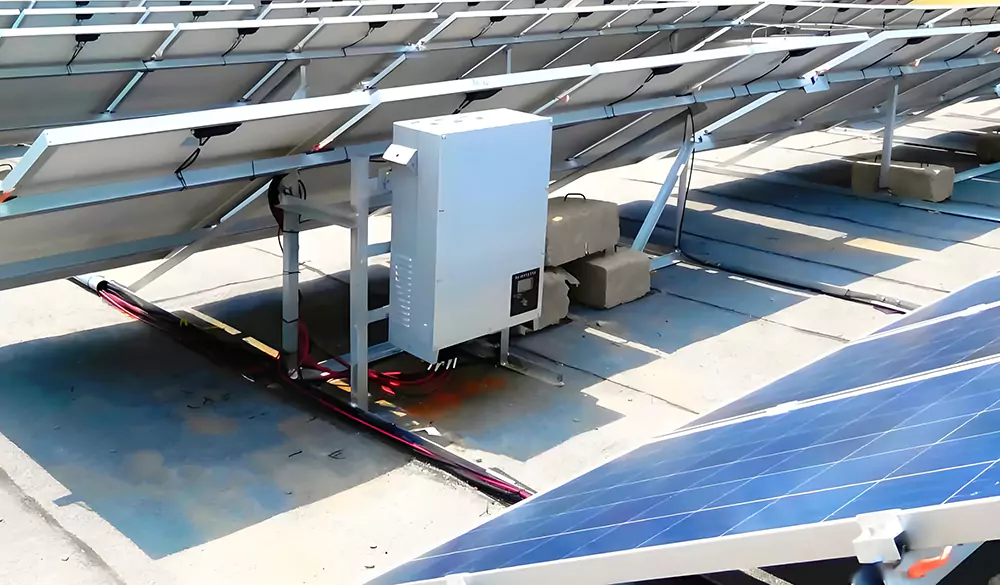
In photovoltaic power generation systems, the inverter is one of the most critical components—responsible for converting DC power generated by solar panels into grid-compatible AC power. Among the various inverter architectures available, microinverters and string inverters represent the two dominant technologies, each with distinct working principles, performance characteristics, cost structures, and ideal application scenarios. For B2B solar procurement professionals, system integrators, and EPC contractors, understanding these differences is essential for optimizing system performance and economic returns. For an overview of our complete solar product portfolio, visit our products page.
1. Working Principle: How Each Technology Operates
1.1 Microinverter Architecture
A microinverter performs Maximum Power Point Tracking (MPPT) and DC-to-AC conversion individually for each photovoltaic module. The DC generated by each panel is directly converted to AC at the panel level and then fed into the grid or local load. Each microinverter operates independently, meaning that if one panel is shaded, soiled, or fails, the remaining panels continue operating at their maximum power output.
| Parameter |
Specification |
| MPPT Tracking Range |
16-60V DC per panel |
| Max Input Current |
11-14A |
| MPPT Update Rate |
Thousands of times per second |
| Output Voltage (Residential) |
240V AC (split-phase) |
| Output Voltage (Commercial) |
208V or 480V (three-phase) |
| Example: Enphase IQ8+ |
300W AC output, matches 350-440W panels |
| Example: Enphase IQ8M |
330W AC output, matches 400-460W panels |
| Example: Enphase IQ8A |
366W AC output, matches 440-500W panels |
| Example: Hoymiles HMS-800 |
800W dual-panel output |
| Example: APsystems QS1 |
1,200W four-panel output |
1.2 String Inverter Architecture
A string inverter connects multiple photovoltaic modules in series to form a string, then performs MPPT tracking for the entire string. The DC generated by the string is converted to AC at a central inverter unit and fed into the power grid. If one panel in the string experiences shading, soiling, or failure, it creates a bottleneck effect that reduces the output power of the entire string.
| Parameter |
Specification |
| MPPT Tracking Range |
300-600V DC per string |
| Number of MPPTs |
1-3 (typical residential), 6-12 (commercial) |
| String Voltage (10 panels × 37V Vmp) |
~370V DC |
| String Voltage (20 panels × 37V Vmp) |
~740V DC |
| DC/AC Ratio (recommended) |
1.0-1.25 |
| Clipping Loss (at 1.15-1.25 ratio) |
<1-2% annually |
| Clipping Duration |
~50-100 hours/year |
| Undersizing Savings |
$500-1,500 per system |
1.3 MPPT Comparison Summary
| MPPT Characteristic |
Microinverter |
String Inverter |
| Tracking Granularity |
Per panel |
Per string (10-25 panels) |
| Shading Tolerance |
Excellent—only shaded panel affected |
Poor—one shaded panel reduces whole string 30-40% |
| Mismatch Losses |
Eliminated |
Significant (panel-to-panel variation) |
| Panel-Level Monitoring |
Yes (standard) |
No (system-level only) |
| Soiling Impact |
Isolated to affected panel |
Propagates to entire string |
| Temperature Mismatch |
Handled per panel |
Average across string |
2. System Structure and Installation
2.1 Microinverter Physical Design
Microinverters are small and compact—typically measuring 15-20 cm in length and weighing 1-2 kg. They are installed directly on the mounting rail beneath or beside each photovoltaic module, requiring no additional installation space. This integrated design simplifies the system aesthetically and reduces DC wiring complexity. However, installation requires more individual connections and AC trunk cable routing.
| Physical Parameter |
Microinverter |
String Inverter |
| Dimensions |
~15-20 cm per unit |
~50-80 cm (wall-mounted box) |
| Weight |
1-2 kg per unit |
15-40 kg per unit |
| Installation Location |
Behind/beside each panel (rooftop) |
Dedicated inverter room or outdoor cabinet |
| IP Rating |
IP67 / NEMA 6 |
IP65 / NEMA 4X |
| Operating Temperature |
-40°C to +65°C |
-25°C to +60°C |
| DC Cable Length |
2-4 feet (panel to microinverter) |
10-50+ meters (string to inverter) |
| AC Wiring |
AC trunk cable daisy-chained |
Single AC output cable |
| Rapid Shutdown (NEC 690.12) |
Built-in (compliant by design) |
Requires add-on ($150-300) |
2.2 Installation Time and Labor
| Installation Metric (5kW system) |
Microinverter |
String Inverter |
| Team Size |
2-3 installers |
2-3 installers |
| Installation Time |
1.5-2.5 days |
1-2 days |
| Additional Time |
+0.5-1 day |
— |
| Labor Cost (daily rate) |
$1,000-2,000/day |
$1,000-2,000/day |
| Labor Premium |
+$500-1,500 |
— |
| Connection Points |
13-25 (one per panel) |
1-3 (string combiner) |
| Commissioning |
Per-unit activation + trunk cable |
Single unit commissioning |
3. Performance Characteristics
3.1 Energy Production Efficiency
Under ideal conditions (no shading, uniform orientation), string inverters and microinverters deliver comparable efficiency. However, in real-world conditions with partial shading, multiple roof orientations, or panel mismatch, microinverters consistently outperform string inverters.
| Efficiency Metric |
Microinverter |
String Inverter |
| Peak Efficiency |
96.0-97.5% |
97.5-98.3% |
| CEC Weighted Efficiency |
95.0-97.0% |
96.0-97.5% |
| Low-Load Efficiency (dawn/dusk) |
94-96% |
90-94% |
| Annual Conversion Loss |
2.5-4.0% |
2.5-4.0% |
| Real-World Desert Performance |
94-96% of rated |
93-95% of rated |
3.2 Shading Impact and Energy Yield
The most significant performance difference emerges under shading conditions. With string inverters, a single panel experiencing 50% shading can reduce the entire string’s output by 30-40% due to the bottleneck effect. Microinverters eliminate this problem entirely.
| Shading Condition |
Microinverter Energy Gain vs String |
String Inverter Loss |
| Ideal (no shading, uniform) |
+2-8% |
Baseline |
| Moderate (partial shading, multi-orientation) |
+8-15% |
10-20% loss |
| Severe (complex roof, heavy shading) |
+15-25% |
30-40% loss |
| Single panel at 50% output (string of 10) |
+~10% vs string |
30-40% string loss |
| NREL field study (micro vs optimizer) |
1-3% difference |
— |
Key Finding: According to NREL field studies, microinverters and power optimizers show only 1-3% energy yield difference under similar shading conditions. The main advantage of microinverters over optimizers is panel-level AC output (lower rooftop DC voltage) rather than energy production.
3.3 Reliability and Failure Rates
| Reliability Metric |
Microinverter |
String Inverter |
| 15-Year Failure Rate (per unit) |
8-12% |
15-20% (whole system) |
| Enphase Annual Failure Rate |
~0.05%/year |
— |
| Failure Impact |
Single panel only |
Entire system shutdown |
| System-Level Failure Points |
30 potential points (but each isolated) |
1 single point of failure |
| Thermal Design |
Natural convection, no fans |
Fan-cooled (failure-prone) |
| Heatwave Shutdowns (Enphase IQ8) |
Zero recorded |
Possible at high ambient temps |
| Repair Complexity |
Simple swap (no technician certification needed) |
Requires certified technician |
| Remote Diagnostics |
Panel-level (precise identification) |
System-level only |
3.4 Safety Comparison
| Safety Parameter |
Microinverter |
String Inverter |
| Rooftop DC Voltage |
40-50V (panel-level only) |
300-600V DC (hazardous) |
| DC Arc Fault Risk |
Minimal (low voltage, short cables) |
Significant (high voltage, long cables) |
| Fire Risk |
Low (no high-voltage DC on roof) |
Moderate (DC cable damage can cause arc fires) |
| Electric Shock Hazard |
Low (output is 240V AC, standard) |
High during installation/maintenance (DC) |
| Rapid Shutdown (NEC 690.12) |
Built-in compliant |
Requires add-on device ($150-300) |
| Anti-Islanding Protection |
Built-in (<2s shutdown) |
Built-in |
| Overvoltage/Overcurrent Protection |
Per-unit integrated |
Centralized protection |
4. Market Data and Industry Landscape
4.1 Global Market Size Comparison
| Market Metric |
Microinverter Market |
String Inverter Market |
| 2024 Market Size |
$2.9-4.7 billion |
~$18-20 billion |
| 2025 Market Size |
$3.77-4.7 billion |
$20.1-21.9 billion |
| 2030 Projected |
$9.27-17.3 billion |
~$35-40 billion |
| 2035 Projected |
~$20-25 billion |
$53.1-60.0 billion |
| CAGR (2025-2030) |
10.6-24.6% |
~10.2-10.6% |
| Cost Reduction (5-year trend) |
-25-30% |
-15-20% |
4.2 Top Microinverter Manufacturers (2025)
| Manufacturer |
Market Share |
Key Products |
Warranty |
Unit Price (Wholesale) |
| Enphase |
~70% (North America), ~45% global |
IQ8+, IQ8M, IQ8A, IQ8H |
15-25 years |
$140-175 |
| APsystems |
~15% |
DS3 (dual), QS1 (quad) |
15 years |
$110-220 |
| Hoymiles |
~8% |
HM-600, HMS-800, HMS-1000 |
12-15 years |
$95-190 |
| Others (SolarEdge, Chilicon) |
~7% |
Various |
Varies |
Varies |
4.3 Top String Inverter Manufacturers (2025)
| Manufacturer |
Estimated Share |
Key Products |
Warranty |
Notes |
| Huawei |
~20-25% |
SUN2000 series |
10-12 years |
Global #1 by volume |
| Sungrow |
~15-18% |
SG series (residential & C&I) |
10-12 years |
Strong in Asia-Pacific |
| SMA |
~10-12% |
Sunny Boy, Sunny Tripower |
10-12 years |
European market leader |
| GoodWe |
~8-10% |
GW series, hybrid |
10 years |
Fast-growing hybrid segment |
| Growatt |
~7-8% |
MOD series |
10 years |
Strong in emerging markets |
| FIMER / Sineng / Others |
~25-30% |
Various |
5-10 years |
Regional players |
Top 5 string inverter manufacturers hold approximately 62% of global market share (QYResearch, 2025).
4.4 US Residential Inverter Market Share
| Technology/Brand |
US Market Share |
Dominant Region |
| Enphase (Microinverter) |
~45% |
North America |
| SolarEdge (Optimizer + String) |
~30% |
North America, Europe |
| String Inverters (SMA, Huawei, Others) |
~25% |
Europe, Asia-Pacific, Emerging |
5. Cost Analysis: Upfront and 25-Year Total
5.1 System Cost by Size (2025-2026 Pricing)
| System Size |
Panels |
String Inverter |
Microinverter |
Power Optimizer |
| 4 kW |
10 |
$1,200 |
$2,000 |
$1,700 |
| 6 kW |
15 |
$1,500 |
$2,900 |
$2,300 |
| 8 kW |
20 |
$1,800 |
$3,800 |
$2,800 |
| 10 kW |
25 |
$2,200 |
$4,800 |
$3,400 |
| 12 kW |
30 |
$2,500 |
$5,700 |
$4,000 |
Note: Inverter-only costs, excluding panels, mounting, and installation labor. Based on 2025-2026 residential pricing from TheGreenWatt and SolarTech Online.
5.2 Complete 5kW System Cost Breakdown
| Cost Component |
Microinverter System |
String Inverter System |
| Solar Panels (400W × 13) |
$3,900-4,550 |
$3,900-4,550 |
| Inverter(s) |
$2,080-2,340 |
$1,200-1,600 |
| Mounting/Racking |
$1,300-1,800 |
$1,300-1,800 |
| Electrical/Permits |
$1,200-1,600 |
$1,000-1,400 |
| Installation Labor |
$3,500-4,500 |
$2,800-3,800 |
| Total System Cost |
$12,000-14,790 |
$10,200-13,150 |
| Cost per Watt |
$2.40-2.96/W |
$2.04-2.63/W |
| Microinverter Premium |
+$1,640-1,800 (+12-15%) |
— |
| After 30% ITC |
$8,400-10,353 |
$7,140-9,205 |
5.3 25-Year Total Cost of Ownership (8kW System)
| Cost Factor |
Microinverter |
String Inverter |
Optimizer + String |
| Initial Inverter Cost |
$3,800 |
$1,800 + $200 (RSD) |
$2,800 |
| Replacement at Year 10-15 |
$0 (25-year warranty) |
$1,500-3,000 |
$1,500-2,500 (inverter only) |
| Service Calls (25 years) |
$100-200 |
$300-600 |
$300-600 |
| 25-Year Total Inverter Cost |
$3,800-4,000 |
$3,300-4,800 |
$4,300-5,800 |
Surprising Finding: Over a 25-year lifecycle, microinverters can actually cost less than string inverters because they avoid the $1,500-3,000 replacement cost at year 10-15. The initial premium of $1,800-2,000 is offset by zero replacement costs and lower service call fees.
5.4 Battery Storage Compatibility Cost
| Battery Integration |
Microinverter (AC Coupling) |
String/Hybrid (DC Coupling) |
| Coupling Method |
AC only |
DC direct |
| Battery System Cost |
$12,000+ |
$5,000-6,000 |
| Round-Trip Efficiency |
85-90% |
97-98% |
| Conversion Losses |
8-12% additional |
Minimal |
| Total (System + Battery) |
$37,000+ |
$23,000 |
| Battery Premium |
+$14,000 |
— |
5.5 Cost per kW by Technology
| Technology |
Cost Range (Installed) |
Best Value System Size |
| String Inverter |
$500-1,000/kW |
10kW+ (commercial/utility) |
| Microinverter |
$1,000-1,500/kW |
3-10kW (residential) |
| Power Optimizer |
$800-1,200/kW |
5-15kW (complex residential) |
| Hybrid Inverter |
$1,200-2,500/kW |
5-20kW (solar+storage) |
6. Application Scenarios and Selection Guide
6.1 Microinverter Ideal Use Cases
| Scenario |
Why Microinverters Excel |
Expected Energy Gain |
| Residential rooftop (multiple orientations) |
Independent MPPT per panel/orientation |
+8-15% |
| Partially shaded roofs (trees, chimneys) |
No bottleneck effect on unshaded panels |
+15-25% |
| Small commercial (dispersed panels) |
Flexible placement, panel-level monitoring |
+5-12% |
| Aesthetic-sensitive installations |
No visible inverter box, integrated design |
N/A |
| Systems requiring panel-level safety |
Low DC voltage (40-50V) on rooftop |
N/A |
| Progressive expansion (add panels later) |
Unlimited scalability—add panels anytime |
N/A |
6.2 String Inverter Ideal Use Cases
| Scenario |
Why String Inverters Excel |
Cost Advantage |
| Large ground-mount solar farms |
Lowest $/W, unified management |
50-60% cheaper than micro |
| Commercial rooftop (uniform, unshaded) |
High peak efficiency, simple maintenance |
40-50% cheaper |
| Solar + battery storage systems |
DC coupling (97-98% efficiency) |
$7,000-14,000 battery savings |
| Flat terrain, consistent irradiance |
Minimal mismatch losses |
Best ROI |
| Utility-scale (MW+ installations) |
Centralized O&M, grid support functions |
Economies of scale |
| Budget-constrained projects |
Lowest upfront cost |
~$2,000 savings on 8kW |
6.3 Decision Framework
| Factor |
Choose Microinverter If… |
Choose String Inverter If… |
| Roof Complexity |
3+ orientations, dormers, shading |
1-2 uniform orientations, no shade |
| System Size |
3-10 kW residential |
10 kW+ commercial/utility |
| Battery Plans |
No battery, or AC coupling acceptable |
Battery storage planned (DC coupling) |
| Budget Priority |
Long-term value, 25-year TCO |
Lowest upfront cost |
| Safety Requirements |
NEC 690.12 compliance, low DC voltage |
Standard safety sufficient |
| Monitoring Needs |
Panel-level diagnostics required |
System-level monitoring adequate |
| Expansion Plans |
Phased installation expected |
Complete installation upfront |
| Climate |
Extreme temperature variations |
Moderate climate, controlled environment |
7. Hybrid Inverters: The Emerging Third Option
Hybrid inverters combine string inverter architecture with integrated battery management, offering DC-coupled solar-plus-storage in a single unit. The hybrid inverter market grew approximately 40% year-over-year in 2025, driven by demand for self-consumption optimization and backup power.
| Parameter |
Hybrid String Inverter |
Standard String |
Microinverter |
| Battery Support |
Native DC coupling |
Requires AC coupling add-on |
AC coupling only |
| Cost (5-10 kW) |
$2,500-5,000 |
$1,000-2,500 |
$2,080-4,800 |
| Premium vs Standard |
+$1,000-2,500 |
— |
+$1,080-2,300 |
| Battery Round-Trip Efficiency |
97-98% |
85-90% (AC coupled) |
85-90% (AC coupled) |
| Backup Power |
240V native (full home) |
Requires transfer switch |
120V only (unless 2+ batteries) |
| Grid-Tie + Off-Grid |
Yes (seamless switching) |
Grid-tie only |
Grid-tie only (UL 1741) |
| Market Share (2025) |
~25% (growing fast) |
~70% |
~5% of string market |
Key Hybrid Inverter Models (2025)
| Manufacturer |
Model |
Power Range |
Key Feature |
| Fronius |
GEN24 Plus |
3-10 kW |
Full backup, PV overshading |
| SolarEdge |
Energy Hub |
3-10 kW |
Optimizer + battery integrated |
| Deye |
SUN-6K/10K/15K |
6-15 kW |
Cost-effective, triple MPPT |
| GoodWe |
GW series |
5-15 kW |
BMS integrated |
| Huawei |
SUN2000 hybrid |
3-10 kW |
Smart PV optimizer compatible |
8. Warranty and Lifespan Analysis
| Parameter |
Microinverter |
String Inverter |
Power Optimizer |
| Standard Warranty |
15-25 years |
10-12 years |
25 yrs (optimizer) / 12 yrs (inverter) |
| Extended Warranty Available |
Up to 25 years (Enphase) |
Up to 20-25 years (some brands) |
Up to 25 years |
| Designed Lifespan |
20-25+ years |
10-15 years |
20-25 years (optimizer) |
| Panel Lifespan (reference) |
25-35 years (degradation ~0.5%/year) |
| Replacements Needed (25-year panel life) |
0 (warranty covers) |
1 (at year 10-15) |
1 inverter (optimizer survives) |
Warranty Comparison by Brand
| Brand |
Type |
Standard Warranty |
Extended Warranty |
Unit Cost |
| Enphase |
Microinverter |
15 years |
25 years |
$140-175 |
| APsystems |
Microinverter |
15 years |
— |
$110-220 |
| Hoymiles |
Microinverter |
12-15 years |
— |
$95-190 |
| Huawei |
String |
10-12 years |
— |
$1,000-2,500 |
| SMA |
String |
10-12 years |
20-25 years |
$1,200-2,800 |
| SolarEdge |
Optimizer + String |
25/12 years |
25 years (both) |
$50-80/unit + $1,200-2,000 |
9. Environmental and Regional Performance
9.1 Temperature Performance
| Environmental Factor |
Microinverter Performance |
String Inverter Performance |
| Operating Temperature Range |
-40°C to +65°C |
-25°C to +60°C |
| IP Rating |
IP67 / NEMA 6 |
IP65 / NEMA 4X |
| Heatwave Shutdown |
Zero recorded (Enphase IQ8) |
Possible above 60°C ambient |
| Desert Performance |
94-96% of rated efficiency |
93-95% of rated efficiency |
| Cold Start |
-40°C operational |
-25°C operational |
| Dust Storm Impact |
12-15% derating (identifiable per panel) |
12-15% derating (system-wide) |
9.2 Regional Market Distribution
| Region |
Dominant Technology |
Market Share |
Key Driver |
| North America |
Microinverter (Enphase) |
~45% micro, ~30% optimizer |
NEC 690.12, safety standards |
| Europe |
String Inverter (SMA, Huawei) |
~70% string |
Cost sensitivity, aesthetics |
| Asia-Pacific |
String Inverter (Huawei, Sungrow) |
~80% string |
Large-scale installations |
| Australia |
String + Hybrid |
~65% string, ~25% hybrid |
High electricity prices, battery adoption |
| Emerging Markets |
String Inverter |
~75% string |
Lowest upfront cost priority |
10. 25-Year ROI Analysis
10.1 Microinverter ROI Example (5kW System)
| ROI Component |
Value |
| Microinverter Upfront Premium |
$2,500 |
| Additional Energy Production (7% × 25 years) |
$1,312 |
| Avoided String Inverter Replacement |
$2,000 |
| Total Financial Benefit |
$3,312 |
| Net Advantage (Benefit – Premium) |
+$812 |
10.2 Simple Payback Period (5kW Microinverter System)
| Financial Metric |
Value |
| Total System Cost |
$15,000 |
| Federal Tax Credit (30% ITC) |
-$4,500 |
| State/Local Incentives |
-$1,000 |
| Net System Cost |
$9,500 |
| Annual Electricity Savings |
$900 |
| Simple Payback Period |
10.6 years |
| Payback (with electricity inflation) |
8-10 years |
| 25-Year System Net Value |
$15,000-25,000 |
10.3 US Federal Tax Credit Schedule
| Year |
Residential ITC |
Commercial ITC |
| 2025-2032 |
30% |
30% |
| 2033 |
26% |
30% (if PWA-compliant) |
| 2034 |
22% |
10% |
| 2035+ |
0% |
10% |
11. Future Trends and Technology Outlook
| Trend |
Impact on Microinverters |
Impact on String Inverters |
| NEC 690.12 adoption |
Already compliant—market advantage |
Requires add-on cost |
| AI-optimized MPPT |
Weather-predictive optimization |
Multi-MPPT intelligence |
| Battery storage growth |
AC coupling limitation (8-12% loss) |
DC coupling advantage (hybrid) |
| Panel power increases (500W+) |
Need higher-rated microinverters |
String voltage management |
| Smart grid integration |
Grid-forming capability (IQ8) |
Grid support functions (Volt-VAR) |
| Cost reduction trajectory |
-25-30% in 5 years |
-15-20% in 5 years |
| Bifacial panels |
Panel-level mismatch increases |
String-level optimization needed |
| 1500V DC systems |
Not applicable (panel-level) |
Standard for utility-scale |
Emerging Technologies
| Technology |
Status (2025-2026) |
Expected Impact |
| Microgrid-forming microinverters |
Commercial (Enphase IQ8) |
Islanding without batteries |
| Variable-power microinverters |
Development |
Auto-adapt to irradiance |
| Mesh communication networks |
Commercial |
Self-healing device communication |
| Solid-state string inverters |
Early commercial |
Higher efficiency, smaller size |
| 1500V string inverters |
Standard (utility) |
Lower BOS costs for large arrays |
| AI-driven energy management |
Emerging |
Predictive dispatch optimization |
12. FAQ
What is the main difference between a microinverter and a string inverter?
A microinverter performs DC-to-AC conversion at each individual solar panel with independent MPPT tracking, while a string inverter converts DC from a series of panels at a central unit. Microinverters offer panel-level optimization and safety (low DC voltage of 40-50V), while string inverters offer lower cost ($500-1,000/kW vs $1,000-1,500/kW) and simpler installation for large uniform arrays.
Are microinverters more efficient than string inverters?
Peak efficiency is similar: string inverters reach 97.5-98.3% and microinverters 96-97.5%. However, in shaded or complex roof conditions, microinverters can produce 5-25% more energy annually because each panel operates independently without the bottleneck effect that can drag down entire strings by 30-40%.
How much more do microinverters cost compared to string inverters?
Microinverters typically cost $1,000-1,500/kW installed versus $500-1,000/kW for string inverters. For an 8kW system, microinverters add approximately $1,800-2,000 upfront. However, over 25 years, microinverters may cost less total ($3,800 vs $4,000) because they avoid the $1,500-2,500 replacement needed for string inverters at year 10-15.
Which inverter type lasts longer?
Microinverters have a designed lifespan of 20-25 years with warranties of 15-25 years, matching solar panel lifespans. String inverters typically last 10-15 years with 10-12 year warranties, meaning they usually need one replacement during a 25-year panel lifecycle at a cost of $1,500-3,000.
Can microinverters work with battery storage?
Yes, but only via AC coupling, which adds conversion losses of 8-12% and costs approximately $12,000+ for a battery system. String/hybrid inverters support DC coupling with battery costs of $5,000-6,000 and 97-98% efficiency, making them significantly more cost-effective for solar-plus-storage installations. For containerized energy storage solutions, see our container energy storage systems.
Which is better for commercial solar installations?
For large-scale commercial and utility installations with uniform arrays and minimal shading, string inverters are preferred due to lower cost ($500-1,000/kW), simpler maintenance, and higher peak efficiency. Microinverters are better for complex commercial roofs with multiple orientations, shading, or where panel-level monitoring and safety compliance are required.
What is the NEC 690.12 rapid shutdown requirement?
NEC 690.12 requires rooftop solar arrays to reduce DC voltage to below 80V within 30 seconds of shutdown. Microinverters and power optimizers have this capability built in. String inverters require additional rapid shutdown equipment costing $150-300, adding to both cost and installation complexity.
What is the global market size for microinverters and string inverters?
The global microinverter market was valued at $2.9-4.7 billion in 2024 and is projected to reach $9.27-17.3 billion by 2030 (CAGR 10.6-24.6%). The string inverter market was $20-22 billion in 2025 and is projected to reach $53-60 billion by 2035 (CAGR ~10.6%), reflecting its dominance in commercial and utility-scale installations.
Conclusion
The choice between microinverters and string inverters is not a question of which technology is universally better, but rather which is better suited for a specific project’s conditions. Microinverters excel in residential and small commercial installations with complex roofs, shading challenges, safety requirements, and long-term value considerations. String inverters dominate in large commercial, utility-scale, and solar-plus-storage applications where upfront cost, DC coupling efficiency, and centralized management are paramount.
Key takeaways for B2B procurement decisions:
- Choose microinverters when roof complexity, shading, safety compliance, and 25-year TCO matter more than upfront cost
- Choose string inverters for large uniform arrays, battery storage integration, and budget-sensitive projects
- Consider hybrid inverters when battery storage is planned—DC coupling saves $7,000-14,000 vs AC coupling
- Factor in replacement costs: string inverters need one $1,500-3,000 replacement at year 10-15, while microinverters are covered by 25-year warranties
- Monitor market trends: microinverter costs are declining 25-30% over 5 years, while safety regulations increasingly favor low-voltage rooftop solutions
Need Help Choosing the Right Inverter?
Huijue Group provides comprehensive solar energy solutions including containerized energy storage, cabinet energy storage, and telecom power systems. Our engineering team can help you select the optimal inverter technology for your project requirements.
Contact Us for a Consultation Explore Our Products
Tags:
Huijue Group microinverter vs string inverter solar inverter comparison Enphase Hoymiles PV inverter selection solar inverter efficiency hybrid inverter
Important Disclaimer
All data regarding cost savings, returns, payback periods, investment costs, etc., mentioned in this article/video are theoretical deductions based on specific assumptions (e.g., annual power consumption of 1 million kWh, electricity tariff of ¥0.8/kWh, photovoltaic utilization hours) – they do not represent actual return commitments nor constitute purchase or investment advice; actual returns may vary significantly due to factors such as sunlight conditions, electricity price fluctuations, equipment and installation costs, and subsidy policies, so please verify the latest market prices independently and consult professionals before making any investment decisions.

 chinahuijue@gmail.com
 +1 (702) 204-9855