
 chinahuijue@gmail.com
 +1 (702) 204-9855
Virtual Capacity Expansion: How Energy Storage + EMS Upgrades Old Buildings Without Rewiring
Quick Answer: Virtual Capacity Expansion at a Glance
| Question | Answer |
|---|---|
| What is it? | Using batteries + EMS to supplement grid power during peaks, creating the effect of a larger grid connection — without physical upgrades |
| Who needs it? | Hotels, apartments, malls, schools, offices, clinics with aging wiring, frequent breaker trips, or capacity limits |
| Key benefit | 70%+ electricity bill reduction, zero breaker trips, 100% PV self-consumption — no rewiring required |
| Payback period | 4-6 years (China); faster in regions with large peak-valley price spreads |
| How it works | EMS monitors real-time load → batteries charge off-peak/PV surplus → discharge during peak demand → load stays below breaker threshold |
1. The Old Building Power Crisis
Across China and Southeast Asia, thousands of commercial buildings constructed 15-30 years ago are facing a silent crisis: their electrical infrastructure was designed for an era before air conditioning ubiquity, electric vehicle charging, and 24/7 digital operations. The result? Frequent power outages, capacity rejection requests, and spiraling electricity costs — problems that traditional grid expansion cannot easily solve.
| Problem | Root Cause | Traditional Solution | Cost & Feasibility |
|---|---|---|---|
| Frequent breaker trips | Total load exceeds aging circuit breaker rating | Upgrade circuit breakers + wiring | $50K-$200K+; requires wall demolition, tenant displacement |
| Grid capacity rejection | Local transformer/substation at full load | Apply for grid capacity expansion | 6-18 month wait; may be rejected entirely |
| Peak demand charges | Building hits high peak kW → punitive rates | Reduce usage during peaks (manual) | Disrupts operations; unreliable |
| PV waste (curtailment) | Daytime PV surplus exported to grid at low rates | Install battery storage | Effective — this is the virtual expansion approach |
| Summer blackout risk | Grid instability during heat waves | Diesel generator backup | Noisy, polluting, high fuel cost, slow start |
The Core Insight
The problem isn’t that buildings use too much electricity — it’s that they use it at the wrong time. Peak demand for 2-3 hours triggers breaker trips and capacity charges, while off-peak capacity sits unused. Virtual capacity expansion shifts energy from off-peak to peak, smoothing the load curve without adding physical grid capacity.
2. Three Core Challenges — and How Virtual Expansion Solves Them
| Challenge | Current Situation | Virtual Expansion Solution | Result |
|---|---|---|---|
| Stable power without rewiring | Retrofitting old building circuits costs $50K-$200K+, requires demolition, displaces tenants | Battery + PCS installed at AC coupling point; CT clamps monitor main panel — no circuit changes | Full power stability with zero structural modification |
| Preventing peak-hour crashes | Summer evenings / heat waves → load spikes → breakers trip → operations halt | EMS tracks real-time load; when load approaches 80% of breaker rating, battery auto-discharges | Zero breaker trips; continuous operation |
| Daytime PV, nighttime green power | PV generates surplus at noon → exported to grid at $0.08/kWh → bought back at night at $0.15/kWh | Battery stores PV surplus during day → releases at night → 100% PV self-consumption | Green power 24/7; eliminates buy-back spread loss |
3. How Virtual Capacity Expansion Works: The Architecture
The system operates on a simple but powerful principle: store energy when supply exceeds demand, release it when demand exceeds supply. The EMS acts as the “brain,” continuously monitoring building loads and making split-second decisions about when to charge and discharge.
Example: 100kW grid limit + 50kW battery discharge = 150kW effective capacity (50% virtual expansion)
| Layer | Component | Function | Response Time |
|---|---|---|---|
| Sensing | CT clamps + edge controller | Real-time floor-by-floor load monitoring; detects overload risk | < 50ms |
| Decision | EMS (Energy Management System) | AI-driven dispatch: when to charge/discharge, which floors to prioritize | < 200ms |
| Execution | PCS (Power Conversion System) | DC↔AC conversion; controls charge/discharge rate | < 100ms |
| Storage | LiFePO4 battery packs | Stores PV surplus + off-peak grid energy for peak release | Instant discharge |
| Protection | Fuse + breaker + BMS | Overvoltage/overcurrent/overtemperature protection; anti-islanding | < 20ms |
| Optimization | Weather-predictive algorithm | Adjusts charge/discharge strategy based on tomorrow’s PV forecast | Pre-emptive |
4. Guangzhou Case Study: 80kW PV + 215kWh Storage
Project Overview
| Parameter | Details |
|---|---|
| Location | Guangzhou, Guangdong Province, China |
| Building type | Multi-floor commercial building (offices + retail) |
| Grid connection limit | 100 kW (frequent breaker trips at 90+ kW) |
| PV generation | 80 kW rooftop system |
| Energy storage | 215 kWh LiFePO4 battery |
| PCS units | 5 × distributed across floors |
| EMS | Huijue intelligent EMS with edge computing |
| Installation time | 2 weeks (no tenant displacement) |
System Operation Logic
| Time Period | Grid Load | PV Output | Battery Action | Effective Capacity |
|---|---|---|---|---|
| 06:00-09:00 (morning peak) | 70-85 kW | 10-30 kW | Standby / minimal discharge | 100 kW (within grid limit) |
| 09:00-15:00 (PV peak) | 60-80 kW | 50-80 kW | Charging (stores PV surplus) | 100 kW + battery filling |
| 15:00-18:00 (afternoon peak) | 90-110 kW ⚠️ | 20-40 kW | Discharging (supplements grid) | 100 + 50 = 150 kW |
| 18:00-22:00 (evening peak) | 95-120 kW ⚠️ | 0 kW (sunset) | Discharging (prevents trip) | 100 + 50 = 150 kW |
| 22:00-06:00 (off-peak) | 30-50 kW | 0 kW | Valley charging (cheap grid rate) | 100 kW (battery refilling) |
(previously 3-5 per week)
(peak shaving + PV self-use)
(zero curtailment)
5. Solution Highlights: Five Key Innovations
| Feature | How It Works | Technical Detail | Benefit |
|---|---|---|---|
| Edge Solver | Real-time floor-by-floor load sensing with distributed controllers | Each floor has a CT clamp + edge node; data refreshed every 50ms | Detects overload risk before breaker trips; pinpoints problem floors |
| Virtual Capacity Expansion | Battery auto-discharges when total load approaches breaker threshold | Trigger at 80% of rated capacity; discharge rate dynamically adjusted | 50% effective capacity increase without grid upgrade |
| PV “Transportation” | Daytime PV stored in battery → released at night | Charge priority: PV surplus first, then off-peak grid; discharge priority: peak load | 100% green power utilization; eliminates buy-back spread |
| One-to-Many Storage | Single battery system serves multiple floors via distributed PCS | 5 PCS units across 5 floors; EMS allocates power per floor demand | Maximizes battery utilization; avoids over-provisioning per floor |
| Weather-Predictive AI | EMS adjusts charge/discharge strategy based on tomorrow’s weather forecast | Integrates local weather API; predicts PV output ±15% accuracy | Pre-charges battery before cloudy days; reserves capacity before heat waves |
6. ROI Analysis: Before vs After
Understanding the cost structure of commercial energy storage cabinets is essential for evaluating ROI. The Guangzhou project demonstrates a clear financial case:
| Cost / Saving Item | Before (Annual) | After (Annual) | Change |
|---|---|---|---|
| Electricity purchase (grid) | $45,000 | $13,500 | ↓ 70% |
| Peak demand charges | $8,000 | $0 | ↓ 100% (battery covers peaks) |
| Power factor penalty | $2,000 | $0 | ↓ 100% (PCS provides reactive power) |
| Diesel generator fuel | $3,500 | $0 | ↓ 100% (battery replaces genset) |
| Maintenance (old system) | $2,500 | $1,500 | ↓ 40% |
| Total annual cost | $61,000 | $15,000 | ↓ 75% |
| System investment: $120,000 (PV + storage + EMS) | |||
| Annual savings: $46,000 → Payback: ~2.6 years | |||
| 25-year net savings (after battery replacement at year 12): $930,000+ | |||
Why the Payback Is So Fast
Guangdong Province has one of China’s largest peak-to-valley electricity price spreads: peak rate $0.18/kWh vs valley rate $0.07/kWh — a 2.6× difference. Every kWh shifted from peak to valley saves $0.11. The 215kWh battery cycles once daily, generating $23.65/day × 365 = $8,632/year in arbitrage alone, before counting PV self-consumption savings and demand charge elimination.
7. Applicable Building Types
| Building Type | Typical Challenge | Recommended System | Est. Payback |
|---|---|---|---|
| Hotels | Evening AC + hot water peaks; guest complaints | 100-200kWh storage + 50-100kW PV | 3-4 years |
| Apartment complexes | Summer capacity limits; tenant disputes | 50-150kWh storage + EMS | 4-5 years |
| Shopping malls | Daytime AC peak; high demand charges | 200-500kWh storage + 100-200kW PV | 3-5 years |
| School campuses | Daytime classes, evening dorms; seasonal variation | 100-300kWh storage + 50-150kW PV | 4-6 years |
| Office buildings | 9-18h load pattern; weekend idle | 100-215kWh storage + EMS | 4-6 years |
| Small factories | Motor start surges; shift-based production | 200-418kWh storage + PCS | 3-4 years |
| Medical clinics | 24/7 critical loads; backup power needed | 50-100kWh storage + UPS function | 5-7 years |
8. Huijue’s Solution Architecture
| Component | Model | Specification | Role in System |
|---|---|---|---|
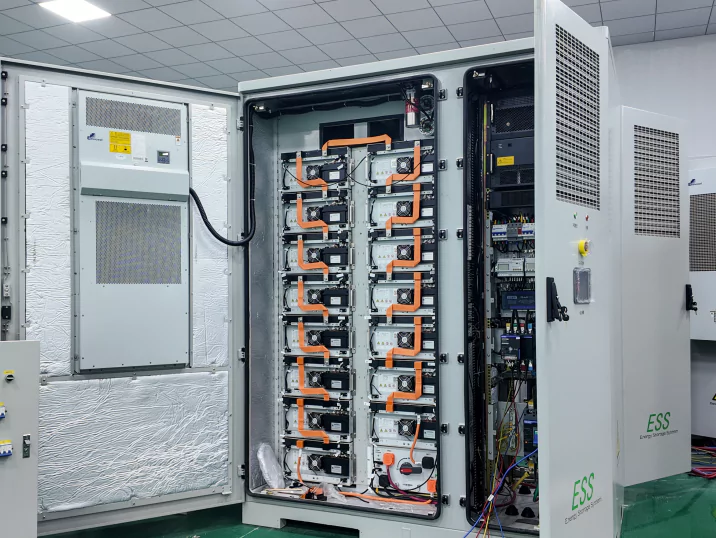
| Battery cabinet | HJ-CES-215 | 215kWh, LiFePO4, 6000+ cycles | Energy storage for peak shaving + PV shifting |
| PCS | 50kW × 5 units | Bi-directional, 97.5% efficiency | DC↔AC conversion; distributed per floor |
| EMS | Huijue intelligent EMS | Edge computing + cloud platform | Real-time monitoring, dispatch, weather AI |
| BMS | Grade A BMS | Cell-level monitoring, passive balance | Battery safety, cycle life optimization |
| PV modules | TOPCon bifacial | 80kW, 22.5% efficiency | Daytime green power generation |
| CT monitoring | Edge controllers | Per-floor CT clamps, 50ms refresh | Real-time load sensing for EMS |
| Cloud platform | Huijue Cloud O&M | Remote monitoring, alarm, reporting | 24/7 system visibility, fault alerts |
Safety: The Non-Negotiable Foundation
Every Huijue storage system includes 5-layer protection: (1) cell-level BMS with thermal runaway prevention, (2) fuse + DC breaker for short-circuit protection, (3) AC breaker with anti-islanding, (4) fire suppression system with smoke/temperature sensors, (5) IP54 enclosure for dust/water resistance. All components certified to UL 1973, IEC 62619, and GB/T 36276.
9. Implementation Roadmap
| Phase | Timeline | Activities | Deliverable |
|---|---|---|---|
| 1. Site assessment | Week 1 | Load profile audit, breaker rating check, roof survey, electrical diagram review | Feasibility report + system sizing |
| 2. System design | Week 2 | EMS strategy configuration, PCS placement, battery sizing, safety plan | Engineering drawings + BOM |
| 3. Installation | Week 3-4 | Battery cabinet placement, PCS wiring, CT clamp installation, EMS setup | Commissioned system (no tenant displacement) |
| 4. Commissioning | Week 5 | Load test, charge/discharge test, breaker trip simulation, EMS tuning | Acceptance report + performance baseline |
| 5. O&M | Ongoing | Remote monitoring, monthly performance report, annual maintenance | Continuous optimization + savings tracking |
Frequently Asked Questions
Q: What is virtual capacity expansion for old buildings?
Virtual capacity expansion uses energy storage batteries combined with an EMS to automatically supply additional power during peak demand periods, effectively increasing the building’s available power capacity without physically upgrading transformers or rewiring circuits. The storage system charges during low-demand periods and discharges during peaks, creating the effect of a larger grid connection.
Q: Can energy storage be installed without modifying existing building wiring?
Yes. Modern energy storage systems with PCS can be installed in parallel with existing electrical infrastructure. The EMS controller connects to the building’s main distribution panel via CT clamps for monitoring, while the storage units connect at the AC coupling point. No major rewiring or wall demolition is required.
Q: How much can I save on electricity bills with PV + storage + EMS?
In the Guangzhou case study, the building achieved over 70% reduction in electricity bills through three mechanisms: (1) peak shaving — discharging stored energy during expensive peak-rate hours, (2) valley filling — charging batteries during cheap off-peak hours, and (3) PV self-consumption — using solar generation directly and storing excess for nighttime use, reducing grid purchases by up to 100% during daytime.
Q: What types of buildings are suitable for virtual capacity expansion?
Virtual capacity expansion is ideal for buildings with aging infrastructure and peak-demand challenges: hotels, apartment complexes, shopping malls, school campuses, office buildings, small factories, and medical clinics. Any building experiencing frequent breaker trips, capacity limits, or high peak-demand charges can benefit.
Q: How does the EMS system prevent circuit breaker trips?
The EMS uses edge-computing controllers that monitor real-time floor-by-floor load data. When total load approaches the circuit breaker threshold (typically 80-90% of rated capacity), the EMS automatically commands the energy storage system to discharge, supplementing grid power and keeping the load below the trip point. Response time is under 200 milliseconds.
Q: What is the typical payback period for a PV + storage + EMS system?
For commercial buildings in China, the typical payback period is 4-6 years, depending on local electricity rate structures, PV generation potential, and peak-to-valley price spread. Buildings with large peak-valley price differences (e.g., Guangdong, Jiangsu, Zhejiang) see the fastest payback. After payback, the system continues generating savings for 10+ years of battery lifespan.
Upgrade Your Building’s Power — Without Rewiring
Whether you manage a hotel with summer blackout risks, a mall with soaring demand charges, or an office building with aging circuits, Huijue’s PV + storage + EMS solution delivers virtual capacity expansion with zero structural changes.
Tags: virtual capacity expansion, energy storage EMS, old building power upgrade, peak shaving, PV self-consumption, microgrid EMS, LiFePO4 storage, commercial energy storage