
 chinahuijue@gmail.com
 +1 (702) 204-9855
500kWh Battery Storage System for Commercial Solar Projects: Applications, Cost Factors, and Sizing Checklist
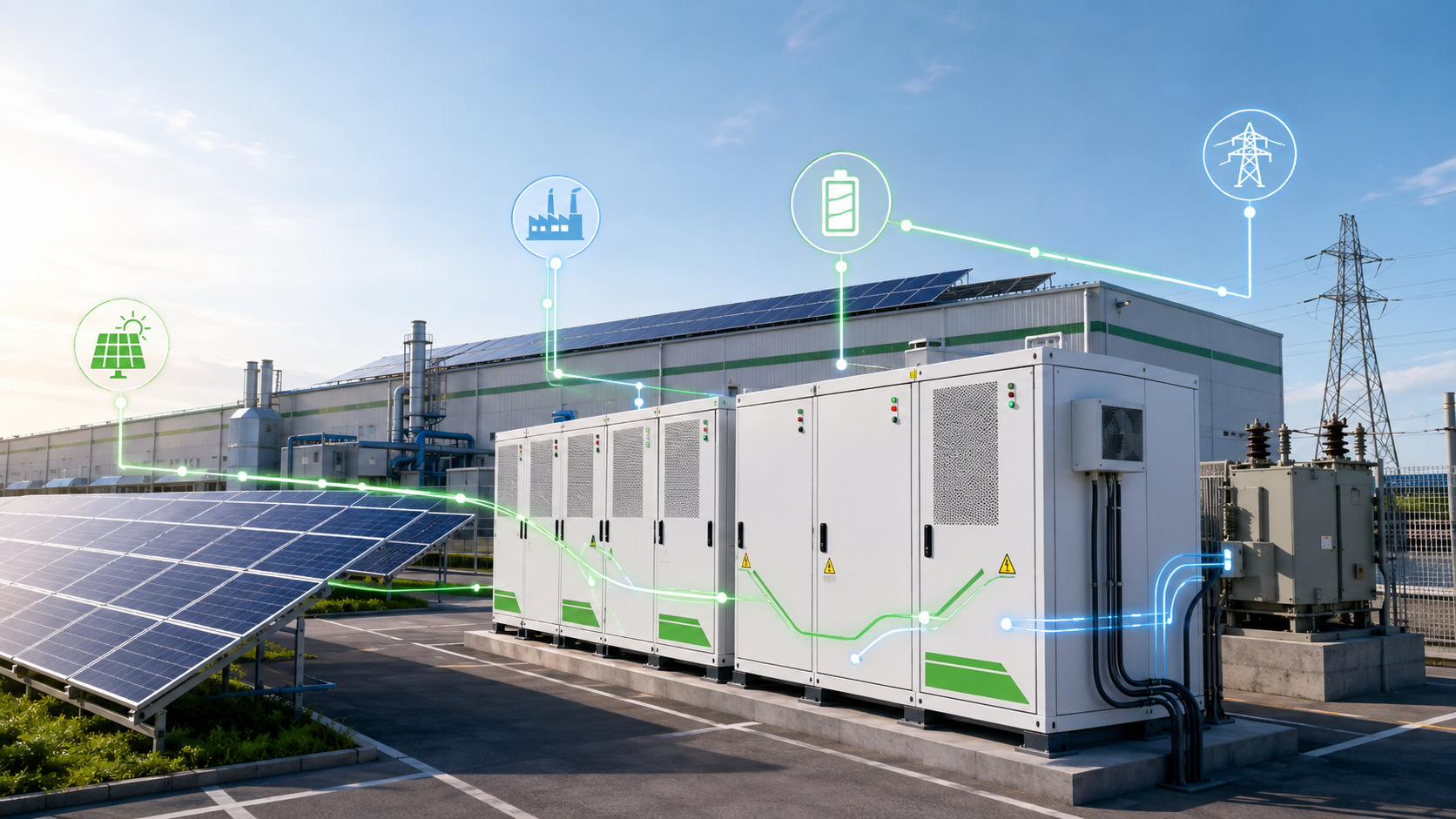
For many commercial solar projects, a 500kWh battery storage system is often considered when the site already has medium-to-large electricity demand, rising peak power costs, or unused solar generation during the day.
However, 500kWh is not just a battery number. Whether it is suitable depends on the load profile, PV capacity, backup time, transformer capacity, grid condition, electricity tariff, and the way the business wants to use stored energy.
This article explains when a 500kWh commercial battery storage system makes sense, how it is usually configured, what affects the cost, and what buyers should prepare before requesting a quotation.
What Does a 500kWh Battery Storage System Mean?
A 500kWh battery storage system means the system can store around 500 kilowatt-hours of electrical energy under rated conditions. In real projects, the usable energy may be slightly lower because of system efficiency, depth of discharge settings, safety margins, and battery management strategy.
For commercial and industrial users, the key question is not only “how many kWh,” but also:
- How much power does the site need at one time?
- How long should the battery support the load?
- Is the system used for solar self-consumption, peak shaving, backup power, or off-grid operation?
- Does the site need cabinet energy storage or containerized BESS?
For example, a 500kWh system paired with 250kW rated power may support about two hours of full-power discharge. If the load is lower, the backup time can be longer. If the load is higher, the battery may discharge more quickly.
When Is a 500kWh Battery Storage System Suitable?
1. Commercial Solar Self-Consumption
Many commercial buildings, factories, farms, warehouses, and industrial parks install solar PV systems to reduce daytime electricity costs. But when solar generation exceeds real-time load demand, surplus electricity may be exported at a low tariff or wasted if export is limited.
A 500kWh battery storage system can store excess solar power during the day and discharge it later during evening operation, cloudy periods, or high-price electricity periods. This improves solar self-consumption and makes the solar project more valuable.
For this type of project, Huijue’s solar + storage solution can be configured according to PV capacity, load curve, grid access condition, and backup requirements.
2. Peak Shaving for Industrial Loads
Factories and commercial facilities often pay extra charges when peak demand is too high. If machines, HVAC systems, pumps, refrigeration equipment, or production lines start at the same time, the short-term load peak may increase electricity costs significantly.
A 500kWh battery system can discharge during peak-load periods to reduce grid demand. This is especially useful for sites with clear peak periods and high demand charges.
3. Backup Power for Key Loads
For some businesses, power interruption can affect production, communication, cold-chain storage, lighting, security systems, or customer service. A 500kWh BESS can provide backup power for selected critical loads instead of supporting the entire facility.
This is important because backup design should be based on priority loads, not just total installed load. A well-designed system separates critical loads from non-critical loads, making battery backup more practical and cost-effective.
4. Remote or Weak-Grid Commercial Projects
In remote areas, islands, mining sites, telecom sites, farms, resorts, and temporary project bases, the grid may be unstable or unavailable. In these cases, a 500kWh battery storage system can work with solar power and diesel generators to reduce fuel consumption and improve power reliability.
The system may operate in hybrid mode, where solar power supplies daytime loads, batteries provide energy shifting and backup, and the generator runs only when necessary.
Cabinet BESS or Container BESS: Which Is Better for 500kWh?
For a 500kWh project, both cabinet-type and containerized solutions may be possible. The choice depends on site space, expansion plan, installation environment, and power capacity.
| Option | Suitable Situation | Main Advantage |
|---|---|---|
| Cabinet Energy Storage System | Commercial buildings, factories, parks, farms, telecom sites, limited-space projects | Compact, modular, easier to install and expand |
| Container Energy Storage System | Larger C&I projects, utility-side projects, high-capacity expansion, outdoor centralized installation | Higher integration capacity, suitable for MW/MWh-level projects |
For many 500kWh commercial projects, a cabinet energy storage system may be a practical starting point because it is modular and easier to deploy. If the project is planned to expand toward MWh-level capacity, a container energy storage system may be more suitable.
Key Design Factors Before Choosing a 500kWh BESS
1. Load Curve
The load curve shows how much electricity the site uses during different periods of the day. It is one of the most important documents for energy storage design.
Without a load curve, it is difficult to know whether 500kWh is too small, too large, or suitable. A project with short peak loads may need higher power. A project with long evening demand may need more energy capacity.
2. PV Capacity
If the project includes solar PV, the PV capacity and generation profile should match the battery storage capacity. A battery that is too large may not be fully charged. A battery that is too small may not store enough surplus solar power.
3. Rated Power
Battery capacity is measured in kWh, while power is measured in kW. A 500kWh system can be designed with different power ratings, such as 125kW, 250kW, or 500kW, depending on the project target.
For example:
- 125kW / 500kWh: longer discharge duration, suitable for energy shifting
- 250kW / 500kWh: balanced option for solar storage and peak shaving
- 500kW / 500kWh: higher power output, suitable for shorter high-load support
4. Grid-Connected or Off-Grid Operation
A grid-connected system is usually designed for solar self-consumption, peak shaving, and energy cost optimization. An off-grid or hybrid system requires more careful design because it must support load stability without relying fully on the utility grid.
5. Cooling and Safety
For commercial battery storage, cooling and safety design are not optional. Thermal management, BMS, fire protection, power distribution, and remote monitoring all affect long-term reliability.
Liquid-cooled energy storage systems are often used in commercial and industrial projects where stable temperature control and long-term operation are important.
What Affects the Cost of a 500kWh Battery Storage System?
The cost of a 500kWh battery storage system depends on more than battery cells. Buyers should compare complete system configuration instead of only asking for a battery price.
Main cost factors include:
- Battery capacity and usable energy
- PCS/inverter power rating
- Battery type and cycle life
- Liquid cooling or air cooling
- Outdoor protection level
- Fire protection system
- EMS and remote monitoring
- Grid-connected/off-grid function
- Shipping, installation, and commissioning support
- Certification and local grid compliance requirements
A lower equipment price is not always a lower project cost. If the system lacks proper EMS control, protection design, or installation support, the project may face higher commissioning and operation risks later.
Example: 500kWh Storage for a Commercial Solar Project
A factory installs rooftop solar during the day, but its electricity demand remains high in the evening. Some solar power is not fully consumed during working hours, while electricity prices rise during peak periods.
In this case, a 500kWh battery storage system may be used to store surplus solar power and discharge during peak-price periods. The EMS can be configured to prioritize solar self-consumption, reduce peak grid demand, and reserve part of the battery capacity for backup power.
Before final sizing, the project team should check the factory’s load curve, solar generation data, transformer capacity, electricity tariff, backup load list, and installation space.
Disclaimer
This article is for general reference only. Actual battery capacity, backup time, system configuration, and project cost should be confirmed based on site conditions, load demand, grid requirements, and final technical design.
Quotation Checklist for Buyers
Before requesting a quotation for a 500kWh commercial battery storage system, buyers should prepare the following information:
- Project country and installation location
- Application scenario: factory, commercial building, farm, telecom site, resort, industrial park, or microgrid
- Existing or planned solar PV capacity
- Daily electricity consumption
- Load curve or peak load data
- Required backup time
- Grid-connected, off-grid, or hybrid operation
- Indoor or outdoor installation environment
- Available installation space
- Local certification or grid connection requirements
With this information, the system supplier can recommend a more suitable BESS configuration instead of giving only a rough battery price.
FAQ
Is a 500kWh Battery Storage System Suitable for Home Use?
Usually no. A 500kWh battery storage system is generally too large for ordinary home energy storage. It is more suitable for commercial buildings, factories, farms, industrial parks, telecom sites, resorts, and other project-based applications.
How Long Can a 500kWh Battery Run?
It depends on the load. If the load is 250kW, a 500kWh system may support about two hours at full power before considering system losses and usable capacity limits. If the load is 100kW, the operating time can be longer.
Can a 500kWh Battery Work With Solar Panels?
Yes. Many 500kWh battery systems are used with solar PV to increase self-consumption, store surplus daytime generation, reduce peak electricity costs, and provide backup power.
Is Cabinet or Container Better for 500kWh?
For many commercial projects, cabinet BESS is compact and flexible. For larger projects or future MWh-level expansion, containerized BESS may be more suitable. The best choice depends on project scale, available space, and expansion plan.
What Information Is Needed for a 500kWh BESS Quote?
Useful information includes project location, PV capacity, load curve, peak load, backup time, installation environment, grid condition, and operating purpose. These details help determine the correct power rating, battery capacity, PCS configuration, and EMS strategy.
Conclusion
A 500kWh battery storage system can be a strong option for commercial solar projects, industrial peak shaving, backup power, and weak-grid applications. But the correct system design should be based on real project data, not only on capacity.
For buyers, the most important step is to clarify the application scenario, load demand, PV generation, backup requirement, and grid condition. With the right system configuration, 500kWh commercial battery storage can improve solar utilization, reduce energy costs, and support more reliable business operation.
For project-specific design, contact the Huijue project team to discuss a suitable commercial energy storage solution based on your site requirements.