
 chinahuijue@gmail.com
 +1 (702) 204-9855
Off-Grid Solar Kit Guide: How to Choose the Right Solar System for Your Home, Cabin, or Farm
1. Why Are Off-Grid Solar Kits So Popular Right Now?
- Rising Electricity Prices: In many countries, electricity rates have increased by 30–80% over the past three years. Peak-hour electricity pricing has made it feel like “using electricity is burning money.”
- Frequent Power Outages in Remote and Low-Coverage Areas: Issues include:
- Long-term power outages in vacation cabins
- Electricity issues on farms or ranches
- Winter snowstorms causing frequent blackouts
- Daily power cuts in developing countries
- Increasing Desire for “Energy Independence”: People living in rural areas, mountains, islands, or off-grid campsites prefer to:
- Many homeowners are now combining off-grid solar systems with a home energy storage system to achieve greater energy independence.
- Be unaffected by power outages
- Have access to electricity whenever needed
- Falling Costs of Off-Grid Solar Kits: As the cost of solar panels has decreased, a complete off-grid kit can even be cheaper than installing two air conditioners.
2. What is an Off-Grid Solar Kit?
Many people mistakenly think an “off-grid kit” is a portable device you can use directly, but it’s actually a system consisting of multiple core components that work together to provide independent power. A typical off-grid solar solution includes:
- Solar Panels: These convert sunlight into electricity. The higher the power, the more electricity it generates. Recommendation: Monocrystalline panels (higher efficiency).
- Off-Grid Inverter: This converts the DC (direct current) power from the solar battery into AC (alternating current) power used in most homes. Important: Don’t skimp on the inverter because it directly affects:
- Whether you can power your devices
- System stability
- Whether it can automatically switch between power sources
- If it can expand with more panels
For high-quality inverters, consider options like: 8kw-11kw Single-phase Off-Grid Inverter from Huijue Technology Group.
- Battery – The Core of the System: Most modern off-grid systems use LiFePO4 batteries because of their safety, long cycle life, and thermal stability. (Lithium Iron Phosphate) Batteries Why? They have longer lifespans, are safer, and can endure more charge/discharge cycles. Batteries determine how long you can use electricity at night and how long your system will last in cloudy or rainy weather.
- Mounting Brackets, Cables, and Connectors: These are necessary to securely mount, connect, and set up the system.
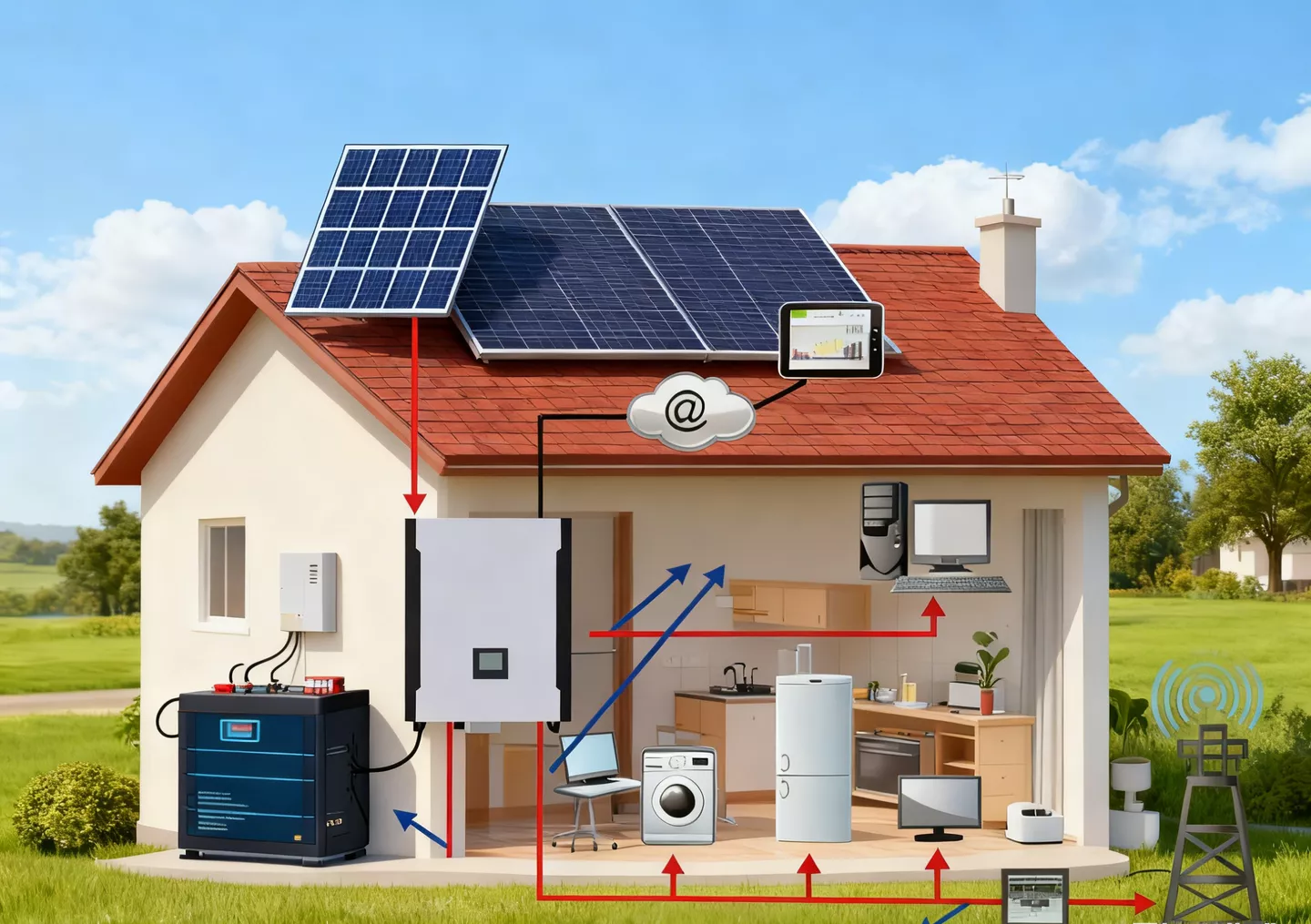
- Optional Additions: Backup Generator, WiFi Module, Automatic Transfer Switch (ATS) Some users may opt for a generator as a backup to ensure power during cloudy days.
3. Choosing the right battery size is essential for a reliable residential solar energy storage solution.
Many users are unsure whether they need a 1kW, 3kW, or 5kW kit. Use this table to quickly determine your needs:
| Scenario | Recommended Kit | Devices Powered |
|---|---|---|
| Occasional Use in Vacation Cabin | 1–2kW | Lights, phones, small fridge, internet |
| Small Home | 3kW | Fridge, water pump, daily appliances |
| Full-Time Residential Use | 5kW+ | Fridge, washer, some heaters, some A/C |
| Farm/Ranch/Construction Site | 5kW–10kW | Water pump, tools, small machines |
How to Calculate Your Power Needs:
- Daily Power Output (kWh) Calculation: Daily Output = Panel Power × Sunlight Hours. Example: 1.2kW panel × 5 sunlight hours = 6 kWh/day
- Battery Usable Capacity (kWh): Usable Power = Battery Capacity × Depth of Discharge (DoD). LiFePO4 has a DoD of 80–90%. Example: 5kWh battery × 0.85 = 4.25 kWh usable
4. Residential vs Vacation Cabin: Which Configuration Should You Choose?
Residential Systems (Full-Time Use)
Characteristics: High and stable power demand. Must support essential devices like refrigerators and water pumps. Sometimes needs to support air conditioning.
Recommended Configuration: 3kW–5kW Inverter, 5–10kWh Battery, Expandable panel support, Pure sine wave output
Vacation Cabin Systems (Occasional Use)
Characteristics: Lower power demand. Primarily for lighting, small electronics, and low-power devices. Requires easy-to-install, portable kits.
Recommended Configuration: 1–3kW kit, Plug-and-play off-grid systems, Foldable, portable panels
5. Price Range of Off-Grid Kits
| Kit Power | Approximate Price Range | Suitable For |
|---|---|---|
| 1kW | $300–$600 | Small cabins, camping, light use |
| 3kW | $1,000–$2,500 | Small homes |
| 5kW | $3,000–$6,000 | Large homes, farms, full-time living |
Price Variations: The key factor in price difference is the battery. 80% of the cost comes from battery capacity. Larger batteries provide longer-lasting power.
6. Is Installation Easy? Can You DIY?
DIY-Friendly Kits:
- Systems under 2kW
- Modular designs
- No high-voltage work required
- No complex wiring needs
Not Recommended for DIY:
- Systems over 3kW
- Power-hungry appliances like water pumps or motors
- Needs grounding or overload protection
- Parallel connection requirements
7. 7 Key Points to Check Before Buying an Off-Grid Solar Kit
- Battery Type: Preferably LiFePO4 for long-lasting cycles (4000–6000).
- Inverter: Must be a pure sine wave inverter for compatibility with home appliances.
- Expandability: Ensure the system supports future panel and battery expansions.
- Lithium Battery Communication: For better safety and longevity.
- Built-in Protections: Overload, overvoltage, short circuit, and temperature protections.
- Warranty & After-Sales Service: Off-grid systems are long-term assets.
- Real User Testimonials: Avoid poorly performing kits.
8. Recommended Off-Grid Solar Kit for Vacation Cabins and Outdoor Shelters
Core Kit Specifications:
- Solar Panels: 6 units of Huijue monocrystalline panels. High conversion efficiency and sleek all-black design perfect for roofs of homes or cabins.
- Inverter: Huijue 4000W 24V pure sine wave inverter/charger for stable, clean power to sensitive electronics.
- Charge Controller: MPPT 80A high-efficiency solar charge controller for maximizing charging efficiency and energy storage.
- Accessories: Circuit breaker, 2 surge protectors, complete set of cables and connectors, and metal roof, tile roof, or pole installation options.
Why Choose This System?
- High-efficiency, aesthetically appealing black panels that perform well in low-light and high-snow environments.
- Pure sine wave inverter ensures better compatibility with appliances like laptops, routers, refrigerators, and water pumps.
- Flexible installation options with various mounting options.
9. How to Quickly Choose the Best Off-Grid Kit for You
- Clarify Your Daily Power Usage (Most Important): Use the provided calculation method to estimate your power needs.
- Match Your Budget with Battery Size: Larger batteries give you more backup time.
- Opt for Established Brands: A high-quality off-grid system must be stable, safe, and expandable.
If you’re still unsure or need help with configurations, feel free to contact us.