
 chinahuijue@gmail.com
 +1 (702) 204-9855
Will Energy Storage Become the Next Solar Boom? Market Trends, Growth Drivers and Future Outlook
Solar and wind energy have transformed the global energy landscape over the past decade. Today, battery energy storage systems (BESS) are entering a similar phase of rapid expansion. But can energy storage truly replicate the explosive growth of solar PV and wind power? This article explores the latest market data, policy drivers, technological advances, and investment opportunities shaping the next trillion-dollar industry.
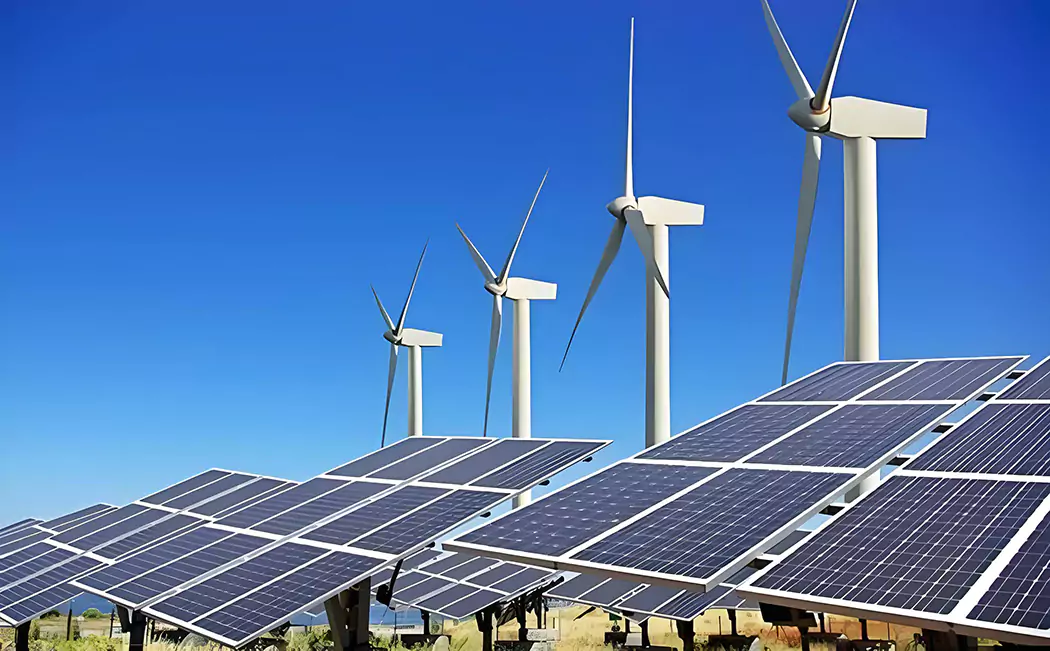
Can Energy Storage Mimic the Miracle of Solar and Wind Growth?
New Trillion-Dollar Opportunities for the Energy Transition
From “Rapid Expansion” to “Quality and Efficiency Improvement”
As of the end of February 2025, China’s total installed capacity of solar and wind power surpassed 1.456 billion kilowatts, beating thermal power for the first time to become the country’s largest energy source. Solar has kept advancing with a growth rate of over 40% annually, driven by distributed projects and bulk base installations on a massive scale. Although growth in wind power slowed down to 17.6% due to project sanctioning and construction cycles, offshore wind and refurbishment of aged turbines remain long-term drivers of growth. However, the inherent volatility of renewables and grid integration problems have increased, with average utilization hours of power generation units decreasing by 61 hours from the previous year. This has forced grid investment growth to increase to 33.5%, putting energy storage in the spotlight as a principal “regulatory hub.”
From “Policy-Driven” to “Value Realization”
As of 2024, the cumulative installed capacity of new-type energy storage (i.e., batteries) in China reached 74.66 GW, up 131.86% year on year and becoming the leading type, replacing pumped hydro storage. Such a speed of growth is promoted by the following reasons:
Technological innovation and cost decreases: Lithium-ion battery prices have fallen over 60% since 2020, and 300 MW-class compressed air storage and flywheel storage technologies came into industrial application, enhancing system efficiency by 3–5%.
Policy incentives: The 14th Five-Year Plan for Development of New-Type Energy Storage presented clear scale goals by 2025, together with regional devices such as capacity compensation and peak-valley price to integrate storage into electricity markets.
Grid requirements and varied applications: As the percentage of renewables crossed 50% of installed capacity, grid flexibility needs went through the roof. Storage is now performing vital roles in uses like renewable base transmission, industrial/commercial peak shaving, and emergency power supply. During the summer peak of 2024, storage accounted for 45% of national charge/discharge cycles, more than 85% in some provinces.
Why Energy Storage Is Different from Solar and Wind
| Solar | Wind | Energy Storage |
|---|---|---|
| Generates electricity | Generates electricity | Stores electricity |
| Weather dependent | Weather dependent | Supports the grid |
| Revenue from electricity sales | Revenue from electricity sales | Multiple revenue streams |
| Mature technology | Mature technology | Rapid innovation |
Global Market Outlook
Europe
- Grid balancing
- Frequency regulation
- C&I storage
USA
- IRA
- Texas
- California
Africa
- Telecom storage
- Off-grid
- Microgrid
How Huijue Supports the Global Energy Storage Market
Huijue Group provides complete battery energy storage solutions for residential, commercial, industrial, telecom, and utility-scale applications.
Our product portfolio includes:
• Residential ESS
• Commercial Energy Storage Cabinets
• Liquid-cooled BESS
• Telecom Energy Storage Systems
• Foldable PV Containers
• Hybrid Inverters
• EMS Energy Management Platforms
CTA
Looking for a reliable energy storage manufacturer?
Huijue Group provides OEM/ODM energy storage solutions for distributors, EPC contractors, utilities, and industrial customers worldwide.
Contact our team today for technical support and customized quotations.
Divergent Growth Logics and Challenges
Although both enjoy the label of clean energy, renewables and storage follow different routes:
Market dynamics: Solar/wind have subsidies and levelized cost reductions to rely upon, whereas storage must profit on value monetization through electricity markets.
Technology paths: Solar/wind technologies are product-line-specific (e.g., silicon PV, doubly-fed turbines), whereas storage is diversifying (lithium, flow batteries, compressed air, etc.).
Revenue models: Renewables enjoy feed-in tariffs, whereas storage taps into multiple streams: energy arbitrage, ancillary services, and capacity leasing.
Present challenges include underutilization (30% capacity rates on some projects), safety incidents leading to loss of confidence, and unfinished cross-regional dispatching procedures. Policies like the 2024 Energy Law, however, are accelerating market-based mechanisms for storage’s use in grid resiliency and capacity payment.
Where Is Storage Headed?
Industry projections see China’s new-type energy storage capacity at 220 GW in 2030, with market size exceeding ¥3 trillion. Three trends are the basis of this vision:
Grid modernization necessities: Renewables will be tens of billions of kilowatts in 2060, with storage becoming the vertex of “generation-grid-load-storage” integration.
Technology diversification: Sodium-ion batteries, gravity storage, and other technologies are already in pilot phases, while the cost of long-duration storage (4+ hours) will fall by 40%.
International expansion: 90% of all world lithium storage batteries are manufactured by Chinese firms, with buoyant demand in markets like Southeast Asia and South Africa fueling factory refurbishment.
Storage Is Not “Another Solar/Wind” — It’s the “New Infrastructure” of the Energy Revolution
While solar and wind provide “generation,” storage takes care of “stabilization.” Its evolution depends on power market reforms, technological maturity, and dispersed use cases. As policy, markets, and innovation meet, storage is on a divergent trajectory from renewables and stands on the brink of becoming the most promising trillion-dollar frontier in the carbon neutrality competition.
FAQ
1. Why is energy storage growing faster than before?
Because renewable energy capacity is increasing rapidly, creating greater demand for grid balancing, peak shaving, and backup power.
2. Is battery energy storage replacing pumped hydro?
Not entirely. Pumped hydro remains important for long-duration storage, but lithium battery systems are growing much faster because they are easier to deploy and more flexible.
3. Which battery technology dominates today’s market?
Lithium iron phosphate (LFP) batteries currently dominate most commercial and utility-scale energy storage projects due to their safety, long cycle life, and competitive cost.
4. What industries benefit most from energy storage?
Commercial buildings, factories, data centers, telecom sites, renewable power plants, and microgrids all benefit from battery energy storage systems.
5. Will energy storage become a trillion-dollar industry?
Industry forecasts suggest that continued policy support, declining battery costs, and increasing renewable energy penetration could make energy storage one of the world’s largest clean energy industries over the next decade.