
 chinahuijue@gmail.com
 +1 (702) 204-9855
Rooftop Solar PV System: Components, Costs & Technology Guide 2026
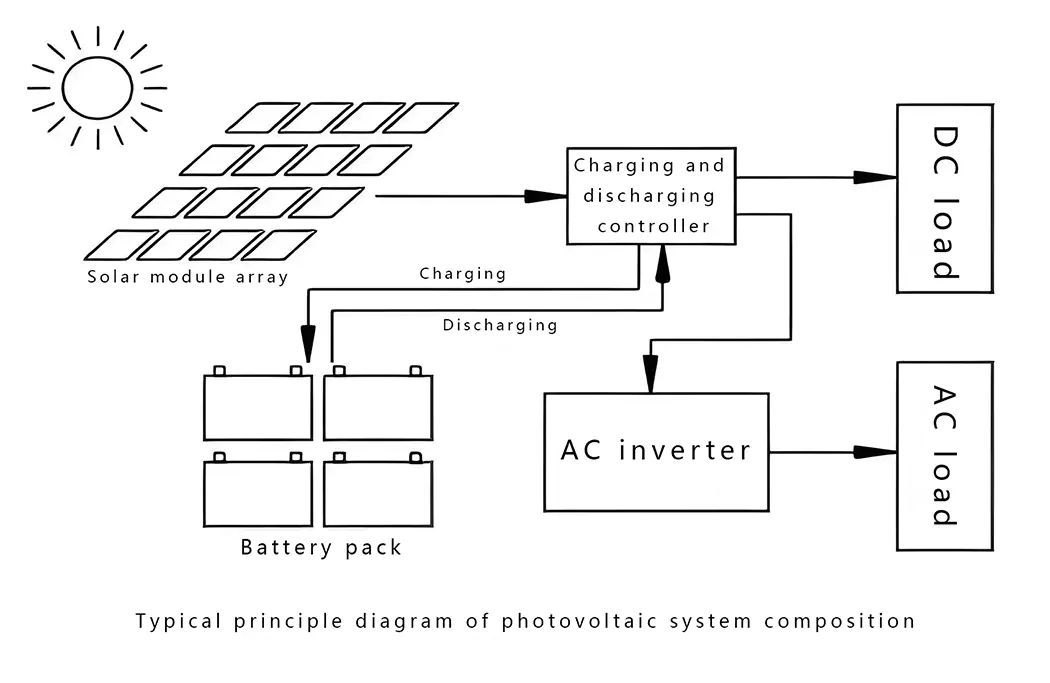
Global distributed PV installations reached 120 GW in 2023, with over 58% on residential rooftops (IRENA). As carbon neutrality goals drive adoption, rooftop solar has evolved from simple “panel + inverter” setups into integrated energy hubs with smart management, battery storage, and AI-driven optimization. This guide breaks down every component, technology, and cost factor you need to understand in 2026.
1. System Architecture: 3 Types at a Glance
| Feature | Grid-Tied | Off-Grid | Hybrid |
|---|---|---|---|
| Core Equipment | PV + Grid-Tied Inverter | PV + Inverter + Battery | PV + Hybrid Inverter + Battery |
| Grid Dependency | Fully dependent (no grid = no power) | Fully independent | Mode-switchable |
| Battery Required | No | Yes (mandatory) | Yes (recommended) |
| Excess Power | Feed to grid (net metering) | Stored in battery | Grid feed or battery — auto-switched |
| Best For | Urban residences with net metering | Remote/unpowered areas | High-tariff C&I; backup power needs |
| ROI Period | 5–7 years | 8–10 years | 6–8 years |
| Cost (5kW system) | $7,500–$12,500 | $15,000–$25,000 | $12,000–$20,000 |
2. PV Modules: Three Generations of Technology
The solar panel market has evolved through three generations. Here’s where each stands in 2026:
| Technology | Generation | Efficiency | Key Advantage | Market Status (2026) |
|---|---|---|---|---|
| Monocrystalline PERC | 1st | 22.5–24.8% | Mature, low cost | Mainstream, being phased out by TOPCon |
| Polycrystalline | 1st | 17–19.6% | Cheapest (~¥0.3/W) | Declining; budget projects only |
| TOPCon | 3rd | 22–24% | 700W+ output, 95% bifacial, -12% LCOE | Market leader 2026 |
| HJT | 3rd | 24–26% | 95% bifacial, <0.25%/yr degradation | Premium segment; growing |
| CIGS Thin-Film | 2nd | 15–18% | Flexible; BIPV applications | Niche (facades, curved surfaces) |
| Perovskite-Silicon Tandem | 3rd | 33.7% (lab) | Highest efficiency potential | Pre-commercial; pilot lines 2026–2028 |
Encapsulation Advances
| Type | Lifespan | Weather Resistance | Cost Premium | Recommendation |
|---|---|---|---|---|
| Single-Glass (standard) | 25 years | Baseline | — | Budget projects |
| Double-Glass | 35 years | 3× conventional | +5–10% | Recommended for all new installs |
| Smart Modules (with optimizer chips) | 30+ years | High | +15–20% | Complex roofs with shading |
3. Inverters: Choosing the Right Type
| Type | Efficiency | Best Application | Key Features | Price (5kW) |
|---|---|---|---|---|
| String Inverter | 99% | Residential, small C&I | Multi-channel MPPT, shadow optimization | $500–$1,200 |
| Hybrid Inverter | 97.2% | Off-grid, hybrid systems | Charge/discharge >90%, grid + battery switching | $800–$2,000 |
| Microinverter | 96.5% | Complex/shaded roofs | Module-level monitoring, high safety, no single point of failure | $1,500–$3,000 (for 5kW) |
| Centralized | 98.5% | Commercial/industrial >100kW | Supports 1500V high-voltage systems | $0.10–$0.15/W |
4. Battery Storage: LFP Dominates in 2026
| Battery Type | Cycle Life | Energy Density | Cost/kWh | DOD | Verdict (2026) |
|---|---|---|---|---|---|
| LFP (LiFePO4) | 6,000 | 120–160 Wh/kg | $200–$300 | 80–90% | Best choice — lowest cost per cycle |
| NMC | 3,000 | 200–260 Wh/kg | $250–$350 | 80–90% | Space-constrained (RV, boat) |
| Sodium-Ion | 3,000 | 100–120 Wh/kg | $200–$400 | 80% | Emerging; cold climate potential |
| Lead-Acid (AGM) | 800 | 30–50 Wh/kg | $100–$150 | 50% | Not recommended — short life, high maintenance |
5. Smart Control & Energy Management
Modern rooftop systems are not just hardware — they’re intelligent energy platforms with two layers:
| Layer | Component | Function | Benefit |
|---|---|---|---|
| Hardware | Environmental sensors | Monitor irradiance, temperature, wind speed | Optimizes panel tilt/orientation dynamically |
| Power routers | Balance DC microgrid power flow | Prevents overloading; ensures stability | |
| Smart meters | Track grid import/export in real time | Enables time-of-use tariff optimization | |
| Software | Energy management algorithms | AI-driven charge/discharge scheduling | Maximizes self-consumption; reduces grid dependence 30–50% |
| Remote monitoring platform | Cloud-based dashboard + mobile app | Real-time alerts; performance analytics | |
| Fault detection (ML-based) | Identifies panel degradation, shading, inverter faults | Reduces O&M response time from days to minutes |
6. Mounting, Cables & Protection
| Component | Requirements | Key Specs | Lifespan |
|---|---|---|---|
| Mounting Rack | High mechanical strength, corrosion resistance | Al alloy 6005-T5; wind load 2400Pa; snow load 5400Pa | 25+ years |
| DC Cables | UV-resistant, weatherproof | PV1-F rated; 1500V DC; -40°C to 90°C | 25 years |
| Sealants | Elastomeric waterproof | Silicone/PU-based; adhesion >1.5 MPa | 20 years |
| Lightning Protection | SPD Type II (DC + AC side) | 40kA discharge capacity; <1.5kV voltage protection | 10–15 years |
| Circuit Breakers | DC + AC isolation | Curve C/D; rated 1.25× max current | 10,000 operations |
| Data Logger | Continuous recording | Modbus/WiFi/4G; 1-min resolution | 10 years |
7. Cost Breakdown: 5kW Residential System (2026)
| Component | Grid-Tied | Hybrid (with battery) | % of Total (Hybrid) |
|---|---|---|---|
| PV Modules (5.5kW TOPCon) | $1,100–$1,800 | $1,100–$1,800 | 9–12% |
| Inverter (5kW) | $600–$1,200 | $1,000–$2,000 (hybrid) | 8–13% |
| Battery (10kWh LFP) | — | $3,000–$5,000 | 25–33% |
| Mounting Structure | $500–$900 | $500–$900 | 4–6% |
| Cables, BOS, Protection | $400–$700 | $500–$800 | 4–5% |
| Monitoring System | $100–$300 | $100–$300 | 1–2% |
| Installation Labor | $1,500–$2,500 | $2,000–$3,500 | 17–23% |
| Permits & Inspection | $300–$800 | $400–$1,000 | 3–5% |
| Total | $4,500–$8,200 | $8,600–$15,300 | 100% |
8. ROI Comparison: Which System Pays Back Fastest?
| Scenario | System | Cost | Annual Savings | Payback | 25-Year Profit |
|---|---|---|---|---|---|
| Urban home, net metering | 5kW grid-tied | $8,000 | $1,200–$1,500 | 5.5 yrs | $22,000–$29,500 |
| High-tariff C&I, peak shaving | 10kW hybrid + 15kWh | $22,000 | $3,500–$4,500 | 5.5 yrs | $65,500–$90,500 |
| Remote cabin, no grid | 3kW off-grid + 10kWh | $12,000 | $1,500 (vs generator) | 8 yrs | $25,500 |
| Villa with EV charging | 8kW hybrid + 20kWh | $18,000 | $2,500–$3,500 | 6 yrs | $44,500–$69,500 |
9. 2026 Technology Trends
| Trend | Impact | Timeline |
|---|---|---|
| Perovskite-silicon tandem commercialization | 30%+ module efficiency; 15–20% cost reduction | Pilot lines 2026–2028; mass production 2029+ |
| AI-driven energy management | Auto-optimize charge/discharge based on weather forecast + tariff | Already available in premium systems |
| BIPV (Building-Integrated PV) | Solar roof tiles replace conventional roofing | Growing in EU/Japan; cost parity by 2028 |
| V2H (Vehicle-to-Home) | EV battery serves as home storage (bi-directional charging) | Available with compatible EVs (2024+) |
| Virtual Power Plants (VPP) | Aggregated rooftop systems sell grid services | Active in Australia, Germany, California |
FAQ
What are the main components of a rooftop solar PV system?
A rooftop solar PV system consists of 6 core components: (1) PV modules, (2) inverter (string, micro, or hybrid), (3) battery storage (optional), (4) mounting structure, (5) cables and electrical protection (breakers, lightning protection), and (6) monitoring system. Grid-tied systems skip the battery; hybrid systems include all components.
How much does a rooftop solar system cost in 2026?
A residential system costs $1,500–$2,500 per kW installed. A 5kW grid-tied system costs $7,500–$12,500; a 5kW hybrid with battery costs $12,000–$20,000. Costs are lower in China/Asia ($1,200–$1,800/kW) and higher in the US ($2,500–$3,500/kW). LFP battery storage adds $300–$500 per kWh.
What is the difference between grid-tied, off-grid, and hybrid solar systems?
Grid-tied connects to the utility grid with no battery (ROI 5–7 years). Off-grid is fully independent with mandatory battery storage (ROI 8–10 years). Hybrid combines both: grid connection plus battery backup, automatically switching modes based on grid availability and tariffs (ROI 6–8 years).
Which solar panel technology is best in 2026?
TOPCon is the best choice for most rooftop installations in 2026. It achieves 22–24% efficiency, 700W+ output, 95% bifacial rate, and reduces LCOE by 12% vs PERC. HJT is superior but more expensive. Perovskite-silicon tandems (33.7% lab efficiency) are promising but not yet commercially viable for residential use.
How long do rooftop solar panels last?
Modern double-glass TOPCon/HJT modules last 30–35 years with <0.25% annual degradation, retaining 85%+ output at year 30. Standard single-glass PERC lasts 25 years. Inverters last 10–15 years (one replacement likely during panel lifetime). LFP batteries last 10–15 years (4,000–6,000 cycles).
Do I need a battery for my rooftop solar system?
If your region has net metering, a battery is optional. Batteries are recommended if: grid is unreliable, nighttime rates are high (peak shaving), you want backup power during outages, or you plan to go off-grid. LFP batteries at $300–500/kWh pay back in 5–8 years through peak shaving and self-consumption optimization.
Conclusion: Rooftops Are the New Power Plants
From monocrystalline PERC to TOPCon to perovskite tandems, from basic string inverters to AI-driven smart energy platforms — rooftop PV has evolved into a sophisticated, multi-component energy system. The 2026 landscape is clear:
- Panels: TOPCon + double-glass = 35-year lifespan, 700W+ output
- Inverters: String for simplicity, hybrid for flexibility, micro for complex roofs
- Batteries: LFP dominates — 6,000 cycles, $0.05/kWh lifetime cost
- Smart management: AI optimization + remote monitoring = 30–50% less grid dependence
- ROI: 5–8 years typical; 25-year profit 3–10× the initial investment
As perovskite commercialization, V2H integration, and VPP aggregation accelerate, rooftop solar will continue its transformation from standalone “power generator” to integrated “energy hub” — delivering both environmental sustainability and compelling economic returns.
Planning a Rooftop Solar PV Project?
Huijue provides end-to-end rooftop solar solutions — from TOPCon panels and hybrid inverters to LFP battery storage and smart monitoring platforms. Contact our engineering team for a free system design consultation, or explore our rooftop PV product range.
📖 Related: Off-Grid Solar System Sizing Guide | Energy Storage Cabinet Guide | PV Inverter Heat Protection