
 chinahuijue@gmail.com
 +1 (702) 204-9855
How to Choose the Right Energy Storage System Integrator: 7 Key Factors
Quick Answer
A reliable BESS (Battery Energy Storage System) integrator does more than assemble batteries and inverters. They own the full system lifecycle — from design and engineering to safety certification, grid integration, and long-term O&M. Before investing, evaluate these five capabilities:
| Capability | What to Verify | Why It Matters |
|---|---|---|
| 1. R&D & Integration | Proprietary BMS/EMS, AI algorithms, in-house testing lab | +20% battery cycle life, lower O&M cost |
| 2. Project Management | EPC turnkey, BIM engineering, digital O&M platform | 30% faster delivery, 15-min fault response |
| 3. Compliance & Safety | IEC 62619, UL 9540A, fire suppression, LFP cells | Failure probability < 0.1%, regulatory approval |
| 4. Innovation Ecosystem | Partnerships with CATL/BYD/Huawei/Sungrow, global service | Future-proof tech roadmap, localized support |
| 5. Customer Service | End-to-end guarantee, real-time dashboards, cascade utilization | 40% lower lifecycle cost, transparent reporting |
As battery energy storage systems (BESS) become essential for commercial, industrial, and utility-scale projects, selecting the right system integrator is one of the most consequential decisions you will make. A professional integrator does far more than assemble batteries and inverters — they provide system design, engineering, software integration, safety management, commissioning, and long-term operation and maintenance.
This guide breaks down the five capabilities every reliable BESS integrator should have, so you can evaluate suppliers with confidence before committing capital.
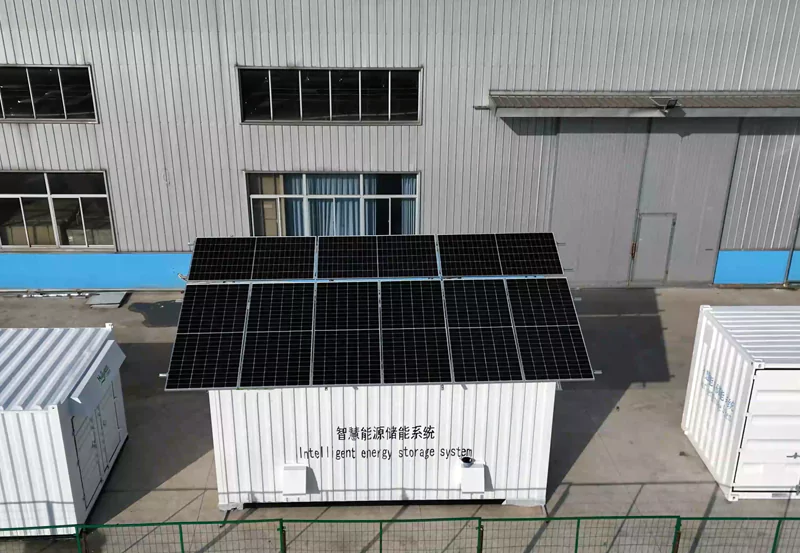
1. Advanced R&D and System Integration
The core value of an integrator is system-level optimization — not just sourcing components, but making them work together efficiently. This requires proprietary technology across four sub-systems:
- BMS (Battery Management System): AI-enhanced algorithms for state-of-charge (SOC) estimation and fault prognosis — improving battery cycle life by up to 20%.
- PCS (Power Conversion System): High-efficiency bidirectional inverters with grid-support functions.
- EMS (Energy Management System): Dynamic charge/discharge strategies for peak shaving, arbitrage, and demand response.
- Thermal Management: Liquid or air cooling designed for -40°C to 60°C operating range.
Multi-energy integration is equally critical. The best integrators can seamlessly couple BESS with solar PV, wind, and diesel generators — enabling solar-storage hybrid configurations that achieve peak shaving and electricity arbitrage simultaneously.
Testing matters. Look for integrators with in-house laboratories certified to global standards. Key tests include:
| Test Category | Standard | What It Proves |
|---|---|---|
| Battery safety | IEC 62619 | Cell-level thermal stability |
| Fire propagation | UL 9540A | No cascading thermal runaway |
| Cycle life | 3,000+ cycles tested | 10+ year design life at 80% DoD |
| Grid compatibility | IEEE 1547 / local codes | Safe interconnection with utility |
2. Full Lifecycle Project Management
A capable integrator manages the entire project from design to decommissioning. This includes three phases:
Customized Solution Design
Different applications demand different designs. Grid-side projects prioritize frequency regulation response rates, while C&I projects focus on ROI and peak-valley arbitrage. Advanced load forecasting models and economic analysis tools ensure the system matches your specific revenue model.
Engineering Execution (EPC Turnkey)
- Electrical design: High/low-voltage distribution, fire protection, grounding
- Construction management: BIM modeling reduces layout conflicts and shortens timelines by up to 30%
- Grid integration: Utility coordination for protection settings and power quality testing
Digital O&M Platform
Modern integrators use IoT and cloud computing for predictive maintenance. Real-time monitoring of SOC, SOH (state-of-health), and temperature — combined with AI-based degradation forecasting — can reduce fault response time from 24 hours to under 15 minutes.
3. Compliance and Risk Management
Regulatory compliance and safety are non-negotiable. A professional integrator helps you navigate three risk categories:
Regulatory Compliance
Projects must comply with national energy storage policies and local incentive structures (peak-valley tariffs, capacity compensation). A knowledgeable integrator designs the system to maximize policy-driven revenue.
Safety Risk Management
Lithium battery thermal runaway is the primary safety concern. Multi-layer protection is essential:
- Cell level: LFP (lithium iron phosphate) chemistry — inherently more stable than NMC, with failure probability below 0.1%
- Module level: Fire sprinklers, explosion-proof pressure relief valves, smoke detectors
- System level: Physical separation, fire-resistant enclosures, emergency shutdown protocols
Financial and Insurance Solutions
Top integrators offer flexible financing models (PPP, leasing) and product liability insurance to minimize capital risk — particularly valuable for large-scale projects where upfront investment is significant.
4. Innovation Ecosystem and Global Reach
Energy storage technology evolves rapidly. Your integrator should have both a technology roadmap and a partnership network that keeps your system competitive:
| Dimension | What to Look For |
|---|---|
| Next-gen R&D | Investment in solid-state, sodium-ion, and flow battery technologies — ensures long-term competitiveness |
| Supply chain | Strategic partnerships with tier-1 manufacturers (CATL, BYD for cells; Huawei, Sungrow for inverters) and open API interfaces |
| Global certification | CE for Europe, UL for the US — with localized service teams and 24/7 support across regions |
| Industry synergy | R&D center collaborations and standards committee participation — signals industry leadership |
5. Customer-Centric Service
The best integrators treat your project as a long-term partnership, not a one-time transaction. Two indicators separate top-tier integrators from the rest:
End-to-End Service Guarantee
From initial design through decommissioning, a “one-stop” approach includes battery cascade utilization (repurposing degraded cells for secondary applications), reducing total lifecycle cost by up to 40% based on circular economy principles.
Transparent Communication
Real-time project dashboards and automated performance reports build trust. Look for integrators that provide:
- 24/7 accessible monitoring portal with SOC, power flow, and alarm history
- Monthly performance analytics reports (revenue, availability, degradation rate)
- Proactive maintenance notifications with recommended actions
- Clear escalation procedures with guaranteed response times
Integrators that prioritize transparency tend to earn repeat business — industry data shows repeat order rates exceeding 65% for integrators with open communication practices.
BESS Integrator Evaluation Checklist
Use this practical checklist when comparing suppliers. A strong integrator should check at least 8 of 10:
| # | Evaluation Criterion | Verify |
|---|---|---|
| 1 | Proprietary BMS with AI algorithms (ask for cycle life data) | ☐ |
| 2 | In-house testing lab with IEC 62619 / UL 9540A certification | ☐ |
| 3 | Solar-wind-storage hybrid project experience | ☐ |
| 4 | EPC turnkey capability with BIM engineering | ☐ |
| 5 | Cloud-based digital O&M platform with real-time monitoring | ☐ |
| 6 | LFP cell chemistry with multi-layer fire protection | ☐ |
| 7 | Partnerships with tier-1 battery/inverter manufacturers | ☐ |
| 8 | CE and UL certifications for your target market | ☐ |
| 9 | Local service team with documented response-time SLA | ☐ |
| 10 | Reference projects with verifiable performance data | ☐ |
FAQ
What does a BESS integrator do?
A BESS integrator designs, engineers, assembles, commissions, and maintains battery energy storage systems. Beyond combining batteries and inverters, they handle system-level optimization across BMS, PCS, EMS, thermal management, grid compliance, safety certification, and long-term operation and maintenance.
How do I evaluate a BESS integrator before signing a contract?
Check five areas: (1) proprietary R&D in BMS/PCS/EMS integration, (2) full lifecycle project management from design to O&M, (3) compliance with IEC 62619, UL 9540A, and local grid codes, (4) partnerships with tier-1 battery and inverter manufacturers, and (5) a documented service network with response-time guarantees. Request reference projects with performance data.
What certifications should a BESS integrator have?
Key certifications include IEC 62619 (battery safety), UL 9540A (thermal runaway testing), UN 38.3 (transport), CE marking for the EU market, and UL listing for the US market. For grid-connected projects, verify compliance with IEEE 1547 and local utility interconnection requirements.
What is the difference between a BESS manufacturer and a BESS integrator?
A manufacturer produces individual components (battery cells, modules, inverters). An integrator combines these components into a complete, certified, grid-ready system — handling system design, software integration, safety engineering, commissioning, and O&M. Some companies, like CATL and BYD, do both, while pure integrators source best-in-class components from multiple suppliers.
How much does BESS integration cost in 2026?
Integration services typically add 10-15% to total system cost. For a 1 MW / 2 MWh LFP system priced at $195-560/kWh in 2026, integration costs range from $40,000 to $170,000 depending on project complexity, grid requirements, and the level of customization needed. See our project case studies for real-world cost examples.
Conclusion
Choosing the right BESS integrator is a decision that affects your project’s performance, safety, and profitability for 10+ years. By evaluating R&D depth, project management capability, compliance rigor, innovation ecosystem, and service transparency — you can identify partners who will deliver reliable, future-proof energy storage systems.
Use the evaluation checklist above, request verifiable performance data from reference projects, and don’t hesitate to ask tough questions about safety certifications and O&M response times. The right integrator will welcome the scrutiny.
Ready to discuss your BESS project? Contact Huijue Solar for a customized system design and quotation.