
 chinahuijue@gmail.com
 +1 (702) 204-9855
Sodium-Ion Batteries in 2026: Cost, Technology & Market Impact Guide
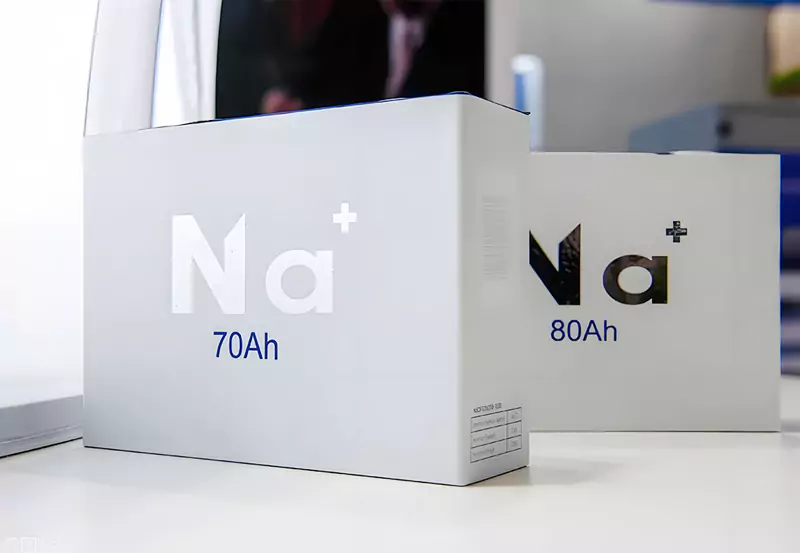
The sodium-ion battery has emerged as one of the most disruptive technologies in the new energy sector in 2026. With cell costs 30-35% below lithium iron phosphate (LFP) and raw material abundance that eliminates supply chain bottlenecks, sodium-ion is reshaping energy storage economics, electric vehicle markets, and microgrid deployment worldwide. This guide examines the technology, cost structure, market impact, and future roadmap of sodium-ion batteries—providing the data project developers and investors need to evaluate this rapidly maturing technology. For those planning integrated cabinet energy storage systems, sodium-ion represents a compelling alternative for cost-sensitive applications.
Quick Answer: Sodium-Ion vs Lithium-Ion Battery Comparison (2026)
| Parameter | Sodium-Ion (Na-ion) | LFP (Lithium Iron Phosphate) | NMC (Nickel Manganese Cobalt) |
|---|---|---|---|
| Cell cost (CNY/Wh) | 0.35-0.45 | 0.55-0.65 | 0.65-0.80 |
| System cost (CNY/Wh) | 0.8-1.0 | 1.2-1.5 | 1.4-1.8 |
| Energy density (Wh/kg, cell) | 140-160 | 180-200 | 230-260 |
| Energy density (Wh/kg, pack) | 100-120 | 140-160 | 180-200 |
| Cycle life | 6,000-8,000 | 6,000-10,000 | 2,000-4,000 |
| Operating temp range | -40°C to 80°C | -20°C to 60°C | -20°C to 55°C |
| Capacity at -40°C | ≥80% | 40-50% | 30-40% |
| Raw material abundance | Unlimited (sodium = 2.6% of Earth’s crust) | Limited (lithium reserves concentrated) | Limited (cobalt/nickel scarce) |
| Safety (thermal runaway) | No risk | Low risk | Moderate-high risk |
1. Sodium-Ion Battery Technology Overview
Sodium-ion batteries operate on the same fundamental principle as lithium-ion batteries—ions shuttle between a cathode and an anode during charge and discharge—but use sodium ions (Na+) instead of lithium ions (Li+). The key technological differences lie in the materials used for each component, which collectively deliver a different cost-performance profile optimized for stationary and low-mobility applications.
1.1 Component Architecture
| Component | Sodium-Ion | Lithium-Ion (LFP) | Cost Advantage |
|---|---|---|---|
| Cathode | Layered sodium transition metal oxide (NaₓMO₂) / Prussian blue analogue | Lithium iron phosphate (LiFePO₄) | 30-40% cheaper (no Li, no Co) |
| Anode | Hard carbon (from biomass or petroleum pitch) | Graphite | 20-30% cheaper |
| Electrolyte | NaPF₆ in carbonate solvents | LiPF₆ in carbonate solvents | 15-25% cheaper |
| Separator | Polyethylene/polypropylene (same as Li-ion) | Polyethylene/polypropylene | Same cost |
| Current collector (anode) | Aluminum (both sides) | Copper (anode side) | 40-50% cheaper (Al vs Cu) |
| Cell format | Cylindrical 26700 / prismatic | Cylindrical / prismatic / pouch | Same manufacturing equipment |
A critical advantage: sodium-ion batteries use aluminum current collectors on both electrodes, whereas lithium-ion requires copper on the anode side. Since aluminum costs roughly one-third of copper, this alone reduces material costs significantly. Additionally, existing lithium-ion production lines can be retrofitted for sodium-ion manufacturing with minimal capital investment.
1.2 Market Forecast 2024-2030
| Year | Global Production (GWh) | Avg Cell Price (CNY/Wh) | Market Share (all batteries) | Key Milestone |
|---|---|---|---|---|
| 2024 | 5 | 0.60 | 0.3% | First GWh-scale production lines |
| 2025 | 15 | 0.50 | 0.8% | Commercial EV fleet trials |
| 2026 | 35 | 0.40 | 1.5% | Grid storage cost parity achieved |
| 2027 | 80 | 0.35 | 3.0% | Residential storage adoption |
| 2028 | 150 | 0.30 | 5.0% | 200 Wh/kg cell density achieved |
| 2030 | 300+ | 0.25 | 8-10% | Mainstream stationary storage chemistry |
2. Cost Reduction & Economic Viability in Energy Storage
The most immediate impact of sodium-ion technology is on energy storage project economics. The 30-35% cost reduction at the cell level translates to even greater savings at the system level, where balance-of-plant costs also benefit from sodium-ion’s simpler thermal management requirements.
2.1 Cost Breakdown: Cell to System
| Cost Component | Na-ion (CNY/Wh) | LFP (CNY/Wh) | Difference |
|---|---|---|---|
| Cathode material | 0.08 | 0.15 | -47% |
| Anode material (hard carbon vs graphite) | 0.06 | 0.08 | -25% |
| Electrolyte | 0.05 | 0.07 | -29% |
| Separator | 0.04 | 0.04 | 0% |
| Current collectors (Al/Al vs Al/Cu) | 0.03 | 0.06 | -50% |
| Cell manufacturing | 0.09 | 0.10 | -10% |
| Pack assembly + BMS | 0.15 | 0.15 | 0% |
| System integration (PCS, thermal, enclosure) | 0.20 | 0.25 | -20% |
| Total system cost | 0.70 | 0.90 | -22% |
2.2 Case Study: 200MW Wind Power + Storage Project
| Parameter | Na-ion System | LFP System | Difference |
|---|---|---|---|
| Wind farm capacity | 200 MW | 200 MW | — |
| Storage capacity | 100 MW / 400 MWh | 100 MW / 400 MWh | — |
| Battery system cost (CNY million) | 280 | 360 | -22% |
| Thermal management cost | 15 (passive cooling sufficient) | 30 (active liquid cooling) | -50% |
| Total CAPEX (CNY million) | 320 | 420 | -24% |
| LCOE (CNY/kWh) | 0.25 | 0.40 | -37% |
| Payback period | 5.5 years | 7.5 years | -2 years |
| 20-year net profit (CNY million) | 185 | 95 | +95% |
2.3 20-Year Lifecycle Cost Comparison
| Cost Item (20-year) | Na-ion System | LFP System |
|---|---|---|
| Initial investment (100 MWh) | CNY 70M | CNY 90M |
| Annual O&M (avg) | CNY 1.5M | CNY 2.0M |
| Battery replacement (year 12-15) | CNY 35M (one replacement) | CNY 45M (one replacement) |
| Recycling value (end of life) | +CNY 8M (simpler recycling) | +CNY 5M |
| Total 20-year cost | CNY 127M | CNY 195M |
| Cost per kWh (20-year) | CNY 0.35/kWh | CNY 0.54/kWh |
Over a 20-year lifecycle, sodium-ion systems demonstrate 35% lower total costs and a 2-year shorter investment payback period, making them economically superior for grid-scale storage, peak shaving, backup power, and renewable integration.
3. Transforming the Electric Vehicle Market
While sodium-ion batteries cannot match the energy density of high-nickel NMC for long-range passenger EVs, they are finding rapid adoption in two critical segments: low-speed electric vehicles (two-wheelers, three-wheelers, micro-EVs) and hybrid vehicles.
3.1 Low-Speed EV: Three-Way Technology Comparison
| Parameter | Na-ion | LFP | Lead-Acid |
|---|---|---|---|
| Energy density (Wh/kg) | 140 | 180 | 35-40 |
| Winter range retention | 90% (at -20°C) | 65-70% | 50-55% |
| Charging time (0-80%) | 15 min | 30-40 min | 6-8 hours |
| Cycle life | 6,000+ | 3,000-5,000 | 500-800 |
| Battery cost (CNY/kWh) | 400 | 600 | 350 |
| Vehicle retail price impact | -15% vs LFP | Baseline | -40% vs LFP |
| Weight (5 kWh pack) | 36 kg | 28 kg | 125 kg |
| Replacement frequency (5-year) | None | None | 2-3 times |
Sodium-ion-powered two-wheelers can achieve a 40% increase in winter range and a 15% reduction in retail prices compared to LFP equivalents—while eliminating the frequent replacement and environmental hazards of lead-acid batteries. This combination is driving rapid adoption in Southeast Asia, India, and Africa.
3.2 Hybrid Vehicle Fuel Consumption Comparison
| Hybrid Configuration | Battery Type | Capacity (kWh) | Fuel Consumption (L/100km) | Cost Premium (CNY) |
|---|---|---|---|---|
| Conventional hybrid (no plug-in) | NiMH | 1.5 | 4.5 | Baseline |
| PHEV (30km range) | LFP | 8 | 4.2 | +15,000 |
| PHEV (50km range) | LFP | 12 | 4.0 | +22,000 |
| Na-ion hybrid (30km range) | Na-ion | 8 | 4.0 | +8,000 |
| Na-ion hybrid (50km range) | Na-ion | 12 | 3.5 | +12,000 |
| Na-ion hybrid (80km range) | Na-ion | 18 | 3.5 | +18,000 |
Integrating sodium-ion batteries into hybrid systems could reduce fuel consumption to 3.5 L/100km—matching or exceeding the efficiency of LFP-based plug-in hybrids—at a significantly lower manufacturing cost. The cost-effectiveness and moderate performance of sodium-ion chemistry make it ideal for hybrid applications where extreme energy density is not required.
4. Distributed Energy & Microgrid Development
Sodium-ion batteries are uniquely positioned to accelerate the deployment of distributed energy systems and microgrids. Their combination of low cost, wide temperature tolerance, and safety makes them particularly suitable for decentralized applications where maintenance access may be limited.
4.1 Household Energy Storage: Regional Price Outlook
| Region | Current System Price (CNY/Wh) | Na-ion Projected Price | Annual Demand Growth | Key Driver |
|---|---|---|---|---|
| Europe | 2.0-3.0 | 1.2 | 45% | Energy independence + high electricity prices |
| Africa | 1.8-2.5 | 1.0 | 35% | Grid instability + off-grid demand |
| Southeast Asia | 1.5-2.2 | 0.9 | 40% | Island electrification + solar adoption |
| Middle East | 1.8-2.5 | 1.1 | 30% | Vision 2030 initiatives + solar megaprojects |
| North America | 2.2-3.5 | 1.4 | 25% | ITC tax credit + backup power demand |
At CNY 1.2/Wh, sodium-ion household storage systems become economically viable without subsidies in most markets. In Europe, this price point is projected to drive 45% annual demand growth, enabling households to achieve energy self-sufficiency at dramatically lower costs. For residential energy storage solutions, sodium-ion offers a path to mass-market affordability.
4.2 Microgrid Deployment Cost Comparison
| Microgrid Type | Capacity | LFP System Cost (CNY) | Na-ion System Cost (CNY) | Savings |
|---|---|---|---|---|
| Remote island | 500 kW / 2 MWh | 2.8M | 2.0M | -29% |
| Industrial park | 2 MW / 8 MWh | 10.5M | 7.5M | -29% |
| Rural village | 100 kW / 400 kWh | 560K | 400K | -29% |
| Military base | 5 MW / 20 MWh | 26M | 18.5M | -29% |
| Commercial building | 300 kW / 1.2 MWh | 1.7M | 1.2M | -29% |
Reduced battery costs will lower microgrid construction expenses by approximately 29%, accelerating adoption in remote areas, islands, and industrial parks where reliable energy supply was previously cost-prohibitive.
5. Reshaping Competitive Dynamics in the New Energy Industry
The rise of sodium-ion batteries is not about replacing lithium-ion—it is about creating a complementary technology ecosystem where each chemistry serves its optimal use case. This complementary rivalry will drive innovation and cost optimization across both technologies.
5.1 Application Suitability Matrix
| Application | Na-ion Suitability | LFP Suitability | NMC Suitability | Recommended Chemistry |
|---|---|---|---|---|
| Grid-scale storage | ★★★★★ | ★★★★☆ | ★★☆☆☆ | Na-ion |
| Residential storage | ★★★★☆ | ★★★★★ | ★★☆☆☆ | LFP (transitioning to Na-ion) |
| Commercial/Industrial | ★★★★★ | ★★★★☆ | ★★★☆☆ | Na-ion |
| Low-speed EVs | ★★★★★ | ★★★☆☆ | ★★☆☆☆ | Na-ion |
| Premium EVs (400km+) | ★☆☆☆☆ | ★★★☆☆ | ★★★★★ | NMC |
| Hybrid vehicles | ★★★★☆ | ★★★☆☆ | ★★★★☆ | Na-ion or NMC |
| Microgrid | ★★★★★ | ★★★★☆ | ★★☆☆☆ | Na-ion |
| Backup power | ★★★★★ | ★★★★☆ | ★★★☆☆ | Na-ion |
5.2 Industry Chain Structure
| Chain Segment | Key Materials/Products | Cost Share | Growth Opportunity |
|---|---|---|---|
| Upstream: Raw materials | Sodium carbonate, hard carbon precursors (biomass), transition metals (Mn, Fe) | 25% | Sodium salt extraction is commodity-level cheap |
| Upstream: Electrode materials | Layered oxide cathodes, Prussian blue analogues, hard carbon anodes | 30% | Biomass-derived hard carbon opens rural supply chains |
| Midstream: Cell manufacturing | Cylindrical/prismatic cells, compatible with Li-ion equipment | 25% | Existing Li-ion factories can retrofit at low cost |
| Midstream: Pack assembly | Module assembly, BMS, thermal management | 10% | Simpler thermal management reduces pack cost |
| Downstream: System integration | Energy storage systems, EV packs, microgrid solutions | 7% | System-level cost savings attract integrators |
| Downstream: Recycling | Sodium recovery, material reuse | 2% | Simpler chemistry = easier recycling |
| R&D | Next-gen cathodes, solid-state Na-ion, electrolyte optimization | 1% | Government grants accelerating in China, EU, US |
6. Technology Roadmap & Innovation
Cost reductions will incentivize R&D efforts that further expand sodium-ion applicability. The technology roadmap targets three key performance dimensions: energy density, low-temperature capability, and charging speed.
6.1 Performance Metrics Roadmap: 2026 → 2028 → 2030
| Metric | 2026 (Current) | 2028 (Target) | 2030 (Target) | Enabling Technology |
|---|---|---|---|---|
| Cell energy density | 140-160 Wh/kg | 180-200 Wh/kg | 220+ Wh/kg | Layered oxide cathode + hard carbon optimization |
| Pack energy density | 100-120 Wh/kg | 140-160 Wh/kg | 170+ Wh/kg | CTP/CTB integration |
| Capacity at -40°C | ≥80% | ≥88% | ≥92% | Electrolyte additive engineering |
| Fast charging (0-80%) | 15 min | 10 min | 8 min | 3D anode architecture |
| Cycle life | 6,000-8,000 | 8,000-10,000 | 10,000-12,000 | Electrolyte stability + cathode coating |
| Cell cost (CNY/Wh) | 0.35-0.45 | 0.28-0.35 | 0.20-0.25 | Scale economies + material optimization |
| Production capacity (GWh) | 35 | 150 | 300+ | Multi-GWh factory investments |
6.2 Cross-Industry Innovation Impact
| Domain | Innovation Direction | Impact Timeline | Market Size |
|---|---|---|---|
| Energy storage system design | Modular Na-ion architectures, simplified thermal management, passive cooling | 2026-2027 | CNY 50B+ by 2030 |
| EV platform optimization | Dedicated Na-ion platforms for low-speed EVs, chassis integration | 2026-2028 | CNY 30B+ by 2030 |
| Smart grid management | AI-driven dispatch with Na-ion response characteristics, virtual power plants | 2027-2030 | CNY 15B+ by 2030 |
| Charging infrastructure | Ultra-fast Na-ion compatible chargers, battery swap stations | 2027-2030 | CNY 10B+ by 2030 |
| Recycling & circular economy | Simplified Na-ion recycling processes, direct cathode regeneration | 2028-2030 | CNY 5B+ by 2030 |
7. Sustainability & Resource Security
Beyond economics, sodium-ion batteries address two critical sustainability challenges: resource security and environmental footprint. These advantages align with global decarbonization goals and green manufacturing mandates.
7.1 Resource Availability: Sodium vs Lithium
| Parameter | Sodium (Na) | Lithium (Li) |
|---|---|---|
| Crustal abundance | 2.6% (6th most abundant element) | 0.0065% (25th most abundant) |
| Geographic distribution | Worldwide (sea salt, soda ash deposits) | Concentrated in Australia, Chile, Argentina, China (Lithium Triangle) |
| Extraction method | Solar evaporation of brine / mining soda ash | Hard rock mining or brine extraction (water-intensive) |
| Water usage (L per kg) | ~100 (soda ash mining) | ~500-2,000 (brine extraction) |
| Political risk index | Very low (widely distributed) | Moderate-high (concentration in few countries) |
| Price volatility | Low (commodity chemical) | High (spot price varied 5x in 2021-2023) |
| Long-term supply security | Effectively unlimited | Limited (estimated 80-200 years at current consumption) |
7.2 Environmental Impact Comparison
| Environmental Metric | Na-ion Battery | LFP Battery | NMC Battery |
|---|---|---|---|
| CO₂ emissions (kg/kWh cell) | 30-40 | 50-65 | 70-100 |
| Water consumption (L/kWh) | 50 | 150 | 200 |
| Land use (m²/kWh) | 0.8 | 1.2 | 1.5 |
| Toxic materials | None (no Co, Ni, Li) | Low (Li only) | High (Co, Ni) |
| Thermal runaway risk | None | Low | Moderate-high |
| Recycling complexity | Simple (fewer materials, no Li recovery needed) | Moderate (Li recovery) | Complex (Co, Ni, Li separation) |
| Recycling recovery rate | 90-95% | 85-90% | 80-85% |
| Biodiversity impact | Minimal (no new mining frontiers) | Moderate (lithium brine extraction affects wetlands) | High (cobalt mining in DRC) |
Sodium-ion batteries involve less environmentally damaging extraction processes compared to lithium-ion batteries. Their simpler chemistry enables recycling pathways with 90-95% material recovery, enhancing circular economy potential and aligning with global decarbonization and green manufacturing goals.
8. Key Players in the Sodium-Ion Battery Industry
| Company | HQ | Technology | Production Capacity (2026) | Key Application |
|---|---|---|---|---|
| CATL | China | Prussian blue analogue cathode | 15 GWh (operating) | EV + grid storage |
| BYD | China | Layered oxide cathode | 10 GWh (operating) | EV + stationary |
| HiNa Battery | China | Layered oxide + hard carbon | 5 GWh (operating) | Low-speed EV + storage |
| Natron Energy | USA | Prussian blue (both electrodes) | 2 GWh (ramping) | Industrial UPS + data center |
| Faradion (Reliance) | India/UK | Layered oxide | 1 GWh (ramping) | EV + commercial storage |
| Altris | Sweden | Prussian blue cathode | 0.5 GWh (pilot) | Residential storage |
| Huijue Group | China | Na-ion integration (LFP + Na-ion systems) | System integrator | C&I + utility storage |
9. Huijue Group: Energy Storage Solutions
Huijue Group specializes in smart energy storage solutions designed to leverage the latest battery technologies—including sodium-ion where appropriate—for commercial, industrial, and utility-scale applications. Our cabinet energy storage systems feature high-safety battery chemistry, integrated BMS and EMS intelligent management, and modular expansion.
| Model | Capacity | Power | Voltage | Cycles | Application |
|---|---|---|---|---|---|
| HJ-G0025-0050F | 25-50 kWh | 25-50 kW | 380V | 6,000+ | Small C&I |
| HJ-G0050-0157L | 157 kWh | 50 kW | 380V | 8,000+ | Commercial |
| HJ-G0050-0209L | 209 kWh | 50-60 kW | 380V | 8,000+ | Commercial/Industrial |
| HJ-G0050-0225F | 225 kWh | 50-100 kW | 380V | 8,000+ | Industrial |
| HJ-G0110-0241 | 241 kWh | 110 kW | 380V | 8,000+ | Industrial |
| HJ-G0125-0261 | 261 kWh | 125 kW | 380V | 8,000+ | Industrial/Utility |
| HJ-G0215-0418 | 418 kWh | 215 kW | 380V | 8,000+ | Utility-scale |
Every system includes cloud-based monitoring, remote diagnostics, and automatic firmware updates. Our engineering team can help design the optimal battery-storage combination—whether using LFP for high-density applications or evaluating sodium-ion for cost-optimized projects.
Ready to Design Your Energy Storage System?
Whether you’re planning a 50 kWh commercial backup system or a 100 MWh grid-scale project, Huijue’s engineering team can help you select the right battery chemistry and system architecture.
📧 Contact Huijue Group for a free consultation and customized quotation.
Frequently Asked Questions
Q1: What is a sodium-ion battery and how does it compare to lithium-ion?
A sodium-ion battery uses sodium ions (Na+) as charge carriers instead of lithium ions. Compared to lithium-ion, sodium-ion batteries offer 30-35% lower manufacturing costs, better cold-climate performance (80%+ capacity at -40°C), and use abundant raw materials. However, they have lower energy density (140-160 Wh/kg vs 200-260 Wh/kg for LFP). Sodium-ion is ideal for stationary energy storage and low-speed EVs, while lithium-ion remains preferred for high-energy-density applications.
Q2: How much cheaper are sodium-ion batteries in 2026?
In 2026, sodium-ion battery cell costs are approximately CNY 0.35-0.45/Wh, compared to CNY 0.55-0.65/Wh for LFP cells—a 30-35% reduction. At the system level, a sodium-ion energy storage system costs CNY 0.8-1.0/Wh vs CNY 1.2-1.5/Wh for lithium-ion. Over a 20-year lifecycle, sodium-ion systems show 35% lower total costs and a 2-year shorter payback period.
Q3: Can sodium-ion batteries be used for commercial energy storage systems?
Yes. Sodium-ion batteries are well-suited for commercial and industrial energy storage due to their low cost, excellent safety profile (no thermal runaway risk), wide operating temperature range (-40°C to 80°C), and 6,000+ cycle life. They are particularly effective for grid peak shaving, renewable integration, backup power, and microgrid applications where space constraints are less critical than in EVs.
Q4: What is the energy density of sodium-ion batteries in 2026?
As of 2026, commercial sodium-ion batteries achieve 140-160 Wh/kg at the cell level and 100-120 Wh/kg at the pack level. R&D targets include exceeding 200 Wh/kg by 2028 through advanced cathode materials (layered oxides) and hard carbon anode optimization. While this trails LFP (180-200 Wh/kg cell), it is sufficient for stationary storage and low-speed EVs.
Q5: Are sodium-ion batteries better for cold climates?
Yes. Sodium-ion batteries maintain over 80% capacity at -40°C, compared to LFP batteries which typically lose 40-60% capacity at the same temperature. This makes sodium-ion ideal for cold-climate energy storage in regions like Northern Europe, Canada, Russia, and high-altitude installations. The superior low-temperature performance also translates to 40% increased winter range for low-speed EVs.
Q6: When will sodium-ion batteries be commercially viable at scale?
Sodium-ion batteries are already in early commercial production in 2026, with CATL, BYD, and HiNa Battery operating GWh-scale production lines. Industry forecasts project 50+ GWh of sodium-ion production capacity by 2027 and 200+ GWh by 2030. Commercial viability for grid storage and low-speed EVs has been achieved in 2026; broader adoption in commercial EVs and residential storage is expected by 2028-2030.
Conclusion
The sodium-ion battery is transforming the new energy landscape in 2026 by delivering 30-35% cost reductions, superior cold-climate performance, and unparalleled resource security. For energy storage projects, this means LCOE reductions of 37% and payback periods shortened by 2 years. For the EV market, it enables affordable low-speed electric vehicles with 40% better winter range. For microgrids and distributed energy, it brings commercial viability to previously cost-prohibitive deployments.
As the technology matures toward 200+ Wh/kg energy density by 2028, sodium-ion will expand from stationary and low-speed applications into broader markets. The complementary competition with lithium-ion will drive innovation across the entire battery industry, benefiting end users with better performance at lower costs.
For the best project outcomes, pair the right battery chemistry with a proven system integrator. Contact Huijue Group to design a complete energy storage solution tailored to your specific requirements.