
 chinahuijue@gmail.com
 +1 (702) 204-9855
Commercial and Industrial Energy Storage Market: Growth Drivers, Profit Models and Future Trends
As global electricity demand continues to rise and renewable energy adoption accelerates, commercial and industrial energy storage systems (C&I ESS) are becoming an essential solution for businesses seeking lower energy costs and greater power reliability.
From factories and industrial parks to commercial buildings and renewable energy projects, battery storage systems are transforming the way companies manage electricity consumption.
Driven by declining battery costs, supportive energy policies and diversified revenue models, the global C&I energy storage market is entering a new stage of rapid growth.
Market Growth: Why C&I Energy Storage Is Expanding Rapidly
* Market size: According to Dataintelo’s report, the global industrial and commercial energy storage market will be approximately $15 billion in 2023, and is expected to grow to $45 billion by 2032 at a compound annual growth rate (CAGR) of 12.5%.
* Installed capacity: TrendForce expects the global installed capacity of new energy storage to reach 86 GW/221 GWh in 2025, a 27%/36% year-on-year growth from 2024, with industrial and commercial side energy storage playing an important role.
* Segmented market performance (e.g., US market)
According to the U.S. Energy Storage Monitor report jointly published by the American Council for Clean Energy (ACP) and Wood Mackenzie, the U.S. energy storage market (utility, distributed, commercial, and industrial) will add about 15.2 GW/48.7 GWh of new installations in 2025, of which:
Utility side: expected to grow by 22%, accounting for the highest share;
Distributed energy storage: most volatile by policy, incentive adjustment;
Commercial and industrial side: remains robust, with new installations of about 0.4 GW/0.8 GWh, up about 11% year-on-year.
* Global market performance
According to Wood Mackenzie Q2 2024 “Global Energy Storage Market Outlook”, as of the end of 2024, the global (except pumped storage) cumulative installed capacity of 159 GW/358 GWh, it is expected that from 2024-2033 will be added another 926 GW/2 789 GWh, global energy storage is moving towards a multi-TW era.
These data show that, with the improvement of technological maturity and cost continuing to decline, the installed base of industrial and commercial energy storage will usher in a significant increase in the coming year.
The continuous decline in lithium battery costs has significantly improved the investment return of commercial energy storage projects.
Lower costs for battery cells, PCS, BMS and EMS technologies allow businesses to deploy larger storage systems with shorter payback periods.
Global Policies Accelerate Commercial Energy Storage Deployment
- the United States
* Inflation Reduction Act (IRA) continues to provide up to 30% investment tax credit (ITC), and additional incentives for domestic manufacturing and low-income community projects.
* FERC Order 841 pushes to open electricity markets to energy storage and encourages storage participation in frequency regulation and capacity markets.
* 3.8 GW of new energy storage in the U.S. in Q3 2024, up 80% year-over-year, with nearly 12 GW installed annually, an all-time high.
- China
* The 14th Five-Year Plan puts new energy storage as a key development target, proposing that by 2025, the installed capacity of energy storage will reach 30 million kilowatts (GW).
* Multi-provincial tariff incentives and capacity market construction to accelerate the industrial and commercial side of the energy storage system landing.
- Europe
In Europe, rising electricity prices and increasing renewable energy penetration are driving demand for commercial battery storage systems. Businesses are using C&I ESS to reduce energy costs and improve energy independence.
Germany, the United Kingdom and other countries are to launch green hydrogen, energy storage distribution networks spread subsidies to help enterprises reduce construction costs.
- Developing countries
* The International Energy Agency (IEA) expects global clean energy investment to reach US$2.2 trillion in 2025, of which about US$66 billion will be invested in energy storage, highlighting the confidence of international capital in the profitability prospects of energy storage.
Policy dividends are stacking; industrial and commercial users can receive multiple incentives to significantly improve project feasibility and return on investment.
Market Supply and Demand: From Cost Reduction to Real Business Demand
* Supply side: with the expansion of battery manufacturing capacity (battery factories in China, South Korea, and Europe continue to come on stream), the cost of energy storage systems has dropped from US$780/kWh in 2013 to US$139/kWh in 2023, a drop of over 80%.
* Demand side: the industrial and commercial power consumption side is facing increasingly severe peak and valley electricity price difference, demand charge, and power limit assessment pressure, especially in manufacturing parks, data centres, charging stations, and other high-energy-consumption scenarios. The demand for energy storage has surged.
* Grid resilience needs: the high penetration of new energy leads to more complex grid regulation, industrial and commercial energy storage can provide “on-site frequency regulation”, “edge standby”, and other services to alleviate the pressure on the power grid.
From a comprehensive point of view, under the joint effect of cost reduction and diversified demand, the supply and demand sides are fast docking, and the market is gradually shifting from “supply-driven” to “demand-pulled”.
How Commercial Energy Storage Creates Business Value
- Peak Shaving and Load Shifting
Commercial users can charge batteries when electricity prices are low and discharge during expensive peak periods, reducing electricity costs and improving energy efficiency.
- Solar + Storage Optimization
When combined with photovoltaic systems, energy storage allows businesses to maximize solar self-consumption and reduce dependence on grid electricity.
- Demand Response
* Third-party energy management companies (ESCOs) help commercial and industrial customers to achieve “zero threshold” deployment and reduce capital pressure through the “zero-investment power purchase share” model.
* Multi-User Virtual Power Plant (VPP) model, which integrates decentralised industrial and commercial energy storage assets to obtain higher premiums in the electricity market. 4.
- Virtual Power Plants
* Energy storage systems can be linked to carbon trading platforms to realise carbon emission reductions and gain carbon credits by reducing high-carbon power purchases.
Diversified profit model, so that industrial and commercial energy storage projects not only have the function of cost saving, but also gradually become a new profit growth point.
Why Businesses Are Investing in C&I Energy Storage
| Business Challenge | Energy Storage Solution |
|---|---|
| High electricity bills | Peak shaving |
| Solar energy waste | Solar self-consumption |
| Grid instability | Backup power |
| Increasing energy demand | Load management |
| Carbon reduction targets | Renewable integration |
Huijue Commercial Energy Storage Solutions
Huijue Group provides advanced commercial and industrial energy storage solutions designed for factories, industrial parks, renewable energy projects and microgrid applications.
Our C&I ESS solutions integrate:
• High-safety lithium iron phosphate batteries
• Liquid cooling thermal management
• Intelligent EMS platform
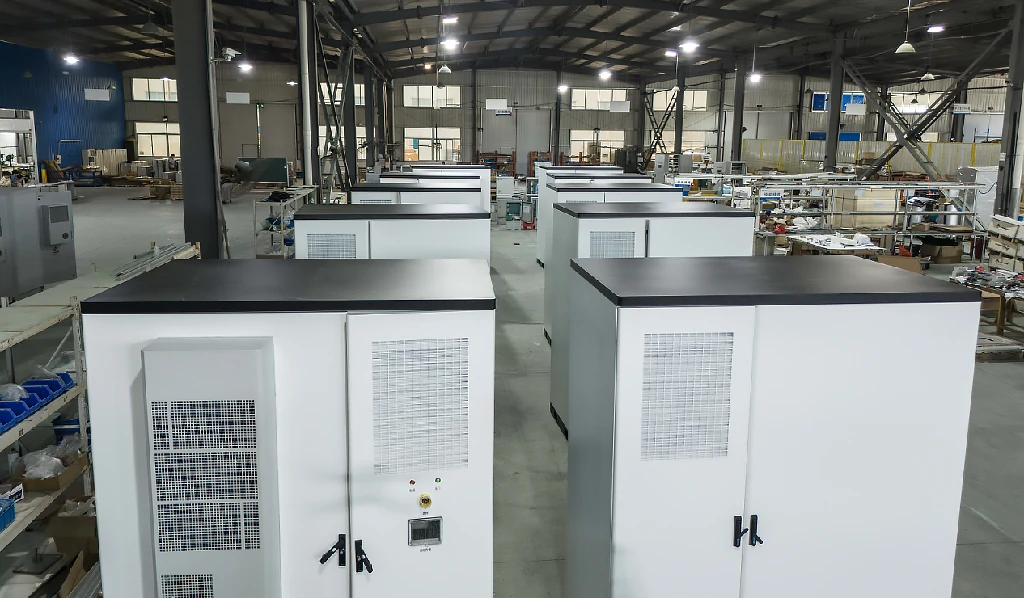
• Modular energy storage cabinets
• Remote monitoring and operation management
By combining safety, efficiency and intelligent control, Huijue helps businesses reduce electricity costs and build more reliable energy systems.
Frequently Asked Questions
1. What is commercial and industrial energy storage?
Commercial and industrial energy storage refers to battery systems installed for businesses, factories and industrial facilities to manage electricity usage, reduce costs and improve energy reliability.
2. Is C&I energy storage profitable?
Profitability mainly comes from peak shaving, time-of-use electricity optimization, demand charge reduction and renewable energy integration.
3. What industries benefit most from energy storage?
Common applications include manufacturing plants, warehouses, data centers, charging stations and commercial buildings.
4. Can C&I energy storage work with solar power?
Yes. Solar-plus-storage systems allow businesses to store excess solar energy and use it when demand or electricity prices are higher.
5. What battery technology is used in commercial energy storage systems?
Lithium iron phosphate (LiFePO4) batteries are widely used because of their safety, long cycle life and thermal stability.