
 chinahuijue@gmail.com
 +1 (702) 204-9855
Commercial & Industrial BESS: How to Size, Price, and Pay Back in 2026
Commercial battery storage stopped being a pilot project somewhere in 2025. Global installations crossed 100 GW for the year, up 43% from the year before, and the commercial-and-industrial slice is now a real market — roughly $8–11 billion in 2026 by most analyst tallies. Buyers are no longer asking “should we”; they are asking “what size, and what will it cost.” This guide answers both, and it leans on what actual procurement searches show buyers typing in 2026.
The pattern in that search data is blunt. Buyers skip the theory and land on price and capacity: “50kWh battery price,” “100 kWh storage cost,” “battery energy storage system BESS.” In Europe the same intent appears in French — “batterie panneau solaire” — solar-plus-storage queried as one phrase. That tells you the real question is not the chemistry. It is the check and the closet.
Short version before the detail: size from the load, pay from peak shaving and demand charges, expect LFP, and budget a turnkey system at several times the cell price once power conversion, controls, cooling and installation are in. The rest of this article is how to get each number right without over- or under-buying.
Why C&I storage moved from pilot to procurement
Three forces converged in 2025 and did not let go. Electricity tariffs kept climbing in the EU and parts of Asia, net-zero commitments pushed operators to cut diesel and grid draw, and the hardware got cheap enough that the math closed on its own. Wood Mackenzie pegged 2025 global storage growth at 43% on the way past 100 GW of annual installations; the commercial segment is the part now compounding fastest because the projects are smaller and faster to approve than grid-scale.
Analyst consensus puts the C&I storage market at roughly $8–11 billion in 2026, growing 14–17% a year through the early 2030s. That range comes from several research shops that land in the same $7–12 billion band, which is about as tight as energy forecasts get. The buyers behind those numbers are factories, logistics parks, cold chains, data centers and retail chains — not utilities.
What changed for them is simple. A battery used to be a resilience nice-to-have. It is now a line item that shortens payback by trimming the most expensive kilowatt-hours on the bill. The rest of this guide is built around that shift.
Size the load first, not the battery
The most common mistake is picking a round capacity — “give me 100 kWh” — and working backward. Start from the load curve instead. Pull 12 months of interval data from the utility, or at least the last three months, and find two numbers: your daily energy swing and your demand peak, the highest 15-minute draw the meter records.
The demand peak sets your power rating (kW). The daily swing sets your energy rating (kWh). A battery that is too small on power cannot shave the peak; one too small on energy runs flat before the expensive window ends. Both have to clear, or the savings leak out the side you ignored.
Most small sites discover their real need is modest. A convenience store, small workshop or clinic with a 30–60 kW peak and a few hundred kWh of daily swing rarely needs more than 50–100 kWh. A plant with a 300 kW peak and shift load is a different animal, and that is where the sizing table below earns its keep.
Four ways a battery actually pays for itself
A C&I battery is rarely a single-product purchase. It is a platform that monetizes the same electrons four or five different ways, depending on the tariff and the site. Vendors in this space — Hoenergy, GeePower and others — list the same short menu of value streams, because that is what the meters reward.
| Value stream | What it does | Best-fit site | Typical capacity |
|---|---|---|---|
| Peak shaving | Discharges during the costly afternoon block to flatten the load | Factories, cold storage | 100–500 kWh |
| Demand charge management | Cuts the highest 15-min draw that sets the monthly demand fee | Retail, manufacturing | 50–200 kWh |
| Backup / power quality | Rides through outages and voltage dips | Data centers, clinics | 50–300 kWh |
| Solar self-consumption | Stores PV instead of exporting it cheap, uses it after sunset | Any roof with solar | Matches PV 30–100% |
| Microgrid / hybrid | Islands the site with genset or renewable during grid failure | Remote, weak-grid | 200 kWh–1 MWh+ |
Demand charges deserve a word of their own. In many commercial tariffs the single highest 15-minute draw in a billing cycle sets a demand fee charged every month, all year. Shave that one spike and the saving recurs forever. It is the quietest, most reliable payback in the list, and it is why a 50 kWh cabinet can pencil out for a site whose total consumption is far larger.
Sizing by site: 50 kWh to 1 MWh
Capacity tracks the site, not the budget. Below is the working map we use when a buyer opens with a price question and no load data yet. The bands are deliberately wide; the load curve narrows them.
| Site profile | Power (kW) | Energy (kWh) | Common form | Primary payback |
|---|---|---|---|---|
| Small business, clinic, store | 20–60 | 50–100 | Floor or wall cabinet | Demand charge + backup |
| Workshop, supermarket | 60–150 | 100–200 | Outdoor cabinet | Peak shaving |
| Factory, cold chain | 150–500 | 200–500 | Multi-cabinet / small container | Peak shaving + PV |
| Logistics park, campus | 500–1000+ | 1 MWh+ | 20-ft container | Microgrid + arbitrage |
Notice the form factor shifts with capacity. Under about 200 kWh the hardware is a cabinet you bolt to a pad or a wall — the kind of enclosure our energy storage cabinet line is built for. Past 500 kWh it usually becomes a container, because cooling, service access and fire separation stop being optional. Buyers searching “50kWh battery price” and “1 MWh battery” are often four steps apart in engineering, not just in money.
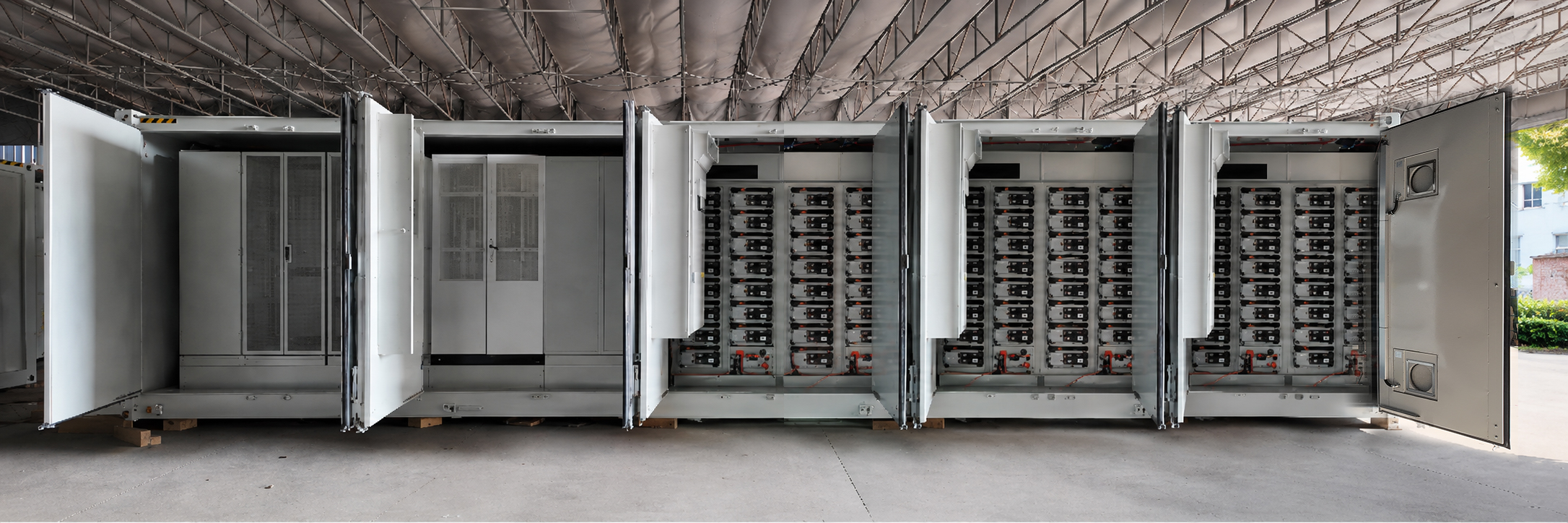
The French-language cluster in procurement search — “batterie panneau solaire,” “batterie pour panneau solaire” — almost always means a small commercial site that already has or wants rooftop PV and wants the battery sized to soak up the midday surplus. For those buyers the right entry point is 50–100 kWh paired with the existing array, not a container.
What a 2026 system actually costs
“How much per kWh” is the question every buyer types, and the honest answer is two numbers. The cell is cheap. The system is not.
BloombergNEF’s LFP cell pricing sat near $84/kWh in early 2026, and LFP now dominates stationary storage because it is safer and cycles longer than nickel chemistries. But a turnkey C&I system is the cell plus a power conversion system (PCS), a battery management and energy management system (BMS/EMS), thermal management, the enclosure, fire safety and labor. Those stacked costs typically push a delivered system to several times the cell price, and the gap widens with harsher sites and stricter codes.
| Cost component | Role | Cost sensitivity |
|---|---|---|
| Battery cells (LFP) | Store energy | Lowest, ~$84/kWh early 2026 (BloombergNEF) |
| PCS / inverter | DC↔AC conversion | High — scales with power rating |
| BMS / EMS | Safety, scheduling, tariff logic | Medium — the software that makes it pay |
| Thermal management | Cooling, lifespan | Medium — higher in hot climates |
| Enclosure & fire safety | IP rating, suppression | Medium — code-driven |
| Install & commissioning | Labor, permits | High — varies by region |
This is why “50kWh battery price” returns such a wide spread. Two quotes for the same nameplate can differ by half, and the difference is almost never the cells. It is the PCS rating, the EMS sophistication, the IP grade of the enclosure and whether the installer is pricing a turnkey job or a bare rack. Read the quote line by line, not the headline number.
Why LFP won the C&I rack
The chemistry question is largely settled for stationary storage. The International Energy Agency puts LFP at roughly 90% of deployed battery storage, and the reasons are practical rather than ideological. LFP tolerates more charge cycles, runs cooler, drops faster in price, and avoids the thermal-runaway reputation that still shadows nickel-based cells in enclosed commercial spaces.
For a battery sitting next to a loaded dock or inside a retail back room, that safety margin is not a footnote. It is what lets the authority having jurisdiction sign off without a fight. When a buyer asks “NMC or LFP,” the answer for almost every C&I site in 2026 is LFP, and the only real sub-decision is cell grade and supplier tier.
A buyer’s checklist before you ask for a quote
Walking into a quote with the right inputs turns a vague price into a comparable one. The list below is what we hand a buyer before engineering a system, and it maps directly to the numbers a serious supplier will want.
| Input | Why it matters | Red / Green |
|---|---|---|
| 12-month interval load data | Sets kW and kWh honestly | Green if available, Red if guessed |
| Tariff sheet (energy + demand) | Reveals the payback lever | Green if demand charges exist |
| Existing or planned PV capacity | Decides solar-self-consumption sizing | Green if PV on roof |
| Site power and cooling constraints | Drives enclosure and thermal spec | Red if unknown |
| Backup runtime requirement | Sets depth-of-discharge target | Green if defined in minutes |
| Local fire and grid code | Gates enclosure and interconnection | Red if not checked |
Any supplier who quotes a capacity off a one-line email — “send me 100 kWh” — is guessing, and you will pay for the guess either in overspend or in a system that misses the peak. The green column above is the difference between a system that pays back and one that sits.
Europe and the French-language buyer
The search logs are unusually clear on one regional signal. French queries for “batterie panneau solaire” and its variants show up in volume, and they almost always pair a battery with rooftop solar on a commercial building. That points to a specific buyer: a small-business owner in France, Belgium or Switzerland who already pays a high retail rate and wants to stop exporting midday solar for pennies and buying it back at night.
For that buyer the product is a compact LFP cabinet, 50–100 kWh, with a PCS that accepts PV input directly so the array ties in without a second inverter. Design that in from day one and the solar and storage share one closet, one EMS and one payback clock. Retrofit it later and you pay for the mistake twice.
Frequently asked questions
What size BESS do I need for a small business?
Start from your daily peak demand; 50–100 kWh fits most small sites with demand charges or backup needs.
How much does C&I storage cost per kWh in 2026?
LFP cells run near $84/kWh; turnkey systems cost several times that once PCS, EMS and install are added.
Does battery storage cut demand charges?
Yes — peak shaving trims the highest 15-minute draw that sets your monthly demand fee, recurring every cycle.
Why choose LFP over NMC for C&I?
LFP is safer, cycles longer and is cheaper; the IEA puts it at roughly 90% of deployed storage.
Can I add solar to a C&I battery later?
Yes — spec the PCS with PV input so solar ties in directly, avoiding a costly second-inverter retrofit.
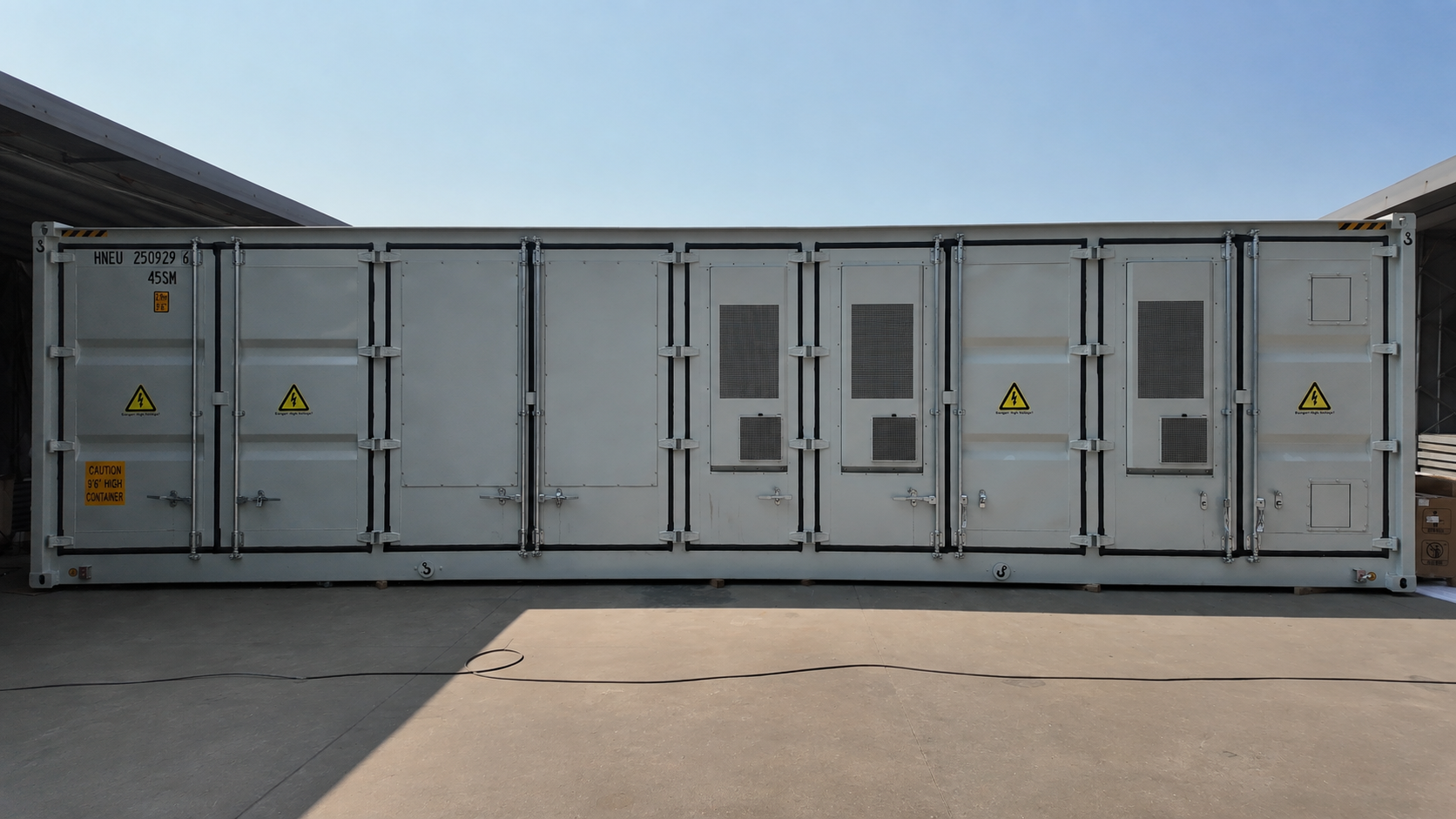
A C&I battery cabinet sized to the site’s load curve, not a round number.
Get a sized quote, not a guess
The fastest way to a defensible number is to hand us your interval load data and tariff sheet. We will size the power and energy ratings to your actual peak, spec LFP with the right PCS and EMS, and return a turnkey quote you can compare line by line. Talk to our C&I storage team and we will engineer the system around your bill, not a catalog.
This article is for procurement guidance only and does not constitute engineering, legal, or financial advice. Local fire and grid-interconnection codes govern final system design.