
 chinahuijue@gmail.com
 +1 (702) 204-9855
Telecom Base Station Solar + Storage: Diesel-to-Green Energy Guide 2026
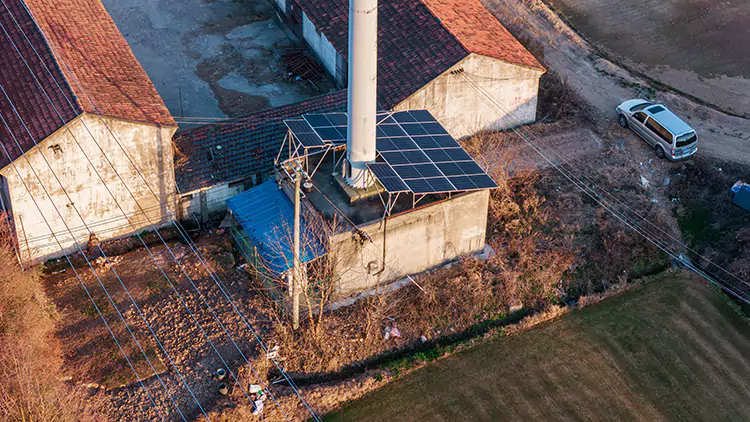
Despite the widespread coverage of global power and communication networks, approximately 789 million people in regions such as Asia, Africa, and the Middle East still live in areas without electricity or with unstable power supply. Communication base stations in these regions primarily rely on diesel generators — and the cost is staggering. This guide examines the diesel-to-solar-plus-storage transition for telecom sites, covering cost analysis, system architecture, real deployment data, and how Huijue Group’s telecom power solutions are transforming off-grid communications.
Quick Answer: The Telecom Base Station Energy Challenge
| Challenge | Current Status (Diesel) | Solution (Solar + LFP Storage) | Improvement |
|---|---|---|---|
| Annual fuel cost per site | $15,000–$25,000 | $500–$2,000 (backup only) | ↓ 80–95% |
| Maintenance visits per year | 24–48 site visits | 2–6 site visits | ↓ 75–90% |
| Communication outages | 80% caused by generator failure | Remote monitoring + auto-failover | ↓ 85%+ downtime |
| CO₂ emissions per site/year | 30–55 tons | 2–6 tons (backup gen only) | ↓ 85–95% |
| Noise pollution | 75–90 dB at 7m | <45 dB (silent operation) | ↓ 40+ dB |
| System lifespan | 5–8 years (generator) | 10–15 years (LFP + PV) | ↑ 2x |
1. The Diesel Crisis: Why Telecom Operators Are Desperate for Change
It is estimated that over 500,000 communication sites worldwide operate diesel engines year-round. These generators run 24/7 to keep base stations online in regions where grid power is unreliable or entirely absent. The result: enormous operational costs, rising maintenance pressure, and significant environmental damage.
1.1 Diesel Cost by Region
In some regions like Africa, diesel prices can reach as high as $1 per liter. A single 10 kW diesel generator consuming approximately 2.4 liters per hour generates a fuel bill of roughly $21,000 per year. When multiplied across hundreds or thousands of sites, the numbers become unsustainable.
| Region | Diesel Price ($/L) | Sites on Diesel (est.) | Avg. Annual Fuel/Site | Total Fuel Spend (est.) |
|---|---|---|---|---|
| Sub-Saharan Africa | $0.95–$1.20 | 180,000+ | $18,000–$24,000 | $3.2B–$4.3B |
| Middle East | $0.60–$0.90 | 95,000+ | $12,000–$18,000 | $1.1B–$1.7B |
| South & Southeast Asia | $0.85–$1.10 | 120,000+ | $15,000–$22,000 | $1.8B–$2.6B |
| Latin America | $0.80–$1.05 | 55,000+ | $14,000–$20,000 | $770M–$1.1B |
| Remote Islands / Oceania | $1.10–$1.50 | 15,000+ | $22,000–$30,000 | $330M–$450M |
| Global Total | — | 465,000+ | — | $7.2B–$10.2B |
1.2 Beyond Fuel: The Hidden Costs of Diesel
Diesel generators carry a cascade of secondary costs that operators often underestimate:
| Cost Category | Description | Annual Impact per Site | % of Total Diesel OPEX |
|---|---|---|---|
| Fuel procurement | Direct diesel purchase, transport to remote sites | $15,000–$25,000 | 65–70% |
| Maintenance & repairs | Oil changes, filter replacements, overhaul, spare parts | $3,000–$6,000 | 15–18% |
| Labor & logistics | Technician visits, fuel delivery logistics, security | $2,000–$5,000 | 8–12% |
| Generator replacement | Amortized replacement every 5–8 years | $1,500–$3,000 | 5–8% |
| Outage penalties | SLA breach fines from communication downtime | $500–$2,000 | 2–4% |
| Total Annual OPEX | — | $22,000–$41,000 | 100% |
Over 80% of communication interruptions are caused by untimely maintenance of diesel generators. When a generator fails in a remote location, it can take days or even weeks for a technician to reach the site — during which the base station goes dark, cutting off communication for entire communities.
1.3 Environmental and Regulatory Pressure
| Environmental Metric | Diesel Generator (10kW) | Solar + LFP Hybrid | Reduction |
|---|---|---|---|
| CO₂ emissions (tons/year) | 30–55 | 2–6 | 85–95% |
| NOₓ emissions (kg/year) | 180–320 | ≈0 | ~100% |
| Particulate matter (kg/year) | 12–25 | ≈0 | ~100% |
| SO₂ emissions (kg/year) | 8–18 | ≈0 | ~100% |
| Noise at 7m (dB) | 75–90 | <45 | 30–45 dB |
| Fuel spills (liters/year) | 50–200 | 0 | 100% |
Diesel generators produce noise pollution and high carbon emissions, failing to meet global low-carbon and energy-saving policy requirements. As ESG (Environmental, Social, and Governance) standards tighten, telecom operators face mounting pressure from regulators, investors, and communities to decarbonize their operations.
2. Huijue’s Hybrid Energy Solution: From Diesel to Solar-Storage
As a solutions provider with years of experience in the energy and communications sector, Huijue Technology Group has thoroughly analyzed the characteristics of sites in regions such as Africa, the Middle East, and Southeast Asia. By considering factors such as on-site environmental conditions, energy policies, and return on investment, the company has developed a hybrid energy solution for communication base stations that transitions from diesel to photovoltaic and energy storage systems.
This solution utilizes Huijue’s self-developed intelligent hybrid energy control system, integrating photovoltaic power generation, lithium-ion battery storage, and emergency diesel generator backup power — helping operators transition from “heavy oil dependency” to “solar-storage-based power supply.”
2.1 System Architecture
| Component | Function | Specification | Priority in Power Flow |
|---|---|---|---|
| Solar PV array | Primary power generation | 3–18 kWp monocrystalline; 250V high-voltage input | 1st (daytime primary) |
| MPPT solar controller | Maximum power point tracking | Up to 99.8% tracking efficiency; 99% conversion | 1st (PV optimization) |
| LFP battery bank | Energy storage | 10–50 kWh; 48V DC; 4,000+ cycles @ 80% DoD | 2nd (nighttime/excess PV) |
| Hybrid inverter/controller | Power management & routing | Overall conversion efficiency ≥97%; self-consumption ≤6W | Coordinator (all sources) |
| Diesel generator (backup) | Emergency backup | Existing generator retained; auto-start only on critical low-battery | 3rd (emergency only) |
| HJ-EMS management system | Remote monitoring & control | Cloud-based; real-time data; fault alerts; strategy config | Oversees all components |
Power Flow Logic: During daylight, solar PV directly powers the base station load while excess energy charges the LFP battery. At night or during low-solar periods, the battery discharges to power the load. The diesel generator starts only when battery state-of-charge drops below a critical threshold (e.g., 15%) — in well-sized systems, this may occur fewer than 10 days per year.
2.2 Battery Technology: LFP vs Lead-Acid
| Parameter | Lead-Acid (VRLA) | LFP (Huijue) | Advantage |
|---|---|---|---|
| Cycle life @ 80% DoD | 500–800 cycles | 4,000–6,000 cycles | 5–8x longer |
| Usable capacity (% of rated) | 50–60% | 85–90% | 30–40% more usable energy |
| Operating temperature | 0°C to 40°C (optimal) | -20°C to 60°C | Wider tolerance |
| Energy density (Wh/kg) | 30–50 | 120–160 | 3x lighter, saves space |
| Charging efficiency | 75–85% | 95–98% | Less energy wasted |
| Maintenance requirement | Regular water topping, equalization | None (sealed, maintenance-free) | Zero maintenance |
| Total cost over 10 years | $25,000–$40,000 (multiple replacements) | $8,000–$15,000 (single installation) | 50–65% lower TCO |
| Safety (thermal runaway risk) | Moderate (hydrogen gas, acid spill) | Very low (stable chemistry, BMS protection) | Significantly safer |
3. Four Core Advantages: Simplicity, Efficiency, Environment, Intelligence
| Advantage | Key Feature | Quantified Benefit | Operator Impact |
|---|---|---|---|
| Simplicity | Modular design, multi-scenario compatibility | Installation time: 1–2 days per site | Faster deployment, lower labor cost |
| Efficiency | 99.8% MPPT, ≥97% conversion, ≤6W self-use | PV utilization near-maximal | More energy harvested per panel |
| Environment | Diesel displacement, zero-noise operation | 85–95% CO₂ reduction | ESG compliance, regulatory readiness |
| Intelligence | HJ-EMS remote monitoring & control | 75–90% fewer site visits | Drastically reduced OPEX |
3.1 Extremely Simple Deployment and Flexible Compatibility
- Modular design supports installation in multiple scenarios, including micro-stations, standard stations, and dual-warehouse stations
- Standardized core equipment supports 48V DC systems and oil generator interconnection
- Easy installation, compact size, and compatibility with multiple station types, including ground-mounted, tower-mounted, and rooftop-mounted
- Easy to expand, with multiple devices supporting parallel operation to meet power growth needs
| Station Type | Typical Load | Recommended PV | Recommended Battery | Installation Time |
|---|---|---|---|---|
| Micro-station (rural) | 0.5–1.5 kW | 3–5 kWp | 5–10 kWh | 1 day |
| Standard station | 2–4 kW | 6–12 kWp | 10–20 kWh | 1–2 days |
| Dual-warehouse station | 4–8 kW | 12–18 kWp | 20–50 kWh | 2–3 days |
| Urban rooftop station | 1–3 kW | 3–8 kWp | 5–15 kWh | 1 day |
3.2 Efficient Operation, Significant Energy Savings
| Efficiency Metric | Industry Average | Huijue Hybrid System | Improvement |
|---|---|---|---|
| MPPT tracking efficiency | 97–98% | Up to 99.8% | +1.8% |
| Overall conversion efficiency | 92–95% | ≥97% | +2–5% |
| Equipment self-consumption | 15–30W | ≤6W | ↓ 60–80% |
| PV input voltage | 150V typical | 250V high-voltage | ↓ line losses ~40% |
| Battery round-trip efficiency | 80% (lead-acid) | 95%+ (LFP) | +15% |
The system uses high-efficiency MPPT tracking algorithms, achieving up to 99.8% photovoltaic utilization. Equipment self-consumption power is as low as ≤6W, with overall conversion efficiency ≥97%. Photovoltaic input supports 250V high voltage, simplifying the wiring structure and reducing line losses.
3.3 Green and Environmentally Friendly: Primarily Replacing Diesel
The system’s main power source is photovoltaic + lithium-ion battery storage, with the diesel generator serving as an emergency backup. Compared to lead-acid batteries, Huijue lithium-ion batteries offer a longer service life and higher energy efficiency.
| Environmental Benefit | Per Site (Annual) | Per 1,000 Sites (Annual) | Equivalent To |
|---|---|---|---|
| CO₂ reduction | 30–50 tons | 30,000–50,000 tons | 6,500–11,000 cars off road |
| Diesel fuel saved | 15,000–25,000 liters | 15–25 million liters | $15M–$25M saved |
| NOₓ reduction | 180–320 kg | 180–320 tons | Removing 9,000–16,000 trucks |
| Noise reduction | 30–45 dB | — | Below residential night limit |
| Fuel spill elimination | 50–200 liters | 50,000–200,000 liters | Preventing groundwater contamination |
This achieves “24/7 diesel-free operation” for communication base stations in optimal conditions, actively responding to the global “dual carbon” strategy and reducing carbon emissions and noise pollution to align with environmental regulations.
3.4 Intelligent Operation and Maintenance: Cost Reduction and Efficiency Improvement
The entire station is connected to the Huijue HJ-EMS energy management system, enabling remote centralized monitoring and making unmanned stations a reality.
| HJ-EMS Feature | Capability | OPEX Impact |
|---|---|---|
| Real-time monitoring | Battery SoC/SoH, PV generation, load consumption, generator status | Eliminates routine inspection visits |
| Fault alerts | Instant push notifications for anomalies (battery, inverter, PV string) | Reduces outage response time by 80%+ |
| Remote generator control | Start/stop diesel gen remotely; auto-strategy based on battery SoC | Minimizes unnecessary generator runtime |
| Strategy configuration | Custom charge/discharge schedules, peak-shaving, demand response | Optimizes energy use per site conditions |
| Historical data & analytics | Trend analysis, performance benchmarking, predictive maintenance | Extends equipment life, prevents failures |
| Multi-site management | Dashboard for hundreds/thousands of sites simultaneously | One operator manages 500+ sites |
For a deeper understanding of how energy management systems integrate with commercial battery storage, see our comprehensive Battery Energy Storage System (BESS) Complete Guide.
4. Real-World Deployment: Case Results from Africa, Middle East & Southeast Asia
Huijue’s site energy system has been commercially deployed on a large scale across multiple regions, helping mainstream operators complete the “oil-to-light storage” upgrade of more than 1,000 sites and achieve “zero oil generator operation” in multiple scenarios.
4.1 Regional Deployment Summary
| Region | Sites Deployed | Avg. System Size | Diesel Reduction | Annual Savings/Site |
|---|---|---|---|---|
| Sub-Saharan Africa | 450+ | 8 kWp PV + 20 kWh LFP | 92–98% | $9,500–$12,000 |
| Middle East | 250+ | 10 kWp PV + 25 kWh LFP | 88–95% | $7,500–$10,000 |
| Southeast Asia | 200+ | 6 kWp PV + 15 kWh LFP | 85–93% | $8,000–$11,000 |
| South Asia | 120+ | 7 kWp PV + 18 kWh LFP | 87–94% | $8,500–$10,500 |
| Total | 1,020+ | — | 88–96% avg. | ~$9,200 avg. |
4.2 Annual Savings Breakdown per Site
| Savings Category | Pre-Deployment (Diesel) | Post-Deployment (Hybrid) | Annual Savings |
|---|---|---|---|
| Diesel fuel | $18,000 | $1,200 (backup gen only) | $16,800 |
| Maintenance & spare parts | $4,500 | $1,000 | $3,500 |
| Technician labor & logistics | $3,500 | $800 | $2,700 |
| Outage penalties | $1,200 | $200 | $1,000 |
| Generator replacement amortization | $2,000 | $300 (reduced runtime) | $1,700 |
| Added: PV/Battery maintenance | $0 | -$800 | -$800 |
| Total Annual Cost | $29,200 | $4,300 | $24,900 (85% reduction) |
According to customer feedback, this solution saves over USD $9,000 annually per site in fuel costs, labor, and spare parts, with overall savings exceeding 50%, significantly enhancing site operational profitability. In the best-performing African deployments, savings reach $12,000+ per site per year.
4.3 ROI Timeline
| Year | Cumulative Investment | Cumulative Savings | Net Position | Status |
|---|---|---|---|---|
| Year 0 (installation) | $28,000–$42,000 | $0 | -$28,000 to -$42,000 | Investment phase |
| Year 1 | $28,000–$42,000 | $9,000–$12,000 | -$19,000 to -$30,000 | Recovering |
| Year 2 | $28,000–$42,000 | $18,000–$24,000 | -$4,000 to -$18,000 | Approaching breakeven |
| Year 3 | $28,000–$42,000 | $27,000–$36,000 | +$5,000 to -$6,000 | Near/achieved breakeven |
| Year 5 | $30,000–$45,000 (minor maintenance) | $45,000–$60,000 | +$15,000 to +$30,000 | Profitable |
| Year 10 | $35,000–$52,000 (battery refresh ~yr 8) | $90,000–$120,000 | +$55,000 to +$85,000 | Strong ROI |
Typical payback period: 2.5–4 years depending on local diesel prices, solar irradiance, and system sizing. After payback, each site generates $9,000–$12,000 in annual net savings for the remainder of the system’s 10–15 year lifespan.
5. Overcoming Common Deployment Challenges
| Challenge | Impact | Huijue Solution | Result |
|---|---|---|---|
| Extreme heat (45°C+) | Battery degradation, reduced PV output | LFP cells rated to 60°C; passive + active cooling; thermal management in cabinet design | Stable operation in desert conditions |
| Dust accumulation on PV | 10–25% output loss | HJ-EMS monitors PV efficiency; auto-alerts for cleaning; anti-soiling coating option | Restores output with timely maintenance |
| Theft & vandalism | Equipment loss, site downtime | Locked steel cabinets; tamper sensors in HJ-EMS; GPS tracking; remote alarm | Deterrence + rapid response |
| Remote logistics | High transport cost for installation & maintenance | Modular pre-assembled units; lightweight LFP vs lead-acid; remote diagnostics minimize visits | 50%+ fewer transport trips |
| Grid intermittency (hybrid sites) | Unstable power quality | Seamless auto-switching between grid/PV/battery/gen; UPS-grade transfer time | Zero downtime transitions |
| Regulatory compliance | Varying standards by country | CE, IEC, UL certifications; local adaptation for telecom standards | Global deployment readiness |
6. Comparison: Huijue Hybrid vs Conventional Diesel-Only vs Grid Extension
| Criterion | Diesel-Only (Status Quo) | Grid Extension | Huijue Hybrid (PV + LFP + Gen) |
|---|---|---|---|
| Initial investment | $8,000–$15,000 (generator) | $50,000–$200,000+ per km | $28,000–$42,000 |
| Annual OPEX | $22,000–$41,000 | $1,000–$3,000 (electricity bill) | $3,500–$6,000 |
| Deployment time | 1–3 days | 6–24 months (permits + construction) | 1–3 days |
| Reliability | Low (80% of outages from gen failure) | Medium (grid outages common in remote areas) | High (multi-source redundancy) |
| Environmental impact | High (30–55 t CO₂/year) | Low (depends on grid mix) | Very low (2–6 t CO₂/year) |
| Scalability | Limited (larger gen = more fuel) | Not applicable | Modular expansion (parallel units) |
| 10-year TCO | $230,000–$425,000 | $60,000–$230,000+ (distance-dependent) | $63,000–$102,000 |
| Best for | Temporary or emergency sites | Sites within 5 km of existing grid | Remote off-grid & unreliable grid sites |
7. Future Outlook: Toward Zero-Diesel Telecom Networks
The telecom industry is at an inflection point. With diesel costs rising, ESG mandates tightening, and solar-plus-storage technology maturing, the transition from diesel to renewable hybrid systems is no longer a question of if but when. Huijue Group will continue to focus on integrating green energy and communications, driving the construction of more low-carbon communication sites.
| Milestone | Timeline | Impact |
|---|---|---|
| Huijue 1,000+ sites deployed | Achieved 2026 | $9M+ annual savings for operators |
| 2,000+ sites target | 2027–2028 | Scale economies, lower unit cost |
| Hydrogen fuel cell integration | 2028–2029 (R&D phase) | Ultra-long-duration backup, zero carbon |
| AI-driven energy optimization | 2027+ (HJ-EMS v2) | Predictive generation forecasting, 5–10% more savings |
| Second-life battery integration | 2028+ (circular economy) | Reduced battery cost, sustainability |
We will empower global operators with efficient, safe, and intelligent energy solutions. In the future, we will introduce more advanced green design concepts and innovative technologies to contribute to the sustainable development of communication networks.
8. FAQ: Telecom Base Station Solar + Storage
How much does a telecom base station spend on diesel per year?
A typical off-grid telecom base station running on diesel generators spends between $15,000 and $25,000 annually on fuel, depending on local diesel prices and generator size. In regions like Africa where diesel can reach $1/liter, a single 10kW generator consuming 2.4L/hour costs approximately $21,000/year in fuel alone.
What is the payback period for converting a telecom base station from diesel to solar plus storage?
The typical payback period is 2.5 to 4 years. With annual savings exceeding $9,000 per site in fuel, labor, and spare parts, and a system lifespan of 10–15 years for LFP batteries, operators can achieve overall savings of more than 50% over the system lifecycle.
Can solar plus storage completely replace diesel generators at telecom base stations?
Yes. In optimal configurations, solar plus LFP storage can achieve 24/7 zero-diesel operation. However, most deployments retain the diesel generator as an emergency backup for extended cloudy periods. Huijue’s hybrid system prioritizes PV and battery as primary power sources, with the generator activating only during critical shortages.
What type of battery is best for telecom base station energy storage?
Lithium iron phosphate (LFP) batteries are the preferred choice. Compared to lead-acid batteries, LFP offers 3–5x longer cycle life (4,000+ cycles), higher energy density, wider operating temperature range (-20°C to 60°C), and lower total cost of ownership. Huijue uses LFP cells with integrated BMS for maximum safety and longevity.
How does the Huijue HJ-EMS system enable remote management of telecom sites?
The HJ-EMS provides real-time monitoring of battery status, solar generation, load consumption, and equipment health. It supports remote start/stop of generators, strategy configuration, fault alerts, and operation optimization. This enables unmanned station operation, significantly reducing on-site maintenance visits and OPEX.
What deployment scenarios does Huijue’s hybrid energy system support?
Huijue’s modular design supports micro-stations, standard stations, and dual-warehouse stations. The system is compatible with 48V DC architectures, supports ground-mounted, tower-mounted, and rooftop installations, and allows parallel expansion to meet growing power demands.
Ready to Cut Your Telecom Site OPEX by 50%+?
Huijue Group’s hybrid solar + LFP storage solutions are deployed across 1,000+ sites in Africa, the Middle East, and Southeast Asia — saving operators $9,000+ per site annually.
🔗 Contact Huijue Group today to request a site assessment and customized energy plan.
Choose Huijue, Connect to the Future.
telecom base station solar hybrid energy system diesel to solar conversion LFP battery storage off-grid telecom power HJ-EMS Huijue Group communication site energy green telecom