
 chinahuijue@gmail.com
 +1 (702) 204-9855
How 5G Base Station Energy Storage Systems Enable Virtual Power Plants
Against the backdrop of the dual carbon strategy, the rapid development of new energy sources is profoundly reshaping the global energy landscape. However, the inherent volatility and unpredictability of wind and solar power remain core challenges limiting their large-scale application.
Virtual Power Plants (VPPs) are regarded as the bridge connecting renewable energy integration with grid regulation. When this VPP concept is combined with the nationwide network of 5G base stations, it gives rise to a more powerful and flexible energy control network, forming a crucial cornerstone for building future smart grids.
Virtual Power Plants: The Key Lever for Regulating Renewable Energy
Whilst wind and solar power possess inherent advantages of being clean, low-carbon, and renewable, their randomness, intermittency, and volatility frequently complicate power system dispatch. Virtual power plants were conceived precisely to address these ‘green electricity anxieties’.
By integrating distributed energy sources, energy storage systems, and controllable loads, and employing advanced information communication and artificial intelligence technologies for unified dispatch, these previously independent resources gain the coordinated response capabilities of a ‘centralised power plant’. This decentralised, multi-node, intelligent control approach is emerging as a new paradigm for flexible regulation within renewable energy systems.
Why Telecom Operators Need Intelligent Energy Storage Systems
Telecom operators are facing increasing challenges from rising electricity costs, unstable grids, and growing energy consumption from 5G networks.
Traditional backup batteries are mainly used for emergency power supply, resulting in low utilisation rates.
With intelligent energy storage systems, telecom operators can transform passive backup batteries into active energy assets by:
- Reducing peak electricity costs through energy arbitrage;
- Improving backup reliability during grid failures;
- Supporting renewable energy integration;
- Participating in demand response programs.
5G Base Stations: Natural Virtual Power Plant Nodes
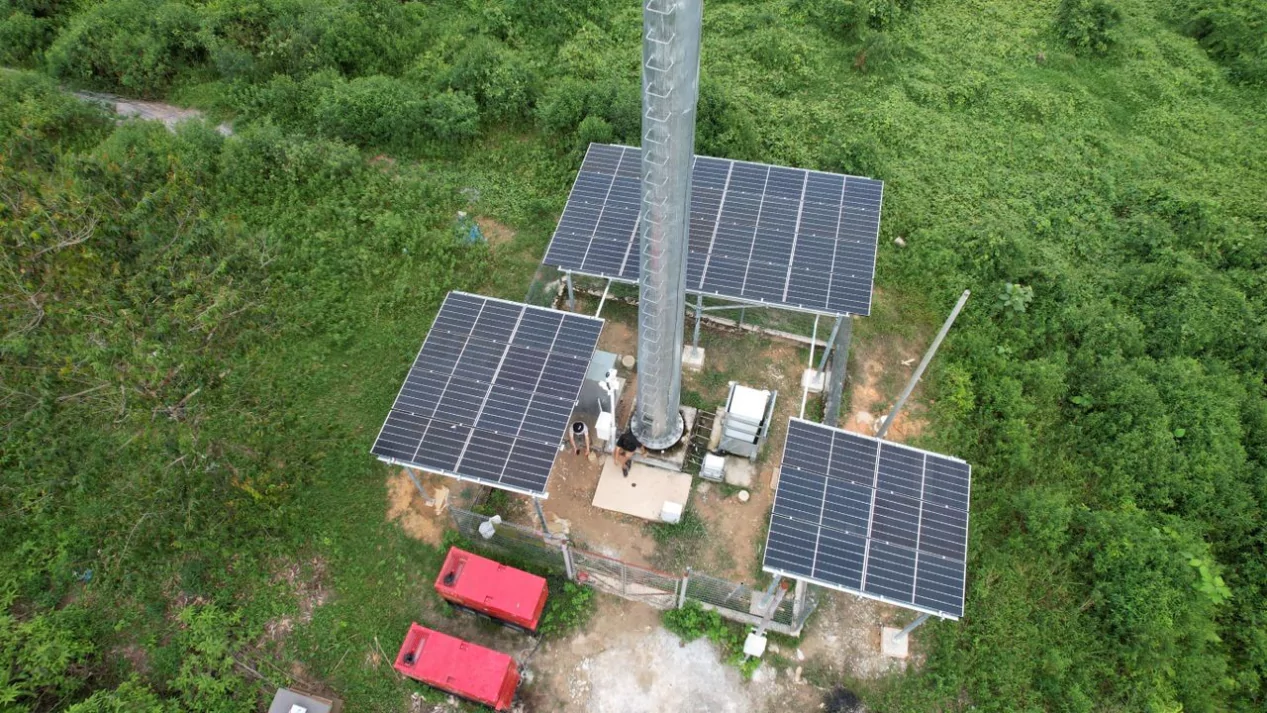
Currently, China’s 5G base stations exceed 3.5 million. These round-the-clock communication infrastructures possess significant energy regulation potential, making them natural nodes for virtual power plants.
On one hand, they are equipped with substantial backup energy storage systems for emergency power supply. On the other, these storage systems feature bidirectional charging and discharging capabilities, enabling charging during off-peak hours and discharging during peak periods to achieve peak shaving and valley filling.
However, realising this potential necessitates support from high-performance, intelligent site energy systems. As a technology leader specialising in the convergence of power and telecommunications, Huijue Group provides intelligent telecom energy storage systems and outdoor power solutions designed for 5G base stations, telecom operators, and distributed communication networks represent one of the key technologies underpinning the energy transformation of 5G base stations.
Huijue Group: Intelligent Telecom Energy Storage Solutions for 5G Networks
Huijue Group has more than 20 years of experience in energy storage and power solutions.
Its telecom energy storage systems integrate:
- High-performance LiFePO4 batteries;
- Intelligent BMS and EMS platforms;
- Outdoor telecom cabinets;
- Remote monitoring and operation management.
The solutions are designed for:
- 5G base stations;
- Telecom towers;
- Remote communication sites;
- Off-grid communication networks.
Triple Value in Reshaping the Power Landscape
Fully integrating 5G base stations into the virtual power plant framework represents not merely a technological leap in energy regulation, but will exert profound impacts on grid architecture and energy economics:
Enhanced Grid Resilience: The virtual power plant network formed by distributed base stations acts as countless ‘micro-power sources,’ providing critical power support during extreme loads or emergencies.
Reducing Energy Costs: Price-driven energy storage regulation enables base stations to buy low and sell high in the market, effectively lowering telecommunications operational expenses.
Facilitating Green Transition: Energy storage combined with intelligent management transforms base stations from passive power consumers into active energy nodes, fostering a bidirectional interaction ecosystem between telecommunications and electricity.
From Concept to Implementation,A Promising Future
Currently, regions including Shanghai have integrated certain 5G base station energy storage systems into grid-side demand response frameworks. During peak load periods, the system automatically mobilises site energy to ‘feed back’ into the grid, while charging automatically during off-peak hours, thereby injecting flexibility into the entire power system.
With ongoing technological breakthroughs and project implementations by enterprises such as HuiJue Group, 5G base station virtual power plants will accelerate from ‘technical piloting’ to ‘large-scale deployment’, providing robust support for China’s energy digital transformation and energy security safeguards.
Although 5G base station virtual power plants still face challenges in energy storage capacity, market mechanisms, and cost recovery, the direction is clear: as communications and energy deepen their integration, and distributed intelligent control networks become the trend, the blueprint for a new ‘energy internet’ is quietly taking shape.
Let us witness together how, from 5G base stations to virtual power plants, from the periphery to the core, a more intelligent, efficient, and green energy era is accelerating towards us.
FAQ
What is a virtual power plant (VPP)?
A virtual power plant is a digital energy management system that connects distributed energy resources, batteries, and controllable loads into one coordinated network.
Why are 5G base stations suitable for virtual power plants?
5G base stations already have distributed energy storage systems and continuous electricity demand, making them ideal nodes for VPP networks.
What battery is commonly used in telecom energy storage systems?
Most modern telecom energy storage systems use lithium iron phosphate (LiFePO4) batteries due to their safety, long cycle life, and thermal stability.