
 chinahuijue@gmail.com
 +1 (702) 204-9855
AI and Data Center Power Growth Is Creating New Opportunities for Battery Storage
August 14, 2026 | Industry News & Analysis
A 50% increase in SMA Solar’s order backlog is highlighting a broader shift in the energy market: rising electricity demand and grid constraints are increasing the need for flexible energy storage.
German solar and energy technology company SMA Solar reported an order backlog of approximately €1.75 billion at the end of June 2026, up 50% year on year. According to Reuters, demand for flexible energy storage systems is rising as AI adoption and data center development increase electricity consumption, while grid bottlenecks in Europe and North America constrain transmission capacity.
For the energy storage industry, the significance goes beyond data centers. Factories, industrial parks, EV charging infrastructure and other power-intensive facilities can face a similar challenge:
What happens when a site needs more power, but the grid cannot easily provide additional capacity when it is needed?
Grid Capacity Is Becoming Part of the Energy Storage Conversation
For years, commercial energy storage discussions have focused heavily on electricity cost management, peak shaving and solar self-consumption.
Those applications remain important. But another consideration is becoming increasingly relevant: access to power capacity.
A battery energy storage system does not physically increase grid capacity. What it can do is give a facility more flexibility over when electricity is stored and when it is used.
For example, a battery can charge during periods of lower site demand or when surplus solar generation is available. It can then discharge when facility demand rises, according to the project’s operating strategy.
This makes energy storage relevant for sites dealing with:
- Short-duration demand peaks
- Solar generation that does not match the load profile
- Limited grid connection capacity
- Critical-load backup requirements
- Rapidly changing power demand
The key question is therefore moving from simply:
“How much energy can the battery store?”
to:
“What power problem does the site need the battery to solve?”
What This Means for Commercial and Industrial BESS
This shift has practical implications for commercial and industrial energy storage buyers.
A factory experiencing a sharp 15-minute demand peak does not necessarily need the same battery configuration as a facility requiring several hours of backup power.
Likewise, a solar-plus-storage project designed to shift daytime PV generation into later consumption will have different requirements from a system supporting high-power EV charging.
That is why commercial BESS sizing should consider both:
Power (kW) — how much power the system needs to deliver at one time.
Energy (kWh) — how much energy needs to be stored and how long the required power needs to be sustained.
Load profile, PV capacity, grid connection, operating strategy and installation environment should then be evaluated together.
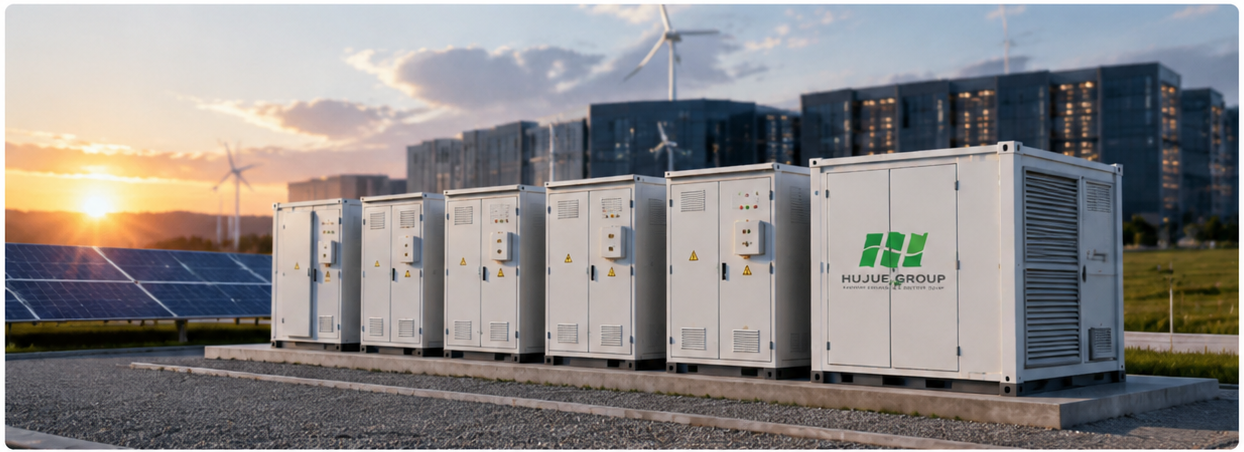
For distributed C&I projects where installation footprint and system integration are important, an energy storage cabinet can provide an integrated system format.
Huijue’s current cabinet energy storage portfolio includes multiple capacity classes for industrial and commercial applications, with cabinet systems covering configurations from 25/50 kWh through 418 kWh.
Cabinet or Container? Project Scale Matters
Growing demand for flexible energy storage does not point to one universal BESS format.
For factories, commercial buildings and distributed industrial projects, cabinet-based systems can integrate batteries with components such as PCS, BMS, EMS, thermal management, electrical protection and monitoring, depending on the specific configuration.
But the enclosure should follow the project requirement—not the other way around.
As project capacity increases, a containerized battery energy storage system may become more appropriate.
Containerized BESS can be considered for larger industrial facilities, renewable energy integration, microgrids and other higher-capacity energy storage applications.
For these projects, buyers need to look beyond battery capacity and evaluate the complete system architecture, including PCS configuration, BMS and EMS communication, thermal management, fire protection, electrical protection and site integration.
The distinction matters because a factory trying to manage a short-duration demand peak and a large renewable energy project requiring MWh-scale storage are solving very different power problems.
The Same Power Challenge Extends Beyond Data Centers
Data centers may be driving today’s headlines, but the underlying power challenge is broader.
Telecom sites, remote infrastructure and distributed energy projects can also face limited or unstable grid access. In these environments, the power architecture may need to combine battery storage with solar generation, grid power or other available energy sources.
Rather than simply increasing battery capacity, a telecom power solution should be designed around the site’s actual load, available energy sources and operating conditions.
This illustrates a broader change in the energy storage market: the conversation is increasingly moving from battery capacity alone to complete power-system design.
What Should Buyers Check Before Planning a BESS?
Before selecting an energy storage system, project owners, EPC contractors and system integrators should first understand the site’s actual power requirements.
Useful project information includes:
- Project location
- Peak load (kW)
- Daily energy consumption (kWh)
- Load profile
- Existing grid connection capacity
- Existing or planned PV capacity
- Required backup duration
- Grid voltage and frequency
- Installation environment
- Primary operating objective
With this information, an energy storage project can be evaluated around the actual application instead of simply selecting a battery based on its rated kWh.
For energy storage buyers, the question is increasingly moving from:
“How much does this battery cost?”
to:
“How should the entire power system be configured for my site?”
FAQ
Why are AI and data centers increasing demand for battery energy storage?
AI computing and data center expansion are contributing to higher electricity demand. In locations where grid capacity or transmission is constrained, battery storage can provide additional flexibility by shifting when electricity is stored and used. The appropriate configuration still depends on the site’s load profile, grid conditions and operating requirements.
Can battery storage solve a limited grid connection?
Battery storage cannot physically increase grid connection capacity. However, it can help manage site demand by charging when capacity is available and discharging during periods of higher demand. Whether this approach is suitable depends on the project’s load profile, grid conditions and operating strategy.
Should a commercial project use an energy storage cabinet or a containerized BESS?
The choice depends on required power and energy capacity, available installation space, expansion requirements and overall system architecture. Cabinet systems can suit many distributed C&I applications, while larger projects may be better suited to containerized energy storage.
Looking Ahead
The rapid growth of AI and data centers is putting a spotlight on a problem that many industries already recognize:
Having enough electricity is not always the same as having enough power available at the right time.
That distinction makes flexibility increasingly important.
For factories, commercial facilities, renewable energy projects, telecom sites and other infrastructure, battery storage can form part of a broader strategy that coordinates grid electricity, renewable generation, stored energy and site loads.
The latest market developments suggest that energy storage is increasingly being evaluated not simply as additional battery capacity, but as part of a broader power-management strategy.
Planning a Commercial Energy Storage Project?
Every project has different load, power and operating requirements.
If you are evaluating a commercial or industrial BESS, providing the following information can help with preliminary system evaluation:
- Project country or location
- Application scenario
- Peak load (kW)
- Daily energy consumption (kWh)
- Existing or planned PV capacity
- Required backup duration
- Grid voltage and frequency
Based on the available project information, Huijue can help evaluate the appropriate BESS power, energy capacity and system configuration for the application.
Source
Reuters, August 13, 2026 — SMA Solar reported that its order backlog reached approximately €1.75 billion at the end of June 2026, up 50% year on year. Reuters reported rising demand for flexible energy storage amid AI and data center growth and grid bottlenecks in Europe and North America.