
 chinahuijue@gmail.com
 +1 (702) 204-9855
Intelligent Power Supply for Communication Base Stations: 2026 Guide
Quick Answer: Intelligent power supply systems for communication base stations use IoT sensors, big data analytics, and remote control to deliver 24/7 uninterrupted power with real-time fault prediction, 30–40% energy savings, and unattended operation. Key capabilities include modular power conversion (96%+ efficiency), AI-based predictive maintenance, and cloud-based remote management — reducing site visits by up to 70% and operational costs by 25–35%.
Why Base Stations Need Intelligent Power
Communication base stations are the backbone of wireless networks — and they demand power that is continuous, reliable, and clean. A single power interruption can drop thousands of calls and disrupt data services across a wide area.
| Power Requirement | Why It Matters | Traditional Power Limitation |
|---|---|---|
| 24/7 uninterrupted | Base stations never sleep; any outage = service failure | Diesel generators need refueling; grid power can be unreliable in remote areas |
| High reliability | Sites face extreme weather, lightning, humidity, dust | Conventional power systems lack real-time monitoring; faults discovered too late |
| Power quality | Voltage fluctuation or harmonics damage sensitive telecom equipment | No automatic voltage regulation; manual adjustment required |
| Energy efficiency | Power is 40–60% of a base station’s operating cost | Fixed output regardless of load; significant waste at low-traffic periods |
With 5G densification driving base station counts past 8 million globally and average site power consumption rising 2–3× versus 4G, traditional power management simply can’t keep up. Intelligent power is not a luxury — it’s a necessity.
What Is an Intelligent Communication Power Supply?
An intelligent communication power supply integrates IoT monitoring, AI analytics, and remote control into a modular power system designed specifically for telecom sites. It does four things that traditional power systems can’t:
| Capability | What It Does | Real-World Impact |
|---|---|---|
| Real-time monitoring | Sensors track voltage, current, temperature, humidity, smoke — 24/7 | Detect issues before they become failures; eliminate blind spots at unmanned sites |
| Predictive fault warning | AI algorithms analyze trends to predict equipment degradation | Reduce unplanned downtime by 50–70%; shift from reactive to preventive maintenance |
| Remote control | Adjust voltage, switch loads, restart equipment — from a phone or laptop | Cut site visits by 60–70%; resolve 80% of issues without dispatching a technician |
| Energy optimization | Auto-adjusts output based on real-time load; shuts down idle modules | Save 25–35% on electricity costs; extend equipment life by reducing thermal stress |
Core Hardware Features
| Feature | Specification |
|---|---|
| Power conversion efficiency | ≥96% (vs 88–92% for legacy systems) |
| Modular design | Hot-swappable rectifier modules; N+1 redundancy; scale by adding modules |
| Protection | Over-voltage, over-current, short-circuit, over-temperature, lightning protection |
| Battery management | Smart LFP battery with SOC/SOH monitoring; automatic charge/discharge control |
| Communication protocols | SNMP, Modbus, TCP/IP; compatible with mainstream NMS platforms |
| Operating temperature | -40°C to +65°C; IP65 enclosure for outdoor sites |
How Intelligent Power Works in Practice
Layer 1: Sensing & Data Collection
Smart meters and sensors at each base station continuously measure electrical parameters (voltage, current, power factor, harmonics) and environmental conditions (temperature, humidity, smoke, door status). Data streams to a cloud platform via 4G/5G or fiber.
Layer 2: AI Analysis & Fault Prediction
The platform applies machine learning to detect anomalies invisible to threshold-based alarms. For example:
- Voltage trend analysis → identifies grid instability before it causes equipment damage
- Battery impedance trending → predicts cell failure 2–3 months before it happens
- Thermal pattern recognition → detects overheating rectifiers or loose connections
- Load profile analysis → optimizes battery cycling to extend lifespan by 20%+
Layer 3: Automated Response & Remote Control
When the system detects an issue, it can take automated action or alert the operations team:
| Scenario | Traditional Response | Intelligent Response |
|---|---|---|
| Grid voltage fluctuation | Equipment damage; manual investigation | Auto-switch to battery; notify NMS; log event for analysis |
| Battery degradation | Discovered during quarterly site visit | Predicted 60–90 days ahead; replacement scheduled proactively |
| Rectifier module failure | Redundancy holds; fault found on next visit | Instant alert; hot-swap module dispatched; redundancy confirmed remotely |
| High temperature | Equipment throttles or shuts down | Auto-start cooling; reduce non-critical loads; alert maintenance |
| Low-traffic period (nighttime) | Full power output; wasted energy | Auto-switch off redundant modules; reduce output to match load |
Layer 4: Energy Management & Optimization
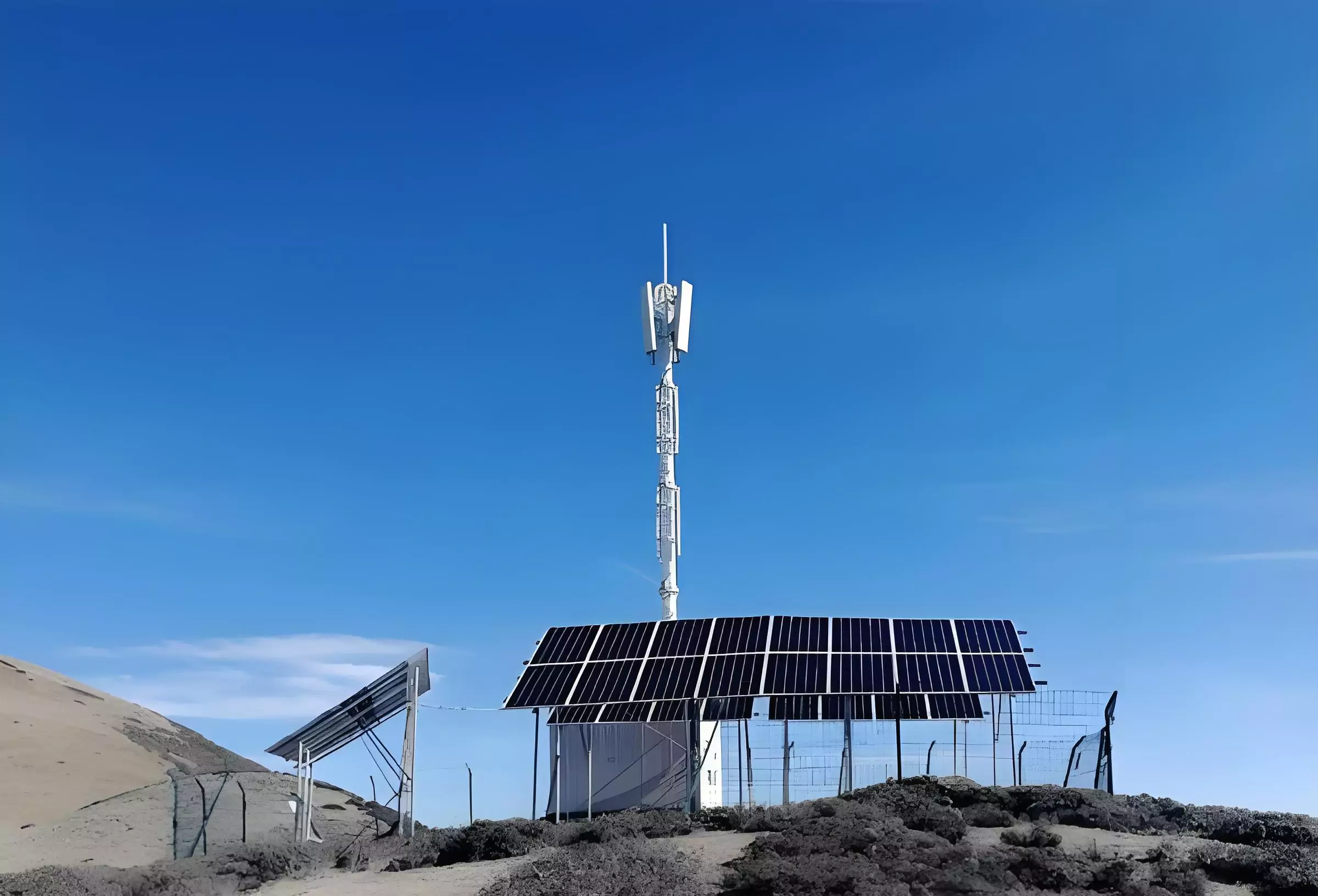
The system continuously optimizes power allocation across the site — prioritizing critical telecom loads, managing battery charge cycles based on time-of-use tariffs, and integrating solar or wind when available. Sites with solar integration can reduce grid dependency by 40–60%.
Quantified Benefits
| Metric | Traditional Power System | Intelligent Power System | Improvement |
|---|---|---|---|
| Unplanned downtime | 8–15 hours/year per site | 1–3 hours/year | ↓ 70–85% |
| Site visits per year | 12–24 (monthly/bimonthly) | 3–6 (condition-based) | ↓ 70% |
| Energy consumption | Baseline | Optimized load matching | ↓ 25–35% |
| Power conversion efficiency | 88–92% | 96%+ | ↑ 4–8 pts |
| Fault response time | 4–24 hours (dispatch + travel) | 15–30 minutes (remote) | ↓ 90% |
| Battery lifespan | 3–5 years | 5–8 years (smart cycling) | ↑ 40–60% |
| O&M cost per site/year | $3,000–$5,000 | $1,800–$3,200 | ↓ 30–40% |
ROI: For a network of 1,000 base stations, intelligent power typically delivers payback in 18–24 months through energy savings, reduced truck rolls, and extended battery life. Annual savings: $1.2M–$1.8M.
Implementation Challenges & Solutions
| Challenge | Why It Happens | Solution |
|---|---|---|
| Data security | Power data and communication data flow through the same network | End-to-end encryption (AES-256); role-based access control; segmented networks; regular security audits |
| Device compatibility | Legacy power equipment from multiple vendors; different protocols | Adopt open standards (SNMP, Modbus, OCPP); use protocol gateways; mandate compliance in procurement specs |
| Network reliability | Remote sites may have unstable backhaul connections | Dual-path communication (4G + fiber); local edge processing for critical alarms; store-and-forward data sync |
| Retrofit complexity | Existing sites have old rectifiers, lead-acid batteries, no sensors | Phased upgrade: add sensors first → upgrade rectifiers → replace batteries with LFP → integrate with cloud platform |
| Skill gap | Maintenance staff trained on legacy systems, not IoT/AI tools | Vendor training programs; simplified dashboards; tiered alerting (critical → technician, informational → log only) |
Best Practices for Deployment
- Start with high-value sites: Prioritize remote, hard-to-reach sites where truck rolls are most expensive — ROI is fastest there
- Standardize on open protocols: Avoid vendor lock-in; insist on SNMP/Modbus compliance and documented APIs
- Use modular rectifiers: Hot-swappable modules enable capacity expansion without replacing the entire system
- Pair with solar + LFP storage: Solar-charged LFP batteries eliminate diesel generator dependency and reduce grid power costs by 40–60%
- Implement tiered alerting: Not every anomaly needs a phone call at 3 AM — define critical vs informational thresholds
- Plan for edge computing: Critical safety functions (over-temperature shutdown, lightning protection) must operate locally, not depend on cloud connectivity
FAQ: Intelligent Power Supply for Base Stations
Q1: What is an intelligent communication power supply?
An intelligent communication power supply is a modular power system designed for telecom base stations that integrates IoT sensing, AI-based analytics, and remote management. It monitors voltage, current, temperature, and battery health in real time, predicts faults before they occur, and allows remote control of power equipment — reducing downtime by up to 85% and energy costs by 25–35%.
Q2: How much can intelligent power save on base station operating costs?
Typical savings are 30–40% on annual O&M costs per site. This comes from three sources: reduced energy consumption (25–35%), fewer site visits (down 70%), and extended battery life (40–60% longer). For a 1,000-site network, annual savings range from $1.2M to $1.8M, with payback in 18–24 months.
Q3: Can intelligent power systems work with existing base station equipment?
Yes, through a phased retrofit approach. Start by adding IoT sensors and smart meters to existing power equipment. Then upgrade to modular rectifiers and LFP batteries. Finally, connect everything to a cloud management platform. Protocol gateways can bridge legacy equipment using proprietary protocols to open standards like SNMP and Modbus.
Q4: What’s the difference between intelligent power and a standard UPS?
A standard UPS provides backup power during outages — that’s it. An intelligent power system goes far beyond: it continuously optimizes power conversion efficiency, predicts equipment failures weeks in advance, manages battery charge cycles to extend lifespan, integrates with solar and storage, and enables remote control. A UPS is reactive; intelligent power is proactive.
Q5: How does intelligent power integrate with solar energy at base stations?
The EMS manages solar generation, battery storage, and grid power as a unified system. During the day, solar charges the LFP battery and powers the load. At night, the battery takes over. The system automatically switches between sources based on availability and cost, reducing grid dependency by 40–60%. This is particularly valuable for off-grid sites that previously relied on diesel generators.
Conclusion
Intelligent power supply is transforming how communication base stations are powered and maintained. By combining real-time monitoring, AI-driven fault prediction, remote control, and energy optimization, these systems deliver 85% less downtime, 70% fewer site visits, and 30–40% lower operating costs — with payback in under two years.
For telecom operators upgrading to 5G, the choice isn’t whether to adopt intelligent power — it’s how quickly. Sites still running legacy power systems are bleeding money through wasted energy, unnecessary truck rolls, and preventable failures. The technology is proven, the ROI is clear, and the deployment path is well-established.
Looking for intelligent power solutions for your base stations? Contact Huijue — we provide integrated solar-plus-storage power systems for telecom sites across Africa, the Middle East, and Southeast Asia. Explore our energy storage products or learn about our folding solar containers for rapid base station deployment.
Related reading: Complete BESS Guide | Containerized Solar Power Systems | Top Solar Panel Manufacturers 2026