
 chinahuijue@gmail.com
 +1 (702) 204-9855
BESS Fire Safety: 2026 Standards, Risks & Compliance Guide
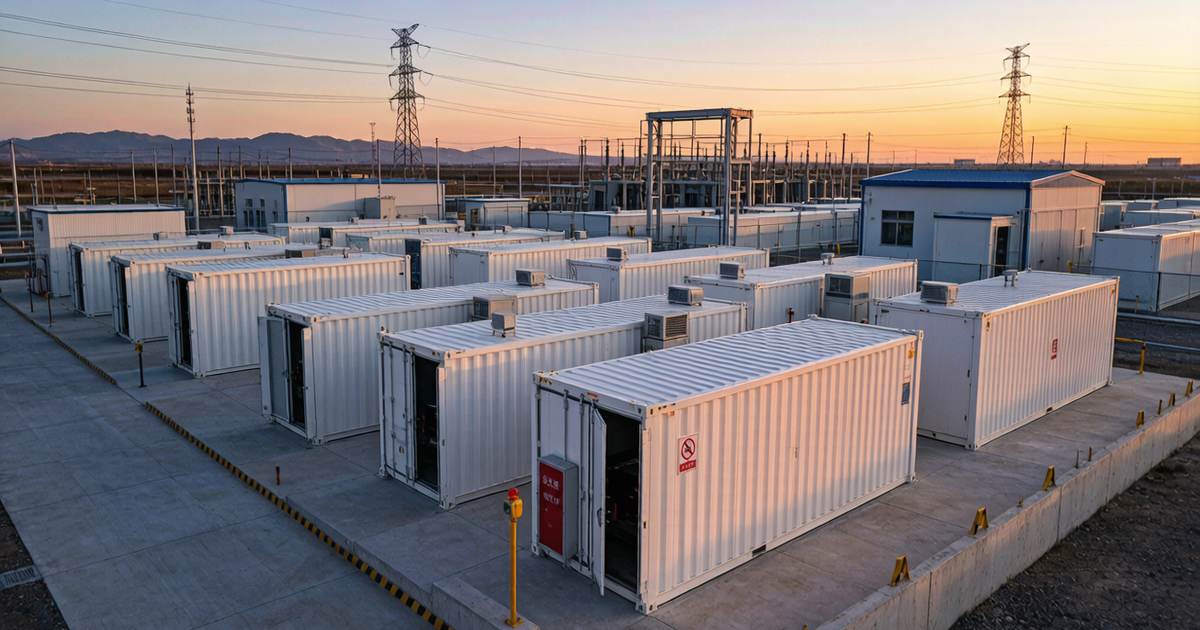
On January 16, 2025, the Moss Landing Battery Storage Facility in California—one of the world’s largest at 300 MW—erupted in flames. An estimated 55-80% of its 100,000 lithium-ion battery cells were destroyed. Heavy metals including nickel, manganese, and cobalt rained down on surrounding wetlands. The facility reignited a month later. The cleanup, supervised by the EPA, is expected to continue through late 2026.
This wasn’t an isolated event. The EPRI BESS Failure Incident Database tracks dozens of publicly documented incidents worldwide. Yet the industry’s response has been swift and substantive: NFPA 855 (2026 edition), published September 2025, represents the most significant regulatory reset in BESS fire safety history. For EPC contractors, facility managers, and energy procurement officers, understanding these changes is no longer optional—it is a procurement prerequisite.
This guide examines BESS fire safety through the lens of the 2026 standards reset. Drawing on data from NFPA, UL, EPRI, BloombergNEF, and incident investigations, we cover what thermal runaway is, how the new standards change the compliance landscape, which fire suppression technologies work, and how B2B buyers can build compliance into their procurement process. Whether you are specifying a containerized energy storage system or evaluating a multi-megawatt C&I installation, this framework will help you navigate the post-2026 safety landscape.
Executive Risk Summary: What B2B Buyers Must Know
- Standards reset: NFPA 855 (2026 edition) removes threshold exemptions—Hazard Mitigation Analysis (HMA) is now mandatory for nearly all BESS installations, not just large ones.
- Philosophy shift: Explosion control moved from passive venting (NFPA 68) to active prevention (NFPA 69)—systems must prevent combustible gas clouds from forming, not just vent them.
- Market scale: Global BESS fire protection market valued at $4.29 billion (2025), with fire suppression systems alone reaching $1.5 billion by 2027. Thermal runaway shields market: $2.1 billion (2026).
- Cost impact: Fire safety systems add 5-12% to BESS project CAPEX. For a 1 MWh system, total fire protection costs range from $80,000 to $230,000.
- LFP is safer, not safe: LFP chemistry reduces fire risk but produces hydrogen-rich off-gas, making explosion prevention the primary design challenge.
- Insurance tightening: Insurers now require NFPA 855 compliance, UL 9540A test data, and documented emergency response plans as preconditions for coverage.
- Architecture matters most: Outdoor, distributed, non-occupied enclosures are fundamentally safer than indoor, shared-air-volume designs. The industry has decisively moved away from the latter.
1. What Is BESS Fire Safety? A Technical Primer
BESS fire safety is the integrated discipline of engineering standards, detection systems, suppression technologies, and operational protocols designed to prevent, contain, and mitigate fire and explosion events in battery energy storage systems. It spans the full project lifecycle—from cell selection and system architecture through commissioning, operation, and decommissioning.
Unlike conventional fire protection (which assumes a known fuel source and combustion behavior), BESS fire safety must address a unique hazard: thermal runaway—a self-accelerating exothermic reaction that generates its own oxygen, flammable gases, and heat, making traditional suppression methods partially ineffective.
The Thermal Runaway Chain
Thermal runaway follows a predictable but devastating sequence:
| Stage | Temperature Range | What Happens | Reversible? |
|---|---|---|---|
| 1. Trigger | Normal → 60°C | Internal defect, overcharge, external heat, or mechanical damage raises cell temperature | Yes (if caught early) |
| 2. Onset | 60°C → 90°C | SEI layer begins decomposing; BMS should trigger alarms and shutdown | Yes (with intervention) |
| 3. Acceleration | 90°C → 120°C | Separator melting begins; exothermic reactions accelerate; gas generation starts | Unlikely |
| 4. Venting | 120°C → 200°C+ | Cell vents release flammable gases (H₂, CO, CH₄, electrolyte vapor) | No |
| 5. Propagation | 200°C → 600°C+ | Adjacent cells ignited; fire spreads through module/rack/container | No |
| 6. Explosion Risk | Any stage after venting | Unburnt gases accumulate in enclosed space → deflagration if ignited | No |
Source: BESS.courses thermal runaway analysis (2026); EPRI Battery Storage Safety Guidelines
The critical distinction is between fire (venting gases ignite immediately, destroying equipment) and explosion (venting gases accumulate unignited in an enclosed space, then deflagrate when exposed to an ignition source—potentially causing casualties). The McMicken (2019) incident demonstrated that explosions, not fires, are the primary threat to human life.
2. The 2026 Standards Reset: What Changed and Why It Matters
The 2026 edition of NFPA 855, published in September 2025, is the most substantive revision since the standard’s inception. It incorporates lessons from the McMicken (2019), Moss Landing (2025), and multiple international incidents. Here is what changed—and what it means for B2B procurement.
NFPA 855 (2026): Seven Major Updates
| Update | What Changed | Impact on B2B Buyers |
|---|---|---|
| 1. HMA universal | Hazard Mitigation Analysis no longer triggered by capacity thresholds—now required for nearly all ESS installations (lead-acid and aqueous nickel exempt) | Even small C&I systems must complete HMA documentation; budget $10,000-$50,000 for engineering analysis |
| 2. Large-scale fire testing | Explicit requirement for large-scale fire testing (LSFT) alongside UL 9540A; 2023 edition’s early-termination loophole closed | Request LSFT documentation from manufacturers; verify test reports cover full-scale thermal runaway scenarios |
| 3. Explosion prevention | Shifted from NFPA 68 (venting/deflagration relief) to NFPA 69 (active prevention via combustible concentration reduction) | Fire suppression alone is insufficient; systems must include gas detection + ventilation to prevent gas cloud formation |
| 4. TRPP redefined | Thermal Runaway Propagation Prevention redefined as active methods; documentation of piping compliance (ASME B31.1/B31.3) required | Verify supplier’s TRPP is active (not just passive barriers); request ASME compliance documentation |
| 5. Detection broadened | Smoke detection, thermal imaging, and radiant energy detection now accepted; must comply with NFPA 72 | More flexibility in detection design; thermal imaging enables earlier intervention than smoke detectors alone |
| 6. Emergency response | ERP must cover mitigation, preparedness, response, recovery; annual review and retraining required; AHJ notification mandatory | Budget for annual ERP updates and firefighter training; include local fire department in commissioning |
| 7. Scope rebuilt | Battery chemistries explicitly listed; sodium-ion and other emerging technologies no longer ambiguous | Clearer compliance path for non-lithium technologies; reduces AHJ interpretation risk |
Source: NFPA 855 (2026 Edition), BESS.courses analysis (July 2026 verified); Earth Energy Log (April 2026)
Standards Ecosystem: How the Pieces Fit
| Standard | Role | Scope | 2026 Status |
|---|---|---|---|
| NFPA 855 | Installation standard | System siting, spacing, protection requirements | 2026 edition published Sep 2025 |
| UL 9540 | Complete ESS safety listing | Battery + PCS + controls as integrated system | Active; references UL 9540A data |
| UL 9540A | Test method (not pass/fail listing) | Thermal runaway propagation at cell/module/unit/installation level | New edition aligned with NFPA 855 (2026); added LSFT |
| UL 1973 | Battery system safety listing | Cell and module level certification | Active |
| NFPA 68 | Explosion protection (venting) | Deflagration venting | No longer accepted as primary strategy alone |
| NFPA 69 | Explosion prevention (active) | Combustible concentration reduction (CCR) | Now required as primary explosion strategy |
| NFPA 72 | Fire detection and signaling | Smoke/heat/gas detection system installation | Active; referenced by NFPA 855 |
| IEC 62933-5 | International equivalent | System safety and testing methods | Part 5-2 updated to align with NFPA 855 |
Sources: NFPA, UL Solutions, IEC, BESS.courses standards analysis (2026)
Notably, there is no international IEC equivalent to NFPA 855’s installation standard role. European projects face a regulatory gap in this area, making NFPA 855 the de facto global benchmark even outside North America.
3. Incident Case Studies: Lessons Written in Fire
Every major update to BESS fire safety standards can be traced to a specific incident. Understanding these cases is essential for B2B buyers—not to fear-monger, but to understand why each requirement exists and what failure mode it prevents.
Case Study 1: McMicken BESS Explosion (April 2019, Surprise, Arizona)
System: 2 MW / 2 MWh lithium-ion (NMC) battery system, indoor installation
What happened: A single cell experienced thermal runaway due to an internal defect. The battery management system detected the anomaly and shut down the system. However, flammable off-gases accumulated inside the enclosed container without igniting. When firefighters opened the container door to investigate, the introduction of oxygen triggered a deflagration. Four firefighters were seriously injured.
Key lessons:
- Unignited gas accumulation is more dangerous than fire—explosions cause casualties, fires cause property damage
- Gas detection and ventilation must be designed to prevent gas cloud formation, not just detect it after the fact
- Emergency responders must be trained on BESS-specific hazards before approaching a malfunctioning system
- Nearly every gas detection, ventilation, and explosion control requirement in NFPA 855 (2026) traces back to this incident
Source: Arizona State fire investigation report (2019); EPRI incident analysis
Case Study 2: Moss Landing BESS Fire (January 2025, Monterey County, California)
System: 300 MW Vistra Moss Landing Battery Building, approximately 100,000 NMC lithium-ion cells, indoor installation in repurposed turbine building
What happened: Thermal runaway propagated through the system. An estimated 55-80% of batteries were damaged. The EPA estimated approximately 25 tons of nickel, manganese, and cobalt were deposited in surrounding wetlands. The facility reignited on February 18, 2025. EPA-supervised battery removal is expected to continue through late 2026, with second-phase demolition beginning mid-2026.
Key lessons:
- Indoor, shared-air-volume architectures at utility scale catastrophically amplify consequences—the industry has decisively moved to outdoor distributed designs
- NMC chemistry at scale creates both fire and environmental contamination risks (heavy metal deposition)
- Post-incident management (removal, environmental remediation) can take 18-24+ months and cost hundreds of millions
- California CPUC responded by passing General Order 167-C, taking over BESS O&M oversight and requiring emergency response plans filed with local fire departments
Source: EPA Moss Landing incident reports (2025-2026); CPUC General Order 167-C; peer-reviewed environmental impact studies
Case Study 3: Liverpool BESS Fire (September 2020, Liverpool, UK)
System: 20 MW / 20 MWh lithium-ion battery system, outdoor containerized installation
What happened: A fire started in one container and spread to a second. Large-scale firefighting response required 12 fire engines and lasted several days. No casualties, but the incident prompted a review of UK BESS safety regulations and highlighted the need for adequate spacing between containers.
Key lessons:
- Container-to-container fire propagation is a real risk even in outdoor installations—spacing requirements in NFPA 855 exist for this reason
- Firefighting water supply and access must be planned during site design, not improvised during an emergency
- “Let it burn” strategy (allowing a contained fire to self-extinguish while protecting exposures) is increasingly accepted as the safest tactical approach
Source: UK Health and Safety Executive report; Merseyside Fire & Rescue Service investigation
4. Fire Suppression Technology Landscape: What Works and What Doesn’t
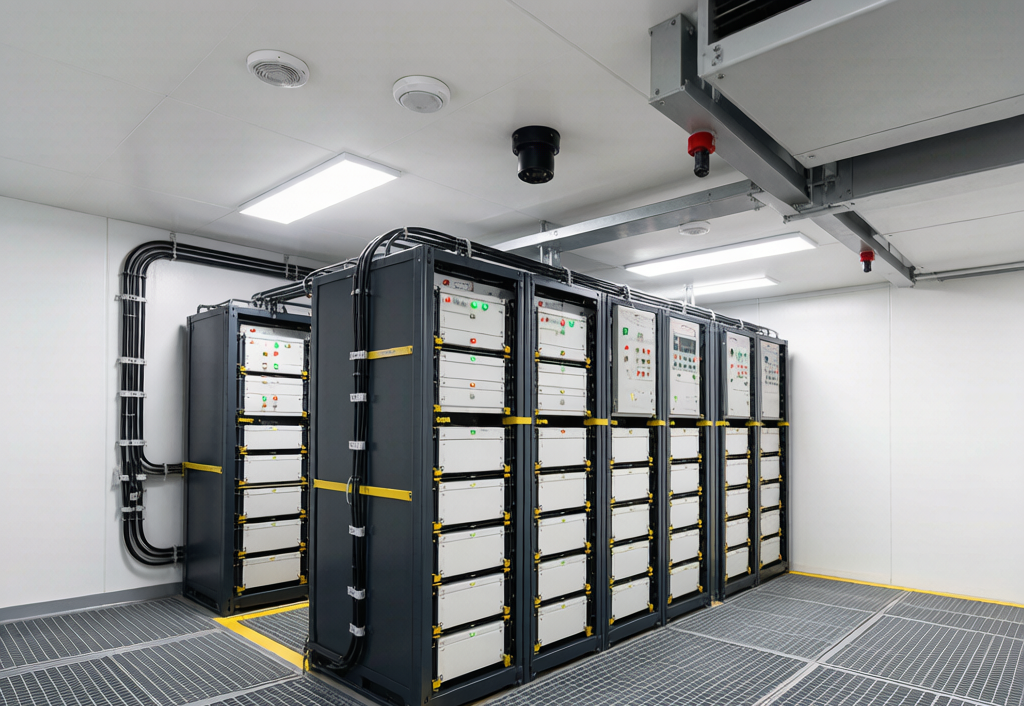
The 2026 standards reset has fundamentally changed the fire suppression technology landscape. The shift from passive venting to active prevention means that traditional suppression agents alone are no longer sufficient. Here is how the leading technologies compare.
| Technology | Mechanism | Effectiveness vs. Thermal Runaway | Best Application | Cost Range (1 MWh) |
|---|---|---|---|---|
| Gas Detection + Ventilation (CCR) | Continuous monitoring of H₂/CO/LFL; fans dilute gases below combustible threshold | High—prevents explosion, the primary casualty risk | All enclosed BESS; mandatory under NFPA 855 (2026) | $25,000-$60,000 |
| Aerosol Suppression | Condensed aerosol particles interrupt chemical chain reaction of fire | Moderate—extinguishes open flame but cannot stop thermal runaway | Containerized BESS; small footprint, no pipework | $20,000-$50,000 |
| Novec 1230 / Clean Agent | Chemical suppression via heat absorption; environmentally friendly | Moderate—effective for early-stage fires; limited on deep-seated thermal runaway | Indoor electrical rooms; systems with sensitive electronics | $35,000-$80,000 |
| Water Mist | Fine water droplets cool battery and displace oxygen; high heat absorption | Good—cooling can slow propagation; risk of electrical shorts if not designed properly | Large outdoor containers; utility-scale systems | $30,000-$70,000 |
| Thermal Barriers | Intumescent coatings and physical insulation between cells/modules | Supporting—delays propagation but does not stop it alone | All systems; complementary to active suppression | $10,000-$30,000 |
| Deflagration Venting (NFPA 68) | Pressure-relief panels release combustion gases outward | Supporting—no longer acceptable as primary explosion strategy alone | Enclosed containers; supplementary to CCR | $8,000-$20,000 |
Sources: IDTechEx Thermal Management & Fire Protection for BESS (2025); Verified Market Reports (2026); PragmaMarketResearch BESS Fire Protection Market (April 2026)
The critical insight: no single technology is sufficient. The 2026 compliance model requires a layered approach—gas detection and CCR to prevent explosions, suppression to manage fires, thermal barriers to slow propagation, and venting as a backup. The old approach of “install a clean agent system and call it done” no longer meets code.
Fire Suppression System Selection Flowchart
START: What is your BESS architecture?
│
├── OUTDOOR CONTAINERIZED (most common for C&I)
│   │
│   ├── Is the container sealed/enclosed?
│   │   │
│   │   ├── YES → Required: Gas Detection + CCR (NFPA 69)
│   │   │           + Aerosol or Water Mist suppression
│   │   │           + Thermal barriers between racks
│   │   │           + Deflagration venting (supplementary)
│   │   │
│   │   └── NO (open/naturally ventilated)
│   │            → Gas Detection (monitoring only)
│   │            + Aerosol suppression
│   │            + Thermal barriers
│   │            + Spacing per NFPA 855
│   │
├── INDOOR / BUILDING (high risk - avoid for new projects)
│   │
│   └── Required: Full CCR system (NFPA 69)
│                + Clean agent (Novec 1230) or Water Mist
│                + Room pressure management
│                + HVAC interlock for shutdown
│                + Deflagration venting
│                + Enhanced spacing and fire-rated barriers
│                ⚠️ Consider relocating to outdoor design
│
└── OPEN RACK / PAD-MOUNTED (utility-scale)
    │
    └── Required: Gas Detection
             + Water Mist or Aerosol
             + Spacing between racks per UL 9540A
             + Thermal imaging cameras
             + Fire department pre-planning
5. The BESS Fire Safety Compliance Checklist for B2B Buyers
Use this checklist during the procurement process to verify that your BESS supplier meets 2026 standards. These items should be explicitly required in your RFP/RFQ and verified before contract award.
Procurement Compliance Checklist (15-Point Framework)
6. Cost Analysis: What BESS Fire Safety Actually Costs
Fire safety is not a line item—it is an integrated system that adds 5-12% to total BESS project CAPEX. Understanding the cost breakdown helps B2B buyers budget accurately and avoid the costly mistake of treating fire protection as an afterthought.
Fire Protection Cost Breakdown by System Size
| Cost Component | 200 kWh (C&I) | 1 MWh (C&I) | 5 MWh (Utility) | 20 MWh (Utility) |
|---|---|---|---|---|
| Gas Detection System | $8,000-$15,000 | $25,000-$60,000 | $80,000-$150,000 | $200,000-$400,000 |
| Fire Suppression (Aerosol/Clean Agent) | $10,000-$25,000 | $30,000-$100,000 | $120,000-$350,000 | $400,000-$1,000,000 |
| Smoke/Thermal Detection | $5,000-$10,000 | $15,000-$40,000 | $50,000-$120,000 | $150,000-$350,000 |
| Thermal Barriers | $3,000-$8,000 | $10,000-$30,000 | $40,000-$100,000 | $120,000-$300,000 |
| Deflagration Venting | $3,000-$5,000 | $8,000-$20,000 | $25,000-$60,000 | $80,000-$180,000 |
| HMA Engineering | $5,000-$10,000 | $10,000-$25,000 | $20,000-$50,000 | $40,000-$80,000 |
| Firefighter Training & ERP | $2,000-$5,000 | $5,000-$15,000 | $15,000-$30,000 | $30,000-$60,000 |
| Total Fire Protection | $36,000-$78,000 | $103,000-$290,000 | $350,000-$860,000 | $1,020,000-$2,370,000 |
| % of Project CAPEX | ~8-12% | ~7-10% | ~6-8% | ~5-7% |
Cost estimates based on: PragmaMarketResearch BESS Fire Protection Market Report (April 2026); IDTechEx Thermal Management Report (2025); industry supplier quotes. Reference pricing only—actual costs vary by specification, jurisdiction, and volume.
Note: All pricing is indicative market reference based on third-party reports. Final project costs vary by specification, location, and volume. Contact our team for a customized quote.
Global BESS Fire Protection Market Size
| Market Segment | 2025 Value | Projected Value | CAGR | Key Driver |
|---|---|---|---|---|
| BESS Fire Protection (Total) | $4.29B | $8.5B+ (2030) | ~14.5% | NFPA 855 (2026) compliance mandates |
| Fire Suppression Systems (Li-ion) | $1.1B | $1.5B (2027) | ~16% | Utility-scale BESS deployment growth |
| Thermal Runaway Shields | $1.8B | $2.1B (2026) | ~8% | Cell-level propagation prevention |
| Gas Detection & CCR Systems | $0.9B | $2.0B+ (2030) | ~17% | NFPA 69 shift from venting to prevention |
Sources: PragmaMarketResearch (April 2026), Verified Market Reports (April 2026), Future Market Insights (February 2026), Morgan Reed Insights (July 2026)
7. Insurance & Risk Transfer: What Insurers Now Demand
The insurance landscape for BESS has hardened significantly since Moss Landing. Underwriters now treat fire safety compliance not as a differentiator but as a baseline precondition for coverage. Projects without documented compliance face higher premiums, coverage exclusions, or outright denial.
| Coverage Type | Typical Limit | 2026 Underwriting Requirements | Premium Impact |
|---|---|---|---|
| Property Damage | $50M-$200M+ (utility) | NFPA 855 (2026) compliance letter; UL 9540A test data; HMA on file | 0.5-2.0% of insured value (up from 0.3-0.8% pre-2025) |
| General Liability | $10M-$25M | ERP with local fire department; exclusion zone documentation; community notification plan | $15,000-$80,000/year depending on size and location |
| Business Interruption | 12-24 months revenue | Post-incident recovery timeline documentation; spare parts inventory plan | 0.3-1.0% of insured value |
| Environmental Impairment | $10M-$50M | Chemistry disclosure; heavy metal containment plan; remediation cost estimate | $20,000-$100,000/year; harder to obtain post-Moss Landing |
| BESS-Specific Endorsement | Varies | Annual compliance audit; thermal runaway scenario modeling; firefighter training records | 5-15% premium load |
Sources: Solarif BESS Insurance Guide (2026); BakerRisk BESS Risk Management (2024); LeaRisk BESS Insurance Analysis (November 2025); industry underwriter interviews
For B2B buyers, the practical implication is clear: compliance is cheaper than non-compliance. The cost of meeting NFPA 855 (2026) requirements (5-12% of CAPEX) is far less than the cost of uninsurable risk, elevated premiums, or post-incident liability exposure.
8. LFP vs NMC: Chemistry Matters, But So Does Architecture
The industry’s shift from NMC (nickel manganese cobalt) to LFP (lithium iron phosphate) chemistry has improved fire safety—but it has not eliminated the risk. Understanding the chemistry tradeoffs is essential for making informed procurement decisions.
| Factor | NMC | LFP | Implication for Fire Safety |
|---|---|---|---|
| Thermal runaway onset | ~150°C | ~210°C | LFP tolerates higher temperatures before failure |
| Heat release during failure | High | ~50-60% less than NMC | LFP fires are smaller and slower to propagate |
| Oxygen release | Yes—cathode releases O₂, self-feeding fire | No—cathode does not release oxygen | LFP fires can be suppressed more effectively |
| Off-gas composition | CO, H₂, hydrocarbons, electrolyte vapor | Higher H₂ concentration (hydrogen-rich) | LFP explosion risk is NOT lower—H₂ is extremely flammable |
| Environmental contamination | Nickel, manganese, cobalt deposition | Iron, phosphate—less toxic | LFP reduces environmental remediation liability |
| UL 9540A test performance | Typically fails propagation tests more easily | Better propagation resistance | LFP systems more likely to pass 2026 LSFT requirements |
Sources: BESS.courses chemistry analysis (2026); Springer fire suppression evaluation (January 2026); UL 9540A test databases
The critical takeaway: LFP reduces fire risk but does not reduce explosion risk. The hydrogen-rich off-gas from LFP cells means that gas detection and CCR systems (NFPA 69) are equally essential regardless of chemistry. The Moss Landing fire involved NMC cells; but a similar-scale LFP installation with inadequate gas management could still produce a devastating explosion.
9. Best Practices: Designing Safe BESS Installations
Based on the 2026 standards, incident lessons, and industry best practices, here is a summary of the design principles that produce safe, compliant, and insurable BESS installations.
Architecture Selection: The Single Most Important Decision
| Architecture | Fire Risk Profile | 2026 Compliance Ease | Recommendation |
|---|---|---|---|
| Outdoor, distributed containers | Lowest—each container is independent; fire in one does not affect others | Easiest—natural ventilation, clear spacing, no shared air volume | ✅ Recommended for all new projects |
| Outdoor, pad-mounted open racks | Low—open airflow prevents gas accumulation | Easy—minimal enclosure requirements | ✅ Suitable for utility-scale |
| Indoor, dedicated battery room | Moderate—enclosed space requires full CCR system | Moderate—expensive to retrofit full NFPA 69 compliance | ⚠️ Acceptable with full compliance; avoid for new projects |
| Indoor, shared building (Moss Landing type) | Highest—shared air volume amplifies consequences | Very difficult—may not meet 2026 standards at scale | ❌ Avoid; industry has moved away |
Based on NFPA 855 (2026) architecture requirements; BESS.courses design guidance; EPRI safety recommendations
The Seven Design Principles
- Go outdoor and distributed: Outdoor containerized or pad-mounted architectures eliminate the shared-air-volume problem that caused both McMicken and Moss Landing catastrophes.
- Design for prevention, not suppression: The 2026 philosophy is to prevent gas clouds from forming (NFPA 69 CCR) rather than managing explosions after they occur (NFPA 68 venting).
- Specify multi-layer detection: Gas detection (H₂/CO/LFL) + thermal imaging + smoke detection. No single sensor type covers all failure modes.
- Size spacing per UL 9540A data: Don’t use generic spacing tables—use the actual tested propagation distances from your supplier’s UL 9540A report.
- Plan for “let it burn”: Modern fire tactics often allow a burning BESS enclosure to self-extinguish while protecting surrounding exposures. Design water supply and access accordingly.
- Train before energizing: Conduct live drills with local fire department before system commissioning. The ERP must be a practiced plan, not a drawer document.
- Choose LFP where possible: LFP reduces fire severity and environmental contamination risk, though gas management remains essential for explosion prevention.
10. The Regulatory Horizon: What’s Coming After 2026
The 2026 standards reset is not the end of the road. Several regulatory developments will shape BESS fire safety over the next 3-5 years:
- NFPA 800 (in development): A new battery safety standard covering the full lifecycle—manufacturing, transport, installation, operation, and decommissioning. May eventually absorb parts of NFPA 855.
- California early adoption: The California State Fire Marshal has signaled intent to adopt NFPA 855 (2026) by July 2027—earlier than the typical code adoption cycle. Other states typically follow California’s lead.
- IEC harmonization: IEC 62933-5-2 is being updated to align with NFPA 855, potentially creating a unified international framework for the first time.
- Insurance evolution: As more incident data accumulates in the EPRI database, expect underwriters to develop BESS-specific risk scoring models (similar to wind turbine or solar project risk scores).
- Sodium-ion and solid-state: NFPA 855 (2026) already explicitly lists sodium-ion chemistry. As solid-state batteries commercialize (2027-2030), expect standards updates to address their unique safety profiles.
- AI-powered monitoring: Machine learning models for predictive thermal runaway detection are entering commercial deployment, potentially enabling intervention before runaway becomes irreversible.
For B2B buyers, the strategic implication is to design to the latest standard even if your jurisdiction hasn’t adopted it yet. The regulatory direction is clear—requirements will only tighten. Building to 2026 standards now avoids costly retrofits later.
Frequently Asked Questions
What is BESS fire safety?
BESS fire safety encompasses the engineering standards, detection systems, suppression technologies, and operational protocols designed to prevent, contain, and mitigate thermal runaway events in battery energy storage systems. It is governed primarily by NFPA 855 (installation), UL 9540A (testing), and IEC 62933 (international standards).
What is thermal runaway in a battery energy storage system?
Thermal runaway is a self-accelerating exothermic failure process in lithium-ion batteries. It begins when a trigger (internal defect, overcharge, external heat, mechanical damage) raises cell temperature above 90-120°C, causing protective layers and separators to decompose. The cell releases flammable gases (hydrogen, carbon monoxide, hydrocarbons) that can ignite as fire or accumulate and explode in enclosed spaces.
What changed in NFPA 855 (2026 edition)?
NFPA 855 (2026 edition) introduced seven major updates: Hazard Mitigation Analysis (HMA) is now mandatory for nearly all installations (threshold table removed), large-scale fire testing is explicitly required alongside UL 9540A, explosion control shifted from venting (NFPA 68) to active prevention (NFPA 69), thermal runaway propagation prevention (TRPP) is redefined as active methods, detection options broadened to include thermal imaging, emergency response requirements strengthened with annual reviews, and the scope table was rebuilt to explicitly list battery chemistries.
Are LFP batteries safe from thermal runaway?
LFP (lithium iron phosphate) batteries are safer than NMC but not immune to thermal runaway. LFP cells are harder to ignite and release less energy during failure, but their off-gas is rich in hydrogen, making explosion prevention a critical design challenge. The industry shift to LFP improved fire behavior but did not solve the explosion problem.
How much does BESS fire protection cost?
BESS fire protection systems typically add 5-12% to total project CAPEX. For a 1 MWh system, fire detection costs $15,000-$40,000, gas detection systems cost $25,000-$60,000, suppression systems range from $30,000-$100,000, and thermal barriers add $10,000-$30,000. The global BESS fire protection market was valued at $4.29 billion in 2025 and is growing rapidly.
What is UL 9540A and why does it matter for BESS fire safety?
UL 9540A is a test method (not a pass/fail listing) that characterizes thermal runaway propagation at the cell, module, unit, and installation level. Its data feeds into NFPA 855, UL 9540, and other standards. The latest edition added large-scale fire testing requirements and increased focus on system-level safety, making it a critical compliance document for B2B BESS procurement.
What are the insurance requirements for BESS installations in 2026?
BESS insurance requirements in 2026 typically include: property damage coverage ($50-200M+ for utility-scale), general liability ($10-25M), business interruption coverage, environmental impairment liability for contamination events, and specialized BESS endorsements. Insurers increasingly require NFPA 855 compliance, UL 9540A test data, HMA documentation, and emergency response plans as preconditions for coverage.
What lessons were learned from the Moss Landing BESS fire?
The Moss Landing fire (January 2025, 300MW NMC system in California) taught the industry that indoor, shared-air-volume architectures with NMC chemistry at utility scale amplify consequences catastrophically. Key lessons: outdoor distributed architectures are fundamentally safer, LFP chemistry reduces fire risk, gas management must prevent combustible gas accumulation (not just vent it), and emergency response plans must be practiced with local fire departments before energization. California subsequently passed CPUC General Order 167-C tightening BESS O&M oversight.
Building a Safe, Compliant BESS Project?
Huijue Group designs and manufactures containerized energy storage systems with comprehensive fire safety compliance—including gas detection, CCR systems, UL 9540A-tested components, and full NFPA 855 documentation. Our engineering team supports HMA preparation, emergency response planning, and firefighter training coordination.
Contact our engineering team | Explore containerized BESS solutions