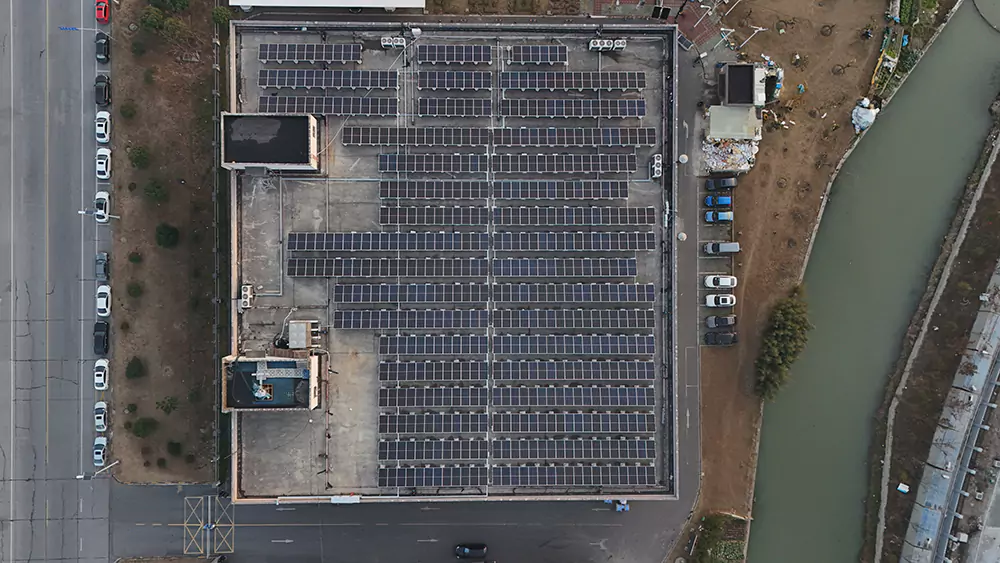
Distributed photovoltaic (PV) energy storage systems have become a cornerstone of the modern energy transition. As global solar PV capacity surpassed 2,383 GW by the end of 2025—with over 600 GW added in a single year—the question of whether these systems must be grid-connected grows increasingly relevant. Whether you are planning a commercial solar installation or evaluating off-grid solutions for remote sites, understanding the architecture options is critical to making the right investment decision.
Quick Answer: Key Takeaways
| Question |
Answer |
| Must distributed PV be grid-connected? |
No. Systems can be grid-connected, off-grid, or hybrid |
| Off-grid system cost |
$40,000-$70,000+ (residential, includes battery bank) |
| Grid-connected system cost |
$15,000-$30,000 (residential, 30-40% cheaper) |
| Global solar PV LCOE (2025) |
$0.044/kWh (IRENA) |
| Off-grid global capacity (2025) |
~20 GW (IRENA) |
| Best choice for remote areas |
Off-grid or hybrid with battery storage |
| Best choice for urban/commercial |
Grid-connected (with optional battery backup) |
| By 2035, % of new systems with storage |
80%+ (projected) |
1. What Is Distributed PV Energy Storage?
Distributed photovoltaic energy storage refers to solar power generation systems located at or near the point of electricity consumption, equipped with battery storage to store excess energy for later use. Unlike centralized utility-scale solar farms, distributed PV systems are installed on rooftops, building facades, or ground-mounted arrays at commercial, industrial, or residential sites.
Three Operating Modes
| Mode |
Grid Connection |
Battery Required |
Primary Application |
| Grid-Connected |
Yes |
Optional |
Urban/commercial buildings with grid access |
| Off-Grid |
No |
Mandatory |
Remote areas, islands, field operations |
| Hybrid |
Yes (with islanding) |
Yes |
Grid-connected with backup power |
Distributed PV System Scale Classifications
| Type |
Capacity Range |
Typical Application |
Global Share Trend |
| Residential |
1-20 kW |
Single-family homes |
Growing rapidly in Europe & Australia |
| Commercial & Industrial (C&I) |
20 kW-1 MW |
Factories, offices, schools |
Fastest-growing segment |
| Community |
100 kW-1 MW |
Shared solar, multi-user |
6-7 GW cumulative (U.S., 2025) |
| Microgrid |
1-10 MW |
Campuses, villages, islands |
Emerging in developing markets |
The distributed PV market is expanding rapidly. In the United States, distributed solar accounts for approximately 17% of new solar capacity additions in 2025. Globally, countries like Germany see over 60% of new residential PV systems paired with battery storage, signaling a shift toward hybrid architectures.
2. Grid-Connected vs Off-Grid: Core Comparison
The fundamental architectural choice between grid-connected and off-grid distributed PV determines system cost, complexity, reliability, and ROI. Here is a comprehensive comparison:
| Parameter |
Grid-Connected |
Off-Grid |
Hybrid |
| Grid dependency |
Connected to utility grid |
Fully independent |
Connected with battery backup |
| Battery requirement |
Not required |
Mandatory (sized for autonomy days) |
Required (sized for backup duration) |
| System cost (residential) |
$15,000-$30,000 |
$40,000-$70,000+ |
$25,000-$45,000 |
| Cost per watt |
$2.50-$4.00/W |
$5.00-$8.00/W |
$3.50-$5.50/W |
| Excess energy handling |
Sold to grid (net metering) |
Stored in batteries |
Grid sell + battery storage |
| Power during outage |
No (anti-islanding shutdown) |
Yes (always independent) |
Yes (battery provides backup) |
| Maintenance complexity |
Low |
High (battery management) |
Medium |
| Typical payback period |
6-10 years |
10-15 years |
7-12 years |
| Best suited for |
Urban areas with stable grid |
Remote areas, islands |
Areas with unreliable grid |
Key Insight: Grid-connected systems are 30-40% cheaper than off-grid alternatives because they leverage existing grid infrastructure and eliminate the need for large battery banks. However, off-grid systems provide energy independence that grid-tied systems cannot match.
Cost Breakdown by System Type
| Component |
Grid-Connected (% of total) |
Off-Grid (% of total) |
Hybrid (% of total) |
| Solar panels |
35-40% |
20-25% |
25-30% |
| Inverter |
15-20% |
10-15% |
12-17% |
| Battery bank |
0% |
30-40% |
20-30% |
| Charge controller |
0% |
5-8% |
3-5% |
| Mounting & wiring |
15-20% |
10-15% |
12-17% |
| Labor & soft costs |
25-30% |
15-20% |
15-20% |
3. Off-Grid Distributed PV Systems: Architecture & Applications
Off-grid distributed PV systems operate entirely independently of the utility grid. They are primarily deployed in areas where grid connection is impossible, difficult, or economically unviable—such as remote mountainous regions, islands, and developing rural communities.
System Architecture
| Component |
Function |
Specification Considerations |
| Solar panels |
Convert sunlight to DC electricity |
Power rating (W), efficiency (%), temperature coefficient, degradation rate |
| Charge controller |
Regulate battery charging/discharging |
MPPT vs PWM, voltage matching, current rating |
| Battery bank |
Store energy for nighttime/cloudy periods |
Capacity (kWh), chemistry (LiFePO4/lead-acid), cycle life, DoD |
| Inverter |
Convert DC to AC for loads |
Power (kW), waveform (pure sine), efficiency, surge capacity |
| Protection devices |
Safeguard system from faults |
Circuit breakers, fuses, surge protectors, DC disconnects |
| Monitoring system |
Track performance and status |
Remote access, data logging, alarm functions |
Advantages of Off-Grid Systems
| Advantage |
Details |
| Complete energy independence |
No reliance on utility grid; immune to grid outages and rate increases |
| Feasible in remote locations |
Only viable option where grid extension costs $20,000-$50,000+/km |
| Environmental resilience |
Operates during natural disasters when grid fails |
| Scalable modularity |
System can be expanded incrementally as needs grow |
| No utility bills |
Zero electricity costs after initial investment |
Disadvantages of Off-Grid Systems
| Disadvantage |
Impact |
Mitigation |
| High upfront cost |
$40,000-$70,000+ for residential; battery bank adds 30-40% to total |
Phased investment; government subsidies |
| Limited capacity |
Cannot meet very large loads without excessive battery storage |
Hybrid genset backup; load management |
| Battery replacement |
LiFePO4: 10-15 years; Lead-acid: 3-7 years; costs $5,000-$15,000 |
Use long-cycle-life LiFePO4 batteries |
| Weather dependency |
Extended cloudy periods reduce generation; requires oversizing |
Design for 3-5 days autonomy |
| Maintenance intensity |
Battery monitoring, terminal cleaning, electrolyte checks (lead-acid) |
Remote monitoring systems; LiFePO4 reduces maintenance |
Global Off-Grid PV Market Snapshot (2025)
| Region |
Off-Grid PV Capacity |
Key Applications |
Growth Driver |
| Sub-Saharan Africa |
~5 GW |
Solar home systems, minigrids |
580M people without electricity |
| South Asia |
~4 GW |
Rural electrification, agricultural pumps |
India: 10M+ solar pumps target |
| Southeast Asia |
~3 GW |
Island minigrids, telecom towers |
17,000+ islands (Indonesia, Philippines) |
| Latin America |
~2 GW |
Remote communities, mining operations |
Brazil: “Luz para Todos” program |
| Oceania |
~1.5 GW |
Off-grid mining, remote stations |
Australia: large off-grid mining sector |
| Total (global) |
~20 GW |
Growing 15-20% annually (IRENA, 2025) |
4. Grid-Connected Distributed PV Systems
Grid-connected (also called grid-tied) distributed PV systems are directly connected to the utility grid. The solar panels generate DC electricity, which an inverter converts to AC power synchronized with the grid. When generation exceeds consumption, surplus power flows to the grid; when generation is insufficient, power is drawn from the grid.
How Grid-Connected Systems Work
| Stage |
Process |
Key Equipment |
| 1. Generation |
Solar panels convert sunlight to DC electricity |
PV modules (300-700W each) |
| 2. Conversion |
Inverter converts DC to grid-synchronized AC |
String inverter / microinverter |
| 3. Distribution |
AC power flows to loads via main panel |
AC disconnect, breaker panel |
| 4. Export/Import |
Excess power sold to grid; deficit drawn from grid |
Net meter / bidirectional meter |
| 5. Safety |
Anti-islanding protection shuts system during outage |
Inverter firmware, grid relay |
Net Metering Economics
| Net Metering Model |
How It Works |
Export Rate |
Example Markets |
| Full retail net metering |
1:1 credit for exported kWh |
Retail rate ($0.12-0.35/kWh) |
Traditional NEM states |
| Net billing |
Export at reduced rate |
Avoided cost ($0.03-0.10/kWh) |
California NEM 3.0 |
| Feed-in tariff (FiT) |
Fixed payment per kWh exported |
$0.08-0.25/kWh (fixed) |
Germany, Japan (legacy) |
| Self-consumption |
No export; excess wasted |
$0/kWh |
Some emerging markets |
Important: California’s NEM 3.0 reduced export rates by approximately 75% compared to NEM 2.0, shifting from retail-rate compensation to “avoided cost” pricing. This has driven 60%+ of new California residential systems to include battery storage.
Grid Connection Technical Requirements
| Parameter |
Specification |
Standard/Code |
| Voltage |
230V (single phase) / 400V (three phase) |
IEC 61727 / IEEE 1547 |
| Frequency |
50 Hz or 60 Hz (±0.5 Hz) |
IEC 61727 |
| Power factor |
≥0.95 (leading or lagging) |
IEEE 1547-2018 |
| Harmonics (THD) |
<5% current THD |
IEEE 519 |
| Anti-islanding |
Disconnect within 2 seconds of grid loss |
UL 1741 / IEC 62116 |
| DC injection |
<0.5% of rated output current |
IEC 61727 |
Advantages and Disadvantages
| Aspect |
Advantage |
Disadvantage |
| Cost |
30-40% cheaper than off-grid |
Subject to utility rate changes |
| Reliability |
Grid provides backup when solar is insufficient |
No power during grid outage (anti-islanding) |
| Maintenance |
Low (no battery to maintain) |
Inverter replacement every 10-15 years |
| Revenue |
Sell excess power via net metering |
Export rates may decrease (NEM 3.0) |
| Installation |
Simpler, fewer components |
Requires utility interconnection approval (1-4 weeks) |
5. Hybrid Systems: The Emerging Standard
Hybrid distributed PV systems combine the best of both worlds: grid connection for reliability and net metering benefits, plus battery storage for backup power during outages. This architecture is rapidly becoming the preferred choice in markets with declining feed-in tariffs and increasing grid instability.
Hybrid System Configurations
| Configuration |
Architecture |
Battery Role |
Cost Premium |
| AC-Coupled |
Solar inverter + separate battery inverter |
Backup power + self-consumption |
+$10,000-$15,000 |
| DC-Coupled |
Single hybrid inverter manages PV + battery |
Higher round-trip efficiency |
+$8,000-$12,000 |
| Multi-Mode |
Inverter supports grid-tie, off-grid, and backup |
Full flexibility |
+$12,000-$18,000 |
Why Hybrid Is Growing
| Driver |
Data Point |
Source |
| Declining battery costs |
Battery prices dropped >80% since 2010; projected <$100/kWh by 2030 |
BloombergNEF / IRENA |
| Grid instability concerns |
U.S. experienced 180% increase in weather-related outages (2011-2021) |
U.S. DOE |
| Policy shifts |
California NEM 3.0 reduced export value by ~75% |
CPUC, 2023 |
| Storage adoption trend |
By 2035, 80%+ of new PV systems expected to include storage |
IEA / SolarPower Europe |
| Germany residential storage |
60% of new residential PV systems paired with batteries |
SolarPower Europe, 2024 |
6. Electrical Design Fundamentals for Distributed PV
Regardless of whether the system is grid-connected or off-grid, the electrical design must address several critical aspects to ensure safety, reliability, and performance.
6.1 Solar Panel Selection and Layout
| Parameter |
Specification |
Design Consideration |
| Panel type |
Monocrystalline PERC / TOPCon / HJT |
HJT offers 22-24% efficiency; TOPCon 21-23% |
| Power rating |
400-700W per panel |
Higher wattage = fewer panels, lower BOS cost |
| Efficiency |
20-24% (commercial) |
Higher efficiency = more energy per m² |
| Temperature coefficient |
-0.30% to -0.35%/°C |
Lower is better for hot climates |
| Degradation rate |
<0.5%/year (Year 2+) |
25-year warranty: 80-85% power retention |
| Orientation (Northern Hemisphere) |
South-facing, 15-35° tilt |
Optimize for latitude; consider east-west for self-consumption |
| Shading |
Minimize to <5% loss |
Use microinverters or optimizers if unavoidable |
Design Tip: For off-grid systems, panel-battery voltage matching is critical. A 48V battery bank typically pairs with panels configured for 60-72 cell modules in series (Vmp ~36-40V per string). Ensure the charge controller’s MPPT voltage range accommodates both minimum and maximum string voltages across all temperature conditions.
6.2 Battery Selection and Capacity Calculation
The battery bank is the most critical and expensive component of off-grid and hybrid systems. Proper sizing ensures system reliability without excessive cost.
| Battery Chemistry |
Cycle Life |
Round-Trip Efficiency |
Cost ($/kWh) |
Best For |
| LiFePO4 (LFP) |
4,000-6,000 cycles |
90-95% |
$300-$500 |
Off-grid, hybrid (recommended) |
| NMC Lithium |
2,000-3,500 cycles |
92-96% |
$350-$550 |
Space-constrained applications |
| Lead-Acid (AGM) |
500-1,200 cycles |
80-85% |
$150-$250 |
Budget systems, short-term use |
| Lead-Acid (Flooded) |
800-1,500 cycles |
75-82% |
$100-$200 |
Stationary, well-maintained systems |
| Saltwater |
3,000-5,000 cycles |
85-90% |
$350-$450 |
Environmentally sensitive sites |
Battery Capacity Sizing Formula
| Step |
Formula |
Example (5 kWh/day load, 3 days autonomy) |
| 1. Daily energy need |
Sum of all load Wh/day |
5,000 Wh/day |
| 2. Autonomy days |
Days without sun (typically 2-5) |
3 days |
| 3. Required capacity |
Daily need × Autonomy days |
5,000 × 3 = 15,000 Wh |
| 4. DoD adjustment |
Capacity ÷ DoD (LFP: 0.8) |
15,000 ÷ 0.8 = 18,750 Wh |
| 5. Temperature derating |
× 1.1-1.2 (cold climates) |
18,750 × 1.1 = 20,625 Wh ≈ 20.6 kWh |
| 6. Inverter efficiency |
÷ 0.90 (inverter loss) |
20,625 ÷ 0.90 ≈ 22.9 kWh |
| Final battery size |
~23 kWh battery bank (LiFePO4, 48V system) |
6.3 Charge Controller Selection
| Controller Type |
Efficiency |
Cost |
Best Application |
| MPPT (Maximum Power Point Tracking) |
95-99% |
$200-$1,500 |
All off-grid and hybrid systems (recommended) |
| PWM (Pulse Width Modulation) |
70-80% |
$50-$200 |
Small systems (<200W), budget applications |
MPPT controllers extract 20-30% more energy from the same solar array compared to PWM, making them the standard choice for any serious off-grid installation. Key selection criteria include maximum input voltage, maximum charge current, battery voltage compatibility, and temperature compensation.
6.4 Inverter Selection
| Inverter Type |
Application |
Key Specs |
Cost Range |
| String inverter |
Grid-connected (roof mounted) |
3-15 kW, 97-99% efficiency |
$1,000-$3,500 |
| Microinverter |
Grid-connected (shade mitigation) |
250-400W per panel |
$1,200-$2,500 |
| Off-grid inverter |
Off-grid systems |
Pure sine wave, surge capacity 2x rated |
$800-$3,000 |
| Hybrid inverter |
Grid + battery backup |
DC-coupled, multi-mode operation |
$1,500-$5,000 |
Inverter Sizing Guidelines
| System Type |
Inverter-to-Array Ratio |
Rationale |
| Grid-connected (cool climate) |
1.0-1.1 |
Maximize AC output |
| Grid-connected (hot climate) |
0.85-0.95 |
Avoid clipping; derate for heat |
| Off-grid |
1.2-1.5 (surge capacity) |
Handle motor startup surges |
| Hybrid |
1.0-1.2 |
Balanced for grid + battery |
7. Cost & ROI Analysis: Grid-Connected vs Off-Grid vs Hybrid
7.1 Total System Cost Comparison
| System Size |
Grid-Connected |
Off-Grid |
Hybrid |
| 5 kW residential |
$12,500-$17,500 |
$30,000-$45,000 |
$20,000-$30,000 |
| 8 kW residential |
$20,000-$28,000 |
$45,000-$65,000 |
$28,000-$40,000 |
| 10 kW residential |
$25,000-$35,000 |
$55,000-$75,000 |
$32,000-$45,000 |
| 50 kW commercial |
$100,000-$140,000 |
$200,000-$300,000 |
$140,000-$200,000 |
| 100 kW commercial |
$180,000-$250,000 |
$350,000-$500,000 |
$250,000-$350,000 |
| 500 kW industrial |
$800,000-$1,100,000 |
N/A (typically hybrid) |
$1,000,000-$1,400,000 |
7.2 Levelized Cost of Energy (LCOE) by System Type
| System Type |
LCOE ($/kWh) |
Key Cost Drivers |
| Utility-scale PV (global avg) |
$0.044 |
Lowest cost; economies of scale (IRENA, 2025) |
| Grid-connected residential |
$0.08-$0.15 |
Higher BOS cost; smaller scale |
| Grid-connected commercial |
$0.06-$0.12 |
Better economies than residential |
| Off-grid residential |
$0.20-$0.45 |
Battery replacement; oversizing |
| Hybrid residential |
$0.12-$0.25 |
Grid offset + battery value |
7.3 ROI Comparison: Residential 8 kW System
| Parameter |
Grid-Connected |
Off-Grid |
Hybrid |
| System cost (pre-incentive) |
$24,000 |
$55,000 |
$35,000 |
| Federal ITC (30%) |
-$7,200 |
-$16,500 |
-$10,500 |
| Net investment |
$16,800 |
$38,500 |
$24,500 |
| Annual savings |
$1,800 |
$2,400 (no utility bill) |
$2,100 (savings + outage protection) |
| Simple payback |
9.3 years |
16.0 years |
11.7 years |
| 25-year NPV |
$28,200 |
$21,500 |
$28,000 |
| IRR (25-year) |
12.5% |
7.8% |
10.2% |
| Battery replacement (Year 12) |
N/A |
-$8,000 |
-$5,000 |
Takeaway: Grid-connected systems offer the best pure financial return (12.5% IRR). However, off-grid systems may be the only viable option where grid access is unavailable, and hybrid systems provide growing value as grid reliability concerns increase and battery costs decline.
7.4 Regional Cost Variation
| Region |
Residential $/W (Grid-Tied) |
Commercial $/W (Grid-Tied) |
Battery $/kWh |
| United States |
$2.50-$4.00 |
$1.50-$2.50 |
$300-$500 |
| Europe (Germany) |
$2.00-$3.20 |
$1.30-$2.20 |
$280-$450 |
| China |
$1.00-$1.80 |
$0.70-$1.30 |
$200-$350 |
| Southeast Asia |
$1.50-$2.50 |
$1.00-$1.80 |
$250-$400 |
| Africa |
$2.00-$3.50 |
$1.30-$2.50 |
$300-$500 |
| Middle East |
$1.80-$3.00 |
$1.20-$2.00 |
$280-$450 |
8. Electrical Wiring, Protection & Monitoring
8.1 Wiring Design Standards
| Component |
Specification |
Standard |
| DC string wiring |
UV-resistant PV wire, 1000V or 1500V rated |
UL 4703 / IEC 62930 |
| AC wiring |
THHN/THWN copper, sized per ampacity |
NEC Article 310 / IEC 60364 |
| Conduit |
EMT, RMC, or UV-rated PVC |
NEC Article 358 / local codes |
| Grounding |
Equipment grounding + system grounding |
NEC 690.47 / IEC 62305 |
| DC disconnect |
Lockable, within sight of inverter |
NEC 690.13 |
8.2 Protection Device Configuration
| Protection Device |
Location |
Function |
Sizing Rule |
| DC fuse/breaker |
Between PV array and controller |
Protect against overcurrent from parallel strings |
1.25 × Isc × 1.56 |
| AC circuit breaker |
Inverter output to panel |
Isolate inverter from AC system |
1.25 × inverter rated current |
| Surge protection device (SPD) |
DC and AC sides |
Protect against lightning/transients |
Type 1+2 (IEC 61643) |
| Ground fault detector |
DC side |
Detect insulation faults to ground |
Built into inverter/controller |
| Leakage protector (RCD/GFCI) |
AC output |
Protect against electric shock |
30 mA trip (residential) |
8.3 Monitoring System Architecture
| Monitoring Level |
Parameters Tracked |
Data Access |
Cost |
| Basic |
Total energy production |
Local display |
$0-$200 |
| Standard |
Production, consumption, grid flow |
Mobile app |
$200-$500 |
| Advanced (off-grid/hybrid) |
SOC, battery temp, per-string monitoring, fault alerts |
Cloud platform + alerts |
$500-$2,000 |
| Enterprise (C&I) |
Full SCADA, predictive maintenance, financial tracking |
API integration, custom dashboard |
$2,000-$10,000+ |
Design Tip: For off-grid systems, a monitoring system is not optional—it is essential. Without grid backup, early detection of battery degradation, controller faults, or panel shading issues prevents system failures that could leave users without power for days.
9. Decision Framework: Which Architecture Should You Choose?
Decision Matrix
| Your Situation |
Recommended System |
Estimated Cost |
Expected Payback |
| Urban location, stable grid, want lower bills |
Grid-connected |
$15,000-$30,000 |
6-10 years |
| Remote area, no grid access |
Off-grid |
$40,000-$70,000+ |
10-15 years |
| Urban, frequent outages, need backup |
Hybrid |
$25,000-$45,000 |
7-12 years |
| Commercial, high daytime usage |
Grid-connected (self-consumption) |
$1.50-$2.50/W |
5-8 years |
| Industrial, critical loads, 24/7 power |
Hybrid with genset backup |
$2.00-$3.50/W |
7-10 years |
| Developing area, minigrid |
Off-grid or hybrid minigrid |
$3.00-$5.00/W |
8-12 years |
| Island community |
Hybrid minigrid + diesel backup |
$3.50-$5.50/W |
8-12 years |
Implementation Timeline
| Phase |
Duration |
Key Activities |
| 1. Site assessment |
1-2 weeks |
Shading analysis, load profiling, structural evaluation |
| 2. System design |
2-4 weeks |
Component selection, electrical drawings, string layout |
| 3. Permitting |
4-12 weeks |
Building permit, electrical permit, utility interconnection |
| 4. Procurement |
2-4 weeks |
Order panels, inverter, batteries, BOS components |
| 5. Installation (residential) |
1-2 days |
Mounting, wiring, inverter installation |
| 5. Installation (commercial) |
1-4 weeks |
Depends on system size and complexity |
| 6. Inspection & commissioning |
1-2 weeks |
Municipal inspection, utility approval, system testing |
| 7. Grid connection (if applicable) |
1-4 weeks |
Meter installation, PTO (permission to operate) |
Future Outlook: 2025-2035 Projections
| Indicator |
2025 Status |
2030 Projection |
2035 Projection |
| Global PV cumulative capacity |
2,383 GW |
~5,500 GW |
~9,000 GW |
| Solar PV LCOE |
$0.044/kWh |
$0.03-$0.035/kWh |
$0.025-$0.03/kWh |
| Battery cost ($/kWh) |
$300-$500 |
<$100/kWh |
$60-$80/kWh |
| % new PV with storage |
~25% |
~50% |
80%+ |
| Distributed PV share |
~30% of total |
~35-40% |
~40-45% |
| Off-grid solar capacity |
~20 GW |
~40-50 GW |
~70-80 GW |
Trend: As battery costs decline below $100/kWh by 2030 and grid reliability concerns grow globally, the hybrid architecture will become the default choice for most new distributed PV installations. The distinction between “grid-connected” and “off-grid” will blur as multi-mode inverters become standard.
10. FAQ
Does distributed PV energy storage have to be grid-connected?
No. Distributed PV energy storage systems can operate in three modes: grid-connected, off-grid, or hybrid. Off-grid systems are fully independent and ideal for remote areas without grid access. Grid-connected systems exchange power with the utility grid. Hybrid systems combine both, offering grid backup capability during outages. The choice depends on location, grid availability, cost budget, and energy independence requirements.
What is the cost difference between grid-connected and off-grid PV systems?
Grid-connected systems typically cost $2.50-$4.00/W ($15,000-$30,000 for a typical residential system). Off-grid systems cost $40,000-$70,000+ due to the need for large battery banks. Grid-tied systems are 30-40% cheaper because they leverage existing grid infrastructure and don’t require battery storage. However, off-grid systems eliminate ongoing utility bills entirely.
What components are needed for an off-grid distributed PV system?
An off-grid system requires solar panels, a battery bank for energy storage, a charge controller to regulate battery charging, an inverter to convert DC to AC power, electrical wiring, protection devices (circuit breakers, fuses, surge protectors), and optionally a monitoring system. The battery bank is the most critical and expensive component, typically representing 30-40% of total system cost.
How long do batteries last in an off-grid solar system?
Lithium-ion (LiFePO4) batteries typically last 10-15 years or 4,000-6,000 charge cycles with round-trip efficiency above 90%. Lead-acid batteries last 3-7 years but cost less upfront. Battery replacement is the primary ongoing maintenance cost for off-grid systems, typically needed every 7-12 years depending on usage patterns and battery chemistry. LiFePO4 is recommended for new installations due to superior cycle life.
What are the key electrical design considerations for distributed PV systems?
Key design elements include: solar panel selection and layout optimization, battery sizing and capacity calculation, charge controller specification (MPPT recommended), inverter selection (power rating, efficiency, waveform), electrical wiring (conductor sizing, insulation rating), protection devices (circuit breakers, fuses, surge protectors, leakage protectors), and monitoring system integration. Each component must be matched to system voltage, load requirements, and environmental conditions.
Can a grid-connected PV system work during a power outage?
Standard grid-connected systems automatically shut down during outages for safety (anti-islanding protection required by IEEE 1547 and IEC 62116). To maintain power during outages, you need a hybrid system with battery storage and a grid-tied inverter that supports islanding mode, or an AC-coupled system with a backup inverter. This adds $10,000-$15,000 to the system cost but provides critical backup power.
What is the ROI for distributed PV energy storage systems?
Grid-connected residential systems typically pay back in 6-10 years with an IRR of 10-15%. Commercial systems pay back in 5-8 years due to economies of scale. Off-grid systems have longer payback periods (10-15 years) due to higher upfront costs, but are often the only viable option in areas without grid access. The 30% U.S. federal ITC (valid through 2032) significantly improves ROI for all system types.
How is the global distributed PV market evolving in 2025-2026?
Global solar PV capacity reached 2,383 GW by end-2025, with 600+ GW added in 2025 alone. Distributed solar accounts for about 17% of new U.S. capacity. Solar PV LCOE is $0.044/kWh globally—the cheapest source of new electricity in most markets. By 2035, over 80% of new PV systems are expected to include battery storage, and battery costs are projected to fall below $100/kWh by 2030, driving rapid hybrid system adoption.
Need Help Choosing the Right PV System Architecture?
Whether you need a grid-connected system for your commercial building, an off-grid solution for a remote site, or a hybrid system with battery backup, Huijue Group provides end-to-end distributed PV and energy storage solutions.
Our engineering team handles everything from site assessment and electrical design to component selection and installation support.
Get a Free Consultation Explore Our Products
About the author: Huijue Group is a leading manufacturer of commercial and industrial energy storage systems, solar power solutions, and telecommunications power equipment. With products ranging from containerized BESS to residential energy storage, we serve clients across Europe, Africa, Southeast Asia, the Middle East, and the Americas.
Important Disclaimer
All data regarding cost savings, returns, payback periods, investment costs, etc., mentioned in this article/video are theoretical deductions based on specific assumptions (e.g., annual power consumption of 1 million kWh, electricity tariff of ¥0.8/kWh, photovoltaic utilization hours) – they do not represent actual return commitments nor constitute purchase or investment advice; actual returns may vary significantly due to factors such as sunlight conditions, electricity price fluctuations, equipment and installation costs, and subsidy policies, so please verify the latest market prices independently and consult professionals before making any investment decisions.

 chinahuijue@gmail.com
 +1 (702) 204-9855