
 chinahuijue@gmail.com
 +1 (702) 204-9855
Energy Storage Market Transformation: From Single-Product to Integrated Solutions in 2026
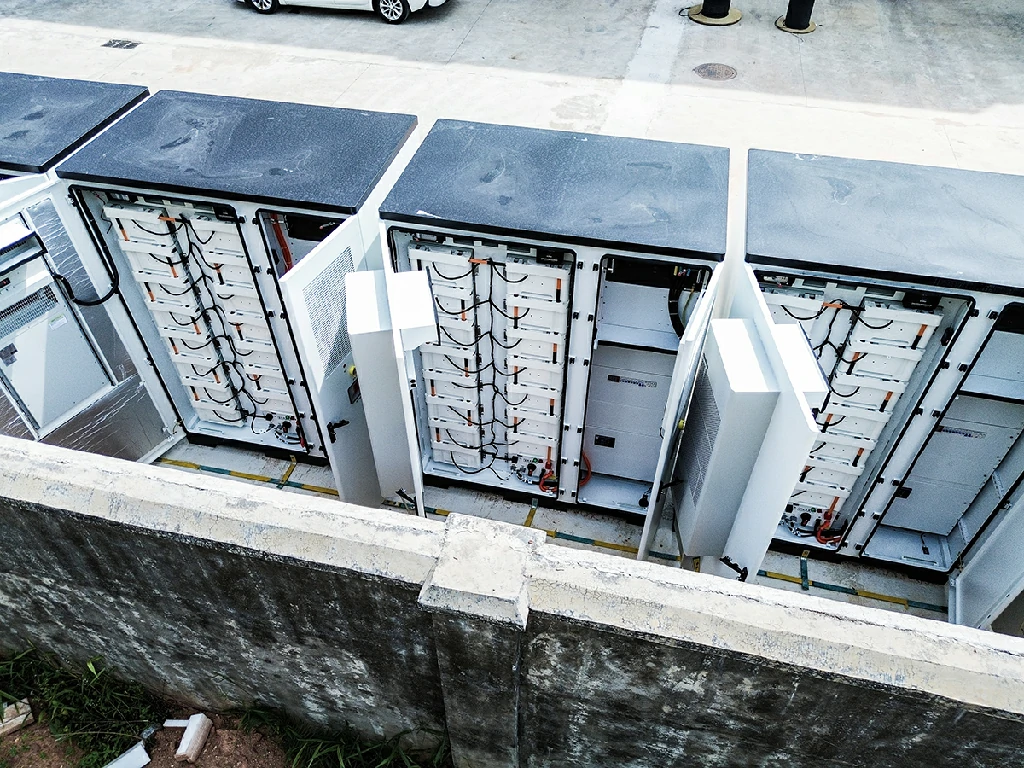
The global energy storage industry has entered a paradoxical phase: capacity is growing at record rates, yet profitability for individual product sellers is shrinking. System costs in China have plunged 43% year-over-year to $115/kWh, and application scenarios have exploded beyond simple grid balancing to encompass EV charging, behind-the-meter C&I optimization, and virtual power plants. The message is clear — selling batteries alone is no longer enough.
This transformation mirrors what happened in the smartphone industry a decade ago: hardware commoditization drove value upstream into software ecosystems, services, and financing. Energy storage is following the same arc. As the global energy storage market enters a mass-procurement phase from 2026 to 2028, integrated solutions combining technology, operations, and capital are becoming the dominant business model.
Quick Answer: 5 Key Questions
| Question | Answer |
|---|---|
| Why are single-product models failing? | System costs dropped 43% YoY; price war erodes margins; diverse use cases require software + financing |
| What replaces single-product sales? | Integrated solutions: ESaaS, VPP platforms, technology-operations-capital trinity |
| How big is the ESaaS market? | $2.4B (2023) → $8.6B (2033), CAGR 13.6% (Market.us) |
| What’s the 2030 storage forecast? | 137 GW / 442 GWh annual additions (BloombergNEF), 3× the 2023 level |
| Who benefits most? | C&I users (peak shaving), utilities (grid stability), investors (ESaaS revenue streams) |
1. The $115/kWh Problem: Market Saturation and Price War
In 2023, new global energy storage capacity reached 45 GW (~97 GWh) — the largest annual increase ever recorded (BloombergNEF). But this explosive growth has a dark side: hyper-competition.
| Metric | 2022 | 2023 | YoY Change | Implication |
|---|---|---|---|---|
| Global new capacity | ~22 GW | 45 GW | +105% | Massive supply expansion |
| China turnkey system cost | $202/kWh | $115/kWh | -43% | Price war; margin compression |
| Cell-level price (LFP) | $98/kWh | $67/kWh | -32% | Approaching commodity pricing |
| Application scenarios | 2-3 (frequency reg, peak shaving) | 6+ (EV charging, VPP, behind-the-meter, etc.) | +100% | Diverse requirements exceed single-product capability |
2. Why Single-Product Models Are Failing
Traditional energy storage companies operate on a simple model: manufacture battery cabinets → sell at a markup → provide basic warranty. This worked when storage was a niche grid-side application. It breaks down when customers need solutions, not just products.
| Dimension | Single-Product Model | Integrated Solution Model | Gap |
|---|---|---|---|
| Revenue source | Hardware sale (one-time) | Hardware + software + service (recurring) | Single-product locks out 60-70% of lifetime value |
| Customer relationship | Transactional (sell and forget) | Partnership (10-20 year O&M contract) | No recurring revenue = no valuation premium |
| Software capability | Basic monitoring (read-only) | AI dispatch, load forecasting, VPP aggregation | Software is where margin lives in 2026 |
| Financing options | Customer pays 100% upfront | ESaaS, leasing, profit-sharing, risk debt | Upfront cost is #1 barrier for C&I adoption |
| Customization | Standard SKU catalog | Modular hardware + configurable software | One-size-fits-all fails for diverse C&I needs |
| Data & analytics | No data collection | Real-time performance, predictive maintenance | Data drives optimization and upsell revenue |
| Risk allocation | Customer bears all performance risk | Provider guarantees performance/kWh delivered | Risk transfer is the #1 ESaaS selling point |
| Competitive moat | Price (easily undercut) | Ecosystem (software + data + partnerships) | Price moats last 6 months; ecosystem moats last 10 years |
3. The ESaaS Revolution: Storage Without Ownership
Energy Storage as a Service (ESaaS) allows users to access storage capabilities through leasing or subscription arrangements — no upfront capital required. The provider owns, operates, and maintains the system; the customer pays for performance (per kWh delivered or per kW peak shaved).
| Year | Global ESaaS Market Size | Key Growth Drivers | Primary Adopters |
|---|---|---|---|
| 2023 | $2.4B | Early adopters, pilot projects | Utilities, large C&I |
| 2025 | $3.5B (est.) | IRA tax credits, EU Green Deal | Mid-size C&I, schools, hospitals |
| 2027 | $5.1B (proj.) | VPP aggregation, AI optimization | Commercial real estate, EV fleets |
| 2030 | $7.2B (proj.) | Grid-scale deployment, hydrogen hybrid | Utilities, data centers, microgrids |
| 2033 | $8.6B (proj.) | Mature market, standardized contracts | Mass-market C&I, residential communities |
Source: Market.us projections. CAGR 2023-2033: 13.6%.
4. The Technology-Operations-Capital Trinity
Integrated solutions are not just product bundles — they represent a deep integration of three distinct capability layers. No single layer can succeed alone.
| Layer | Core Functions | Key Technologies / Tools | Value Delivered | Without This Layer |
|---|---|---|---|---|
| Technology | BMS, EMS, AI scheduling, predictive maintenance | LFP cells, cloud platforms, ML algorithms, IoT sensors | System efficiency, safety, optimization | Safe hardware but no intelligence; cannot adapt to dynamic tariffs or demand |
| Operations | Site assessment, deployment, O&M, performance guarantee | Project management, field service teams, remote monitoring | Uptime, reliability, customer satisfaction | System installed but underperforming; 15-25% efficiency loss |
| Capital | Project financing, risk management, revenue optimization | ESaaS, tax equity, green bonds, profit-sharing | Bankability, scalability, risk transfer | Good technology that nobody can afford to deploy |
— Industry consensus at the 2026 BloombergNEF Energy Storage Summit
5. Innovative Financing Models Breaking the CapEx Barrier
Energy storage projects typically face high upfront costs and long payback cycles (5-10 years). Traditional bank loans are often inadequate because storage assets lack the 25-year track record of solar panels. Six innovative financing models have emerged to fill this gap.
| Financing Model | How It Works | Upfront Cost to User | Best For | Example |
|---|---|---|---|---|
| ESaaS / Leasing | Provider owns system; user pays monthly fee | $0 (OpEx only) | C&I without CapEx budget | Stem Inc., Fluence |
| Profit-Sharing | Investor funds system; splits savings with user | $0 or minimal | Large C&I, hospitals, hotels | Capalo AI + MW Storage |
| Risk Debt | Concessional loans for early-stage projects | 20-30% equity | Startups, pilot projects | EIB + Breakthrough Energy Catalyst |
| Tax Credit Monetization | 30% ITC reduces effective system cost | 70% of system cost | US residential & commercial | US IRA Section 48 |
| Green Bonds | Debt instruments tied to ESG outcomes | Varies | Utility-scale, portfolio projects | Google’s $5.75B green bond |
| Virtual PPA + Storage | Corporate buys RE + storage output via contract | $0 (contract obligation) | Corporates with RE100 targets | Microsoft, Amazon data centers |
6. Real-World Case Studies: Who’s Winning the Transformation?
| Company | Model | Technology Layer | Operations Layer | Capital Layer | Result |
|---|---|---|---|---|---|
| Capalo AI (Finland) | VPP + profit-sharing | AI generation/consumption forecasting; battery dispatch optimization | Partners with MW Storage for site O&M | Profit-sharing with investors | Multi-asset portfolio optimized across Nordic markets |
| Fluence (US/Germany) | Integrated: hardware + software + trading | Mosaic OS platform; AI bidding algorithms | Global O&M network; 24/7 NOC | Project financing; trading desk | 6.8 GW deployed across 30+ markets |
| Stem Inc. (US) | ESaaS + Athena AI | Athena AI for real-time dispatch optimization | Turnkey installation + monitoring | Owns/operates assets; customer pays subscription | Thousands of C&I sites under management |
| EIB + Breakthrough Energy | Risk debt financing | N/A (capital provider) | N/A | €1B+ catalytic capital for climate tech | Bridged “valley of death” for 20+ storage startups |
| Huijue Group (China) | Integrated: hardware + EMS + global service | LiFePO4 BMS; EMS with load forecasting | Modular 25-418kWh cabinets; remote O&M | Customized project financing for overseas markets | Deployed across Africa, SE Asia, Middle East, Europe |
7. Market Forecast: 2026-2030
BloombergNEF projects global annual energy storage capacity additions will reach 137 GW (442 GWh) by 2030 — a 3× increase from 2023. But the growth is not evenly distributed.
| Year | Global Annual Additions (GW) | Cumulative (GWh) | China Share | US Share | Europe Share | Key Milestone |
|---|---|---|---|---|---|---|
| 2023 | 45 | ~97 | 55% | 20% | 15% | Largest annual increase on record |
| 2024 | 68 (est.) | ~165 | 50% | 22% | 17% | IRA tax credits take full effect |
| 2026 | 92 (proj.) | ~280 | 48% | 24% | 18% | China mandatory storage policy matures |
| 2028 | 115 (proj.) | ~390 | 45% | 25% | 20% | EV charging integration at scale |
| 2030 | 137 (proj.) | ~442 | 42% | 26% | 22% | Storage + solar cheaper than coal in all major markets |
Source: BloombergNEF Energy Storage Outlook 2024. “Rest of world” share (Africa, SE Asia, Middle East, Latin America) grows from 10% to 10%.
8. Huijue Group’s Integrated Approach
Huijue Group exemplifies the transition from single-product supplier to integrated solution provider. The company’s C&I energy storage portfolio spans 25-418kWh, with modular hardware paired with intelligent software and customized financing for overseas markets.
| Product | Capacity | Power | Cooling | Cell Type | Best Application |
|---|---|---|---|---|---|
| Industrial & Commercial ESS | 25 / 50 kWh | 25-50 kW | Air | LFP | Small shops, telecom sites |
| Outdoor Cabinet ESS | 112 kWh | 50 kW | Air | LFP | Small factories, schools |
| Outdoor Cabinet ESS | 157 kWh | 50 kW | Air | LFP | Mid-size C&I, hotels |
| Outdoor Cabinet ESS | 209 kWh | 50 kW | Air | LFP | Commercial buildings |
| Industrial & Commercial ESS | 225 kWh | 50 kW | Air | LFP | Factories, shopping malls |
| Outdoor Cabinet ESS | 241 kWh | 110 kW | Air | LFP | Large C&I, industrial parks |
| Liquid-Cooled BESS Cabinet | 261 kWh | 125 kW | Liquid | LFP | High-power C&I, peak shaving |
| Outdoor Cabinet ESS | 418 kWh | 215 kW | Air | LFP | Large industrial, microgrid |
BMS + EMS: The Intelligence Layer
| Function | BMS (Battery Management) | EMS (Energy Management) | Combined Effect |
|---|---|---|---|
| Monitoring | Cell voltage, temperature, SoH | Grid tariff, load profile, weather forecast | 360° system visibility |
| Protection | Overvoltage, overcurrent, overtemperature | Peak demand cap, tariff-triggered dispatch | Multi-layer safety net |
| Optimization | Cell balancing, cycle life extension | Load forecasting, AI scheduling | 15-25% higher revenue vs. basic systems |
| Analytics | Predictive degradation modeling | Energy consumption statistics | Proactive maintenance, fewer outages |
| Remote Control | Firmware OTA updates | Dispatch override, mode switching | 24/7 unmanned operation |
| Compliance | Safety standards logging | Carbon footprint reporting | ESG reporting ready |
| Integration | Modbus/CAN bus to EMS | API to SCADA, VPP, ERP | Seamless system-of-systems |
Huijue’s approach reflects the broader industry shift: as the BESS market accelerates through 2026, customers increasingly demand not just a battery cabinet, but an intelligent energy management ecosystem backed by financing options and global service support.
9. Challenges on the Road to Integration
| Challenge | Current Status | Solution Path | Timeline |
|---|---|---|---|
| Software talent shortage | Most storage companies are hardware-first; AI/ML engineers scarce | Partnerships with tech firms; cloud-based AI platforms | 2-3 years |
| Financing standardization | No standardized ESaaS contracts; every deal is custom | Industry associations drafting template agreements | 3-5 years |
| Battery recycling | End-of-life recycling infrastructure underdeveloped | Second-life applications; regulatory mandates (EU Battery Regulation) | 5-7 years |
| Grid interconnection delays | Queue times of 2-4 years in some markets (US, UK) | FERC Order 2023 reforms; fast-track for storage | Ongoing |
| Cybersecurity | Connected storage systems vulnerable to hacking | IEC 62443 standard adoption; zero-trust architecture | 2-4 years |
| Regulatory fragmentation | Each country has different storage classification, compensation rules | Harmonization efforts (EU Electricity Directive; FERC) | 5-10 years |
Frequently Asked Questions
Q1: Why are single-product energy storage models failing in 2026?
System costs dropped 43% YoY to $115/kWh, intensifying price competition. Application scenarios expanded from grid frequency regulation to EV charging, peak-valley balancing, and behind-the-meter C&I use, requiring integrated hardware + software + financing that single products cannot deliver.
Q2: What is Energy Storage as a Service (ESaaS)?
ESaaS lets users access storage through leasing or subscription without upfront capital. The global ESaaS market is projected to grow from $2.4B (2023) to $8.6B (2033) at 13.6% CAGR, driven by C&I and utility demand for flexible, scalable storage.
Q3: How do technology, operations, and capital work together?
Technology (BMS, EMS, AI) provides core capability. Operations manage deployment, maintenance, and optimization. Capital provides financing through risk debt, tax credits, and profit-sharing. Together, they de-risk projects and maximize ROI across a 10-20 year asset lifecycle.
Q4: What is the 2030 energy storage market forecast?
BloombergNEF projects 137 GW (442 GWh) of annual additions by 2030, up from 45 GW in 2023. Growth concentrates in China (42%), the US (26%), and Europe (22%), driven by renewable integration, EV charging, and grid modernization.
Q5: How does the US Inflation Reduction Act support storage?
The IRA provides a 30% federal tax credit for residential systems ≥3 kWh and commercial ITC for standalone storage. This significantly lowers investment barriers and has accelerated deployment across the United States since 2023.
Q6: What integrated solutions does Huijue Group offer?
Huijue offers modular C&I storage (25-418kWh), LiFePO4 cabinets, EMS with load forecasting and AI scheduling, and BMS with multi-level protection. Solutions support DC/AC dual-coupling, peak shaving, and emergency backup for hotels, factories, schools, and commercial buildings.
Ready to Move Beyond Single-Product Thinking?
Huijue Group’s integrated energy storage solutions combine modular hardware, intelligent EMS/BMS software, and customized financing for your market.