
 chinahuijue@gmail.com
 +1 (702) 204-9855
Top Solar Panel Manufacturers in 2026: Global Rankings, Tech & Buying Guide
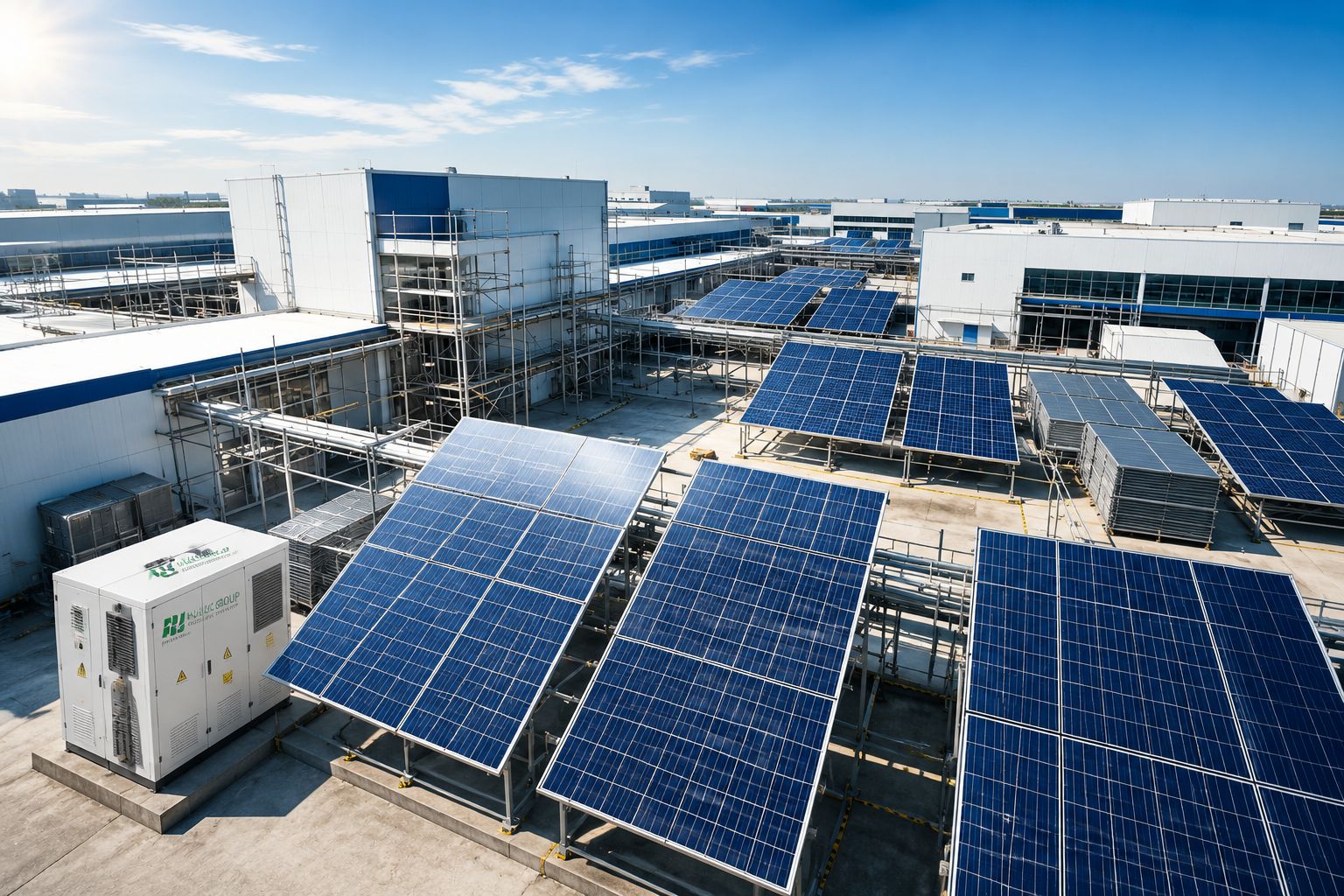
The global solar PV market is projected to reach 500 GW of new installations in 2026, driven by falling module prices, policy support, and the accelerating energy transition. With over 200 companies producing solar panels worldwide, identifying the right manufacturer for your project—whether residential, commercial, or utility-scale—requires understanding efficiency benchmarks, warranty terms, technology roadmaps, and regional service capabilities.
Whether you are searching for a solar PV company for a 10 kW home system or evaluating solaranlagen hersteller for a 100 MW solar farm, this guide provides the data you need to make an informed decision. For projects combining panels with energy storage solutions, matching the right panel technology with compatible battery systems is essential for maximizing ROI.
Quick Answer: Top 10 Solar Panel Manufacturers (2026)
| Rank | Manufacturer | HQ | 2025 Output (GW) | Top Efficiency | Key Technology |
|---|---|---|---|---|---|
| 1 | LONGi Green Energy | China | 85.0 | 23.2% | N-type TOPCon (Hi-MO 7) |
| 2 | JinkoSolar | China | 80.0 | 23.0% | N-type TOPCon (Tiger Neo) |
| 3 | Trina Solar | China | 75.0 | 22.8% | N-type i-TOPCon (Vertex) |
| 4 | JA Solar | China | 70.0 | 22.9% | Bycium+ (N-type) |
| 5 | Canadian Solar | Canada/China | 35.0 | 22.5% | HiKu7 (N-type) |
| 6 | First Solar | USA | 16.0 | 19.3% | CdTe Thin-Film (Series 7) |
| 7 | Tongwei Solar | China | 40.0 | 22.6% | TNC (N-type) |
| 8 | Risen Energy | China | 20.0 | 22.5% | Hyper-ion (N-type) |
| 9 | Maxeon (SunPower) | Singapore | 2.5 | 24.1% | IBC (Maxeon 7) |
| 10 | Hanwha Q CELLS | South Korea | 18.0 | 22.6% | Q.TRON (N-type) |
1. Global Solar Panel Market Overview (2026)
The solar manufacturing landscape has undergone dramatic consolidation. The top 10 manufacturers now control over 75% of global production capacity, while module prices have fallen to historic lows—monocrystalline PERC panels are trading at $0.11–$0.15/W in bulk, down from $0.28/W just two years ago.
| Region | 2025 Production (GW) | Market Share | Avg Module Price ($/W) | Key Players |
|---|---|---|---|---|
| China | 450 | 78% | $0.11–$0.15 | LONGi, Jinko, Trina, JA, Tongwei |
| Southeast Asia | 55 | 10% | $0.14–$0.18 | Canadian Solar (VN), Hanwha (MY), First Solar (VN) |
| USA | 18 | 3% | $0.25–$0.35 | First Solar, Q CELLS (GA), Silfab |
| India | 25 | 4% | $0.18–$0.25 | Waaree, Adani, Vikram Solar, Tata Power |
| Europe | 8 | 1.5% | $0.30–$0.45 | Meyer Burger, Oxford PV, Enel Green Power |
| Others | 20 | 3.5% | $0.20–$0.30 | — |
| Global Total | 576 | 100% | $0.13 avg | — |
Key Market Drivers in 2026
- N-type transition: Over 70% of new production is now N-type (TOPCon or HJT), replacing older P-type PERC technology
- US Section 201/301 tariffs: 50% tariff on Chinese cells pushes manufacturing to Vietnam, Thailand, and India
- EU Anti-Dumping: MIP (Minimum Import Price) review creates supply chain uncertainty for European buyers
- India PLI Scheme: $3.2B production-linked incentive drives 65 GW of new domestic manufacturing capacity
- Perovskite commercialization: Oxford PV and LONGi pilot lines targeting 26%+ tandem cell efficiency by Q4 2026
2. Top 10 Solar Panel Manufacturers: Detailed Profiles
2.1 LONGi Green Energy (China)
LONGi is the world’s largest solar panel manufacturer by revenue and the undisputed leader in monocrystalline silicon technology. The company operates vertically integrated facilities across China, Vietnam, and Malaysia, with a total module capacity exceeding 100 GW.
| Parameter | Value |
|---|---|
| Founded | 2000 |
| 2025 Module Shipment | 85.0 GW |
| Flagship Product | Hi-MO 7 (N-type TOPCon) |
| Max Module Efficiency | 23.2% |
| Power Range | 430–600 W |
| Product Warranty | 15 years (standard) / 25 years (optional) |
| Performance Warranty | 30 years (≥87.4% at year 30) |
| Temperature Coefficient | -0.27%/°C |
| Bifacial Gain | Up to 25% (rear side) |
| Cell Technology | N-type TOPCon (self-developed) |
| Manufacturing Locations | Xian, Taizhou, Vietnam, Malaysia |
| Bloomberg Tier | Tier 1 |
2.2 JinkoSolar (China)
JinkoSolar is the global volume leader in N-type TOPCon module shipments, having transitioned its entire product line to N-type technology ahead of competitors. The Tiger Neo series is the industry benchmark for cost-performance ratio.
| Parameter | Value |
|---|---|
| Founded | 2006 |
| 2025 Module Shipment | 80.0 GW |
| Flagship Product | Tiger Neo (N-type TOPCon) |
| Max Module Efficiency | 23.0% |
| Power Range | 415–635 W |
| Product Warranty | 15 years (standard) / 25 years (Neo) |
| Performance Warranty | 30 years (≥85.0% at year 30) |
| Temperature Coefficient | -0.29%/°C |
| Bifacial Gain | Up to 25% |
| N-type Market Share | #1 globally (TOPCon) |
| Manufacturing Locations | Shangrao, Haining, Vietnam, US (FL) |
| Bloomberg Tier | Tier 1 |
2.3 Trina Solar (China)
Trina Solar pioneered the 210mm wafer platform with its Vertex series, offering the highest single-panel power output (up to 710 W). The company’s vertically integrated supply chain spans polysilicon, wafers, cells, and modules.
| Parameter | Value |
|---|---|
| Founded | 1997 |
| 2025 Module Shipment | 75.0 GW |
| Flagship Product | Vertex N (N-type i-TOPCon) |
| Max Module Efficiency | 22.8% |
| Power Range | 425–710 W |
| Product Warranty | 15 years (standard) / 25 years (Vertex N) |
| Performance Warranty | 30 years (≥84.8% at year 30) |
| Temperature Coefficient | -0.30%/°C |
| Wafer Size | 210mm (largest in industry) |
| Manufacturing Locations | Suqian, Yangzhou, Vietnam, Thailand |
| Bloomberg Tier | Tier 1 |
2.4 JA Solar (China)
JA Solar is known for its DeepBlue series, which combines high efficiency with industry-leading cost control. The company’s Bycium+ cell technology achieves 25.8% cell efficiency in mass production.
| Parameter | Value |
|---|---|
| Founded | 2005 |
| 2025 Module Shipment | 70.0 GW |
| Flagship Product | DeepBlue 4.0 (N-type) |
| Max Module Efficiency | 22.9% |
| Power Range | 410–635 W |
| Cell Efficiency | 25.8% (mass production) |
| Product Warranty | 15 years (standard) / 25 years (Pro) |
| Performance Warranty | 30 years (≥85.0% at year 30) |
| Manufacturing Locations | Beijing, Ningjin, Vietnam |
| Bloomberg Tier | Tier 1 |
2.5 Canadian Solar (Canada/China)
Canadian Solar operates in over 30 countries and is the most globally diversified manufacturer, with production in China, Vietnam, Thailand, and Brazil. The company is also a major project developer with over 26 GW of solar projects in its pipeline.
| Parameter | Value |
|---|---|
| Founded | 2001 |
| 2025 Module Shipment | 35.0 GW |
| Flagship Product | HiKu7 / BiHiKu7 (N-type) |
| Max Module Efficiency | 22.5% |
| Power Range | 400–685 W |
| Product Warranty | 25 years |
| Performance Warranty | 30 years (≥83.1% at year 30) |
| Project Pipeline | 26 GW (development) |
| Manufacturing Locations | China, Vietnam, Thailand, Brazil |
| Bloomberg Tier | Tier 1 |
2.6 First Solar (USA)
First Solar is the only major Western manufacturer producing at scale, using proprietary CdTe (Cadmium Telluride) thin-film technology. The company’s Series 7 panels are optimized for utility-scale projects and benefit from US Inflation Reduction Act (IRA) manufacturing credits.
| Parameter | Value |
|---|---|
| Founded | 1999 |
| 2025 Module Shipment | 16.0 GW |
| Flagship Product | Series 7 (CdTe Thin-Film) |
| Max Module Efficiency | 19.3% |
| Power Range | 520–580 W |
| Product Warranty | 25 years |
| Performance Warranty | 30 years (≥82.0% at year 30) |
| Temperature Coefficient | -0.24%/°C (best in industry) |
| Cell Technology | CdTe Thin-Film (proprietary) |
| Manufacturing Locations | Ohio, Alabama (USA); Vietnam (planned) |
| Bloomberg Tier | Tier 1 |
| US Content | 100% US-made (IRA compliant) |
2.7 Tongwei Solar (China)
Tongwei is unique as both the world’s largest polysilicon producer and a top-tier module manufacturer. Vertical integration from polysilicon to modules gives Tongwei a 15–20% cost advantage over competitors.
| Parameter | Value |
|---|---|
| Founded | 2006 (solar division) |
| 2025 Module Shipment | 40.0 GW |
| Flagship Product | TNC (N-type TOPCon) |
| Max Module Efficiency | 22.6% |
| Polysilicon Capacity | 450,000 tons/year (#1 globally) |
| Product Warranty | 15 years |
| Performance Warranty | 25 years (≥80.0% at year 25) |
| Manufacturing Locations | Chengdu, Hefei, Shuangliu |
| Bloomberg Tier | Tier 1 |
2.8 Risen Energy (China)
Risen Energy specializes in high-power modules for utility-scale projects, with its Hyper-ion series achieving 700W+ output using 210mm N-type cells.
| Parameter | Value |
|---|---|
| Founded | 1986 |
| 2025 Module Shipment | 20.0 GW |
| Flagship Product | Hyper-ion (N-type HJT) |
| Max Module Efficiency | 22.5% |
| Power Range | 400–710 W |
| Product Warranty | 15 years |
| Performance Warranty | 30 years (≥85.0% at year 30) |
| Bloomberg Tier | Tier 1 |
2.9 Maxeon / SunPower (Singapore)
Maxeon produces the industry’s highest-efficiency residential panels using IBC (Interdigitated Back Contact) technology. While its volume is small compared to Chinese manufacturers, Maxeon commands a 50–100% premium for its unmatched efficiency and 40-year warranty.
| Parameter | Value |
|---|---|
| Founded | 2020 (spin-off from SunPower) |
| 2025 Module Shipment | 2.5 GW |
| Flagship Product | Maxeon 7 (IBC) |
| Max Module Efficiency | 24.1% (industry leader) |
| Power Range | 400–445 W |
| Product Warranty | 40 years (industry’s longest) |
| Performance Warranty | 40 years (≥88.0% at year 40) |
| Cell Technology | IBC (Gen 6) |
| Manufacturing Locations | Singapore, Mexico, Philippines |
| Bloomberg Tier | Tier 1 |
2.10 Hanwha Q CELLS (South Korea)
Q CELLS combines German engineering heritage with Korean manufacturing scale. The Q.TRON N-type series targets the premium European and US markets with strong brand recognition and local service networks.
| Parameter | Value |
|---|---|
| Founded | 1999 (Germany) |
| 2025 Module Shipment | 18.0 GW |
| Flagship Product | Q.TRON (N-type TOPCon) |
| Max Module Efficiency | 22.6% |
| Power Range | 400–490 W |
| Product Warranty | 25 years |
| Performance Warranty | 30 years (≥86.0% at year 30) |
| Manufacturing Locations | South Korea, Malaysia, US (GA) |
| Bloomberg Tier | Tier 1 |
3. Solar Panel Technology Comparison
Understanding cell technology is critical for selecting the right panel. The industry is transitioning from P-type PERC to N-type TOPCon and HJT, with perovskite tandem cells on the horizon.
| Technology | Cell Efficiency | Module Efficiency | Market Share 2026 | Cost Premium | Key Advantage |
|---|---|---|---|---|---|
| P-type PERC | 23.0–23.8% | 20.5–21.5% | 30% (declining) | Baseline | Lowest cost, proven reliability |
| N-type TOPCon | 25.0–25.8% | 22.0–23.2% | 55% (dominant) | +5–10% | Best cost-efficiency balance |
| N-type HJT | 26.0–26.5% | 22.5–23.5% | 8% (growing) | +15–25% | Lowest temperature coefficient |
| IBC (Back Contact) | 25.5–26.8% | 23.5–24.1% | 2% (premium) | +50–100% | Highest module efficiency |
| CdTe Thin-Film | 19.0–19.5% | 18.5–19.3% | 4% (utility) | +30–50% | Best hot climate performance |
| Perovskite Tandem (pilot) | 26.5–28.0% | 24.0–25.5% | <1% (emerging) | +100–200% | Theoretical limit >30% |
Technology Selection Guide
| Application | Recommended Technology | Rationale |
|---|---|---|
| Residential (rooftop) | N-type TOPCon or IBC | High efficiency maximizes power per m² |
| Commercial (flat roof) | N-type TOPCon Bifacial | Bifacial gain on white roof, good cost-efficiency |
| Utility-scale (desert) | CdTe or N-type TOPCon | CdTe best in heat; TOPCon for lowest LCOE |
| Utility-scale (humid) | N-type TOPCon Bifacial | Lower degradation, bifacial gain from ground |
| Off-grid / mobile | N-type HJT or PERC | Low light performance, flexible sizing |
| Building-integrated (BIPV) | Thin-film or custom IBC | Aesthetic flexibility, uniform appearance |
4. Efficiency & Performance Benchmarks
Module efficiency determines how much power you can generate per unit of roof or land area. For space-constrained installations, every percentage point matters.
| Manufacturer | Module | Efficiency | Power (W) | Temp Coefficient | Year-1 Degradation | Annual Degradation |
|---|---|---|---|---|---|---|
| Maxeon | Maxeon 7 | 24.1% | 445 | -0.27%/°C | 1.0% | 0.3%/yr |
| LONGi | Hi-MO 7 | 23.2% | 600 | -0.27%/°C | 1.0% | 0.35%/yr |
| JinkoSolar | Tiger Neo 635W | 23.0% | 635 | -0.29%/°C | 1.0% | 0.40%/yr |
| JA Solar | DeepBlue 4.0 Pro | 22.9% | 635 | -0.29%/°C | 1.0% | 0.40%/yr |
| Trina Solar | Vertex N 720W | 22.8% | 720 | -0.30%/°C | 1.0% | 0.40%/yr |
| Q CELLS | Q.TRON M440 | 22.6% | 440 | -0.29%/°C | 1.0% | 0.35%/yr |
| Tongwei | TNC 620W | 22.6% | 620 | -0.29%/°C | 1.0% | 0.40%/yr |
| Risen | Hyper-ion 700W | 22.5% | 700 | -0.26%/°C | 1.0% | 0.40%/yr |
| Canadian Solar | HiKu7 685W | 22.5% | 685 | -0.29%/°C | 1.0% | 0.40%/yr |
| First Solar | Series 7 580W | 19.3% | 580 | -0.24%/°C | 1.5% | 0.30%/yr |
5. Warranty Comparison
Warranty terms directly impact your long-term return on investment. Always evaluate both product warranty (covers manufacturing defects) and performance warranty (guarantees minimum power output over time).
| Manufacturer | Product Warranty | Performance Warranty | End-of-Warranty Guarantee | Insurance Fund |
|---|---|---|---|---|
| Maxeon | 40 years | 40 years | 88.0% | Yes (comprehensive) |
| LONGi | 25 years (optional) | 30 years | 87.4% | Yes |
| JinkoSolar | 25 years (Neo) | 30 years | 85.0% | Yes |
| Trina Solar | 25 years (Vertex N) | 30 years | 84.8% | Yes |
| JA Solar | 25 years (Pro) | 30 years | 85.0% | Yes |
| Canadian Solar | 25 years | 30 years | 83.1% | Yes |
| Q CELLS | 25 years | 30 years | 86.0% | Yes (Endurance) |
| First Solar | 25 years | 30 years | 82.0% | Yes ( Recycling) |
| Tongwei | 15 years | 25 years | 80.0% | Yes |
| Risen | 15 years | 30 years | 85.0% | Yes |
6. Pricing Analysis by Region & Module Type
Module prices vary significantly by region due to tariffs, shipping, local content requirements, and distribution markups. The following tables show Q2 2026 pricing benchmarks.
Module-Only Prices (Ex-Works)
| Module Type | China ($/W) | Southeast Asia ($/W) | India ($/W) | EU ($/W) | USA ($/W) |
|---|---|---|---|---|---|
| P-type PERC (standard) | $0.11–$0.13 | $0.14–$0.16 | $0.18–$0.22 | $0.18–$0.22 | $0.28–$0.35 |
| N-type TOPCon | $0.13–$0.16 | $0.16–$0.19 | $0.20–$0.25 | $0.20–$0.25 | $0.32–$0.40 |
| N-type HJT | $0.18–$0.22 | $0.21–$0.26 | $0.25–$0.30 | $0.25–$0.30 | $0.38–$0.48 |
| IBC (Maxeon) | $0.30–$0.40 | $0.32–$0.42 | $0.35–$0.45 | $0.35–$0.45 | $0.50–$0.65 |
| CdTe (First Solar) | Not available | $0.22–$0.28 | Not available | $0.25–$0.30 | $0.25–$0.32 |
Installed System Prices (All-In)
| System Size | China ($/W) | India ($/W) | Germany ($/W) | USA ($/W) | Nigeria ($/W) |
|---|---|---|---|---|---|
| Residential (5–10 kW) | $0.80–$1.10 | $1.20–$1.80 | $1.80–$2.50 | $2.50–$3.50 | $1.80–$2.80 |
| Commercial (50–200 kW) | $0.70–$0.90 | $1.00–$1.50 | $1.50–$2.00 | $2.00–$2.80 | $1.50–$2.20 |
| Utility (1 MW+) | $0.50–$0.70 | $0.80–$1.10 | $1.00–$1.40 | $1.30–$1.80 | $1.10–$1.60 |
7. Regional Manufacturer Analysis
7.1 Chinese Manufacturers (Global Leaders)
Chinese manufacturers dominate global production with 78% market share, benefiting from complete supply chain integration, economies of scale, and government support. For international buyers, Chinese panels offer the lowest cost per watt, but tariff and trade policy considerations may apply.
| Manufacturer | Strength | Best For | Price Tier | Key Differentiator |
|---|---|---|---|---|
| LONGi | Technology leadership | Premium projects, high-efficiency needs | Mid-high | Lowest degradation, highest reliability |
| JinkoSolar | Volume & N-type transition | Large-scale projects, cost-sensitive | Mid | Best TOPCon cost-performance |
| Trina Solar | 210mm platform | Utility-scale, high-power modules | Mid | Highest single-panel power (720W) |
| JA Solar | Cell efficiency | All applications, balanced performance | Mid | 25.8% cell efficiency in mass production |
| Tongwei | Vertical integration | Cost-driven utility projects | Low-mid | Polysilicon cost advantage |
7.2 US & Western Manufacturers
| Manufacturer | HQ | Technology | Best For | US Content | IRA Benefit |
|---|---|---|---|---|---|
| First Solar | USA | CdTe Thin-Film | US utility-scale | 100% | Full (45X + domestic content) |
| Q CELLS (US) | South Korea | N-type TOPCon | US residential & commercial | ~60% | Partial (45X manufacturing) |
| Silfab | Canada | P-type PERC | US residential | ~40% | Partial |
| Maxeon | Singapore | IBC | US premium residential | 0% (Mexico plant) | None |
| Meyer Burger | Switzerland | HJT | EU premium market | 0% | None (EU production) |
7.3 Indian Manufacturers (Emerging)
India’s PLI (Production Linked Incentive) scheme has catalyzed domestic manufacturing, with 65 GW of new capacity under construction. Indian manufacturers serve the domestic market and emerging export destinations.
| Manufacturer | 2025 Output (GW) | Technology | Key Market | Price Tier |
|---|---|---|---|---|
| Waaree Energies | 12.0 | P-type PERC, N-type (transitioning) | India, US export | Mid |
| Adani Solar | 8.0 | P-type PERC, N-type (planned) | India domestic | Mid |
| Vikram Solar | 5.0 | P-type PERC, N-type (pilot) | India, EU export | Mid |
| Tata Power Solar | 4.0 | P-type PERC | India domestic | High |
| RenewSys | 3.0 | P-type PERC | India, Africa export | Low-mid |
8. How to Choose the Right Solar Panel Manufacturer
Selecting the right manufacturer involves evaluating multiple criteria beyond price. The following framework helps systematize your decision.
8.1 Seven Key Evaluation Criteria
| # | Criterion | What to Check | Minimum Standard | Weight |
|---|---|---|---|---|
| 1 | Bankability | Bloomberg Tier 1 status, financial health | Tier 1 (Bloomberg NEF) | 20% |
| 2 | Module Efficiency | Nameplate efficiency vs. area | ≥21.5% (N-type TOPCon) | 15% |
| 3 | Warranty Terms | Product + performance warranty | 25yr product / 30yr performance | 15% |
| 4 | Temperature Coefficient | Power loss per °C above 25°C | ≤-0.30%/°C | 10% |
| 5 | Certifications | IEC 61215, IEC 61730, UL 61730 | All required for your market | 15% |
| 6 | Local Service | Local office, warranty claim process | Within 48hr response time | 15% |
| 7 | Price per Watt | Total delivered cost including tariff | Within project budget | 10% |
8.2 Decision Matrix by Project Type
| Project Type | Top Priority | Recommended Brands | Budget Range ($/W) | Panel Size |
|---|---|---|---|---|
| Residential rooftop (5–10 kW) | Efficiency + warranty | Maxeon, LONGi, Q CELLS | $0.30–$0.55 | 400–450W (full-cell) |
| Commercial flat roof (50–200 kW) | Cost-efficiency + bifacial | JinkoSolar, JA Solar, Canadian Solar | $0.16–$0.25 | 550–650W (large-format) |
| Utility ground-mount (1 MW+) | LCOE + bankability | Trina, JinkoSolar, LONGi, First Solar | $0.13–$0.22 | 650–720W (bifacial) |
| Off-grid / hybrid system | Low-light performance + durability | LONGi, Canadian Solar, SunPower | $0.20–$0.40 | 400–550W |
| US project (IRA compliant) | Domestic content | First Solar, Q CELLS (US), Silfab | $0.28–$0.40 | 400–580W |
| EU project (MIP compliant) | EU/SE Asia origin | Q CELLS, Meyer Burger, Canadian Solar (VN) | $0.22–$0.35 | 400–550W |
9. Emerging Trends & Technologies (2026–2028)
| Trend | Timeline | Impact | Key Players | Current Status |
|---|---|---|---|---|
| N-type TOPCon mainstream | 2024–2026 | 55% market share, 22–23% efficiency | JinkoSolar, LONGi, Trina | Mass production |
| Perovskite-Silicon Tandem | 2026–2028 | 26%+ module efficiency, 5–10% cost premium | Oxford PV, LONGi, Trina | Pilot production (100 MW) |
| 210mm wafer standardization | 2024–2026 | 720W+ panels, reduced BOS cost | Trina, Risen, JA Solar | Mass production |
| US manufacturing expansion | 2025–2027 | 50+ GW new US capacity via IRA | First Solar, Q CELLS, Jinko (FL) | Under construction |
| India PLI Phase 2 | 2025–2028 | 65 GW domestic capacity, polysilicon | Adani, Reliance, Tata | Under construction |
| AI-driven manufacturing | 2025–2028 | 0.3–0.5% efficiency gain, 10% cost reduction | LONGi, JinkoSolar, Trina | Early adoption |
| Module recycling | 2026–2030 | 95% material recovery, circular economy | First Solar, Veolia, EU regulations | Commercial scale (limited) |
10. Integration with Energy Storage Systems
For most modern solar installations, panels are just one component of a complete energy system. Matching the right solar panels with compatible energy storage cabinets ensures optimal system performance and ROI.
| System Type | Panel Recommendation | Storage Capacity | Inverter Type | Typical ROI |
|---|---|---|---|---|
| Residential (5–10 kW) | 400–450W N-type TOPCon (6–20 panels) | 5–15 kWh LFP | Hybrid (5–10 kW) | 6–9 years |
| Commercial (50–100 kW) | 550–650W N-type TOPCon bifacial | 50–200 kWh LFP | 3-phase (50–100 kW) | 5–7 years |
| Industrial (200–500 kW) | 650–720W bifacial | 200–500 kWh LFP | 3-phase (100–250 kW) | 4–6 years |
| Utility (1 MW+) | 650–720W bifacial (tracker) | 0.5–2 MWh LFP | Central (1–3 MW) | 5–8 years |
| Off-grid (10–50 kW) | 400–550W N-type | 20–100 kWh LFP | Off-grid hybrid (10–50 kW) | 3–6 years (vs. diesel) |
Panel-Storage Compatibility Checklist
| Parameter | What to Verify | Acceptable Range |
|---|---|---|
| Voltage compatibility | Panel Voc vs. inverter MPPT range | Voc within 80–110% of MPPT max |
| Inverter sizing | DC/AC ratio | 1.1–1.3 (grid-tied), 1.0–1.2 (off-grid) |
| Battery voltage | Match with inverter DC bus | 48V (residential) / 400–1500V (commercial) |
| Charge controller | MPPT current rating | ≥1.25 × Isc of panel array |
| System grounding | Panel frame + inverter + battery | Single-point ground |
| Backup duration | Battery kWh / daily load kWh | 0.5–3 days autonomy |
11. Certification & Quality Standards
| Certification | Scope | Required For | Testing Body |
|---|---|---|---|
| IEC 61215 | Design qualification & type approval | All markets (international standard) | TÜV, Intertek, UL |
| IEC 61730 | Safety qualification | All markets | TÜV, Intertek, UL |
| UL 61730 | US safety standard | United States | UL |
| UL 1703 (legacy) | US safety (being replaced by UL 61730) | United States (legacy) | UL |
| MCS | Microgeneration Certification Scheme | UK residential | MCS |
| CE Marking | EU compliance | European Union | Notified bodies |
| CEC Listing | California Energy Commission | California, USA | CEC |
| BIS Certification | Bureau of Indian Standards | India | BIS |
| PV Cycle | Collection & recycling | EU (mandatory in some countries) | PV Cycle |
12. Common Pitfalls When Selecting Solar Panel Manufacturers
| Pitfall | Risk | Mitigation |
|---|---|---|
| Choosing solely on lowest price | Poor quality, early degradation, warranty issues | Balance price with Tier 1 status and warranty terms |
| Ignoring temperature coefficient | 5–15% output loss in hot climates | Choose ≤-0.30%/°C for tropical regions |
| Overlooking bifacial gain | Missed 5–25% additional energy | Use bifacial panels for ground-mount and white roofs |
| Wrong wafer size for inverter | Inverter clipping, MPPT mismatch | Verify Voc and Isc within inverter limits |
| No local warranty service | Months-long replacement delays | Choose manufacturer with local warehouse/service |
| Ignoring tariff impact | 25–50% unexpected cost increase | Check country of origin vs. import tariffs |
| Not verifying Tier 1 status | Financing rejection, quality uncertainty | Check Bloomberg NEF Tier 1 list (updated quarterly) |
| Assuming all N-type is equal | 20%+ performance variation between brands | Compare actual efficiency, not just “N-type” label |
13. Supplier Verification Checklist
Before placing an order, use this 12-point checklist to verify any solar panel manufacturer:
| # | Verification Item | How to Check | Pass Criteria |
|---|---|---|---|
| 1 | Bloomberg Tier 1 status | BNEF website or manufacturer certificate | Listed in latest BNEF Tier 1 |
| 2 | Manufacturing capacity | Annual report or company website | ≥5 GW annual capacity |
| 3 | Financial health | Annual report, credit rating | Positive net income, ≥3 years profitable |
| 4 | IEC certifications | TÜV/Intertek certificate database | IEC 61215 + IEC 61730 current |
| 5 | Mono vs poly | Product datasheet | 100% monocrystalline (N-type preferred) |
| 6 | PID resistance | IEC 62804 test report | ≤5% power loss after PID test |
| 7 | Salt mist / ammonia resistance | IEC 61701 / IEC 62716 certificate | Level 6 (severe) for coastal/agricultural |
| 8 | Hail resistance | IEC 61215 mechanical load test | ≥25mm diameter hail at 23 m/s |
| 9 | Warranty registration | Manufacturer warranty portal | Online registration available globally |
| 10 | Local technical support | Contact local office | 48-hour response commitment |
| 11 | Track record | Reference projects in your region | ≥10 projects, ≥3 years operational |
| 12 | Insurance backing | Manufacturer warranty insurance policy | Third-party insured warranty fund |
14. Cost Analysis: Total Cost of Ownership (20-Year)
The true cost of a solar panel system extends far beyond the initial module price. This 20-year TCO analysis compares three scenarios.
| Cost Component | Budget (P-type PERC) | Standard (N-type TOPCon) | Premium (IBC/HJT) |
|---|---|---|---|
| Module cost (10 kW system) | $1,200 | $1,600 | $3,500 |
| Inverter + BOS | $2,500 | $2,500 | $3,000 |
| Installation labor | $2,000 | $2,000 | $2,500 |
| Permitting & inspection | $500 | $500 | $500 |
| Initial investment | $6,200 | $6,600 | $9,500 |
| 20-yr energy production (kWh) | 275,000 | 295,000 | 325,000 |
| 20-yr degradation loss | -12.0% | -8.5% | -6.5% |
| 20-yr maintenance cost | $1,500 | $1,200 | $1,000 |
| 20-yr inverter replacement | $2,000 | $2,000 | $2,000 |
| 20-year total cost | $9,700 | $9,800 | $12,500 |
| LCOE ($/kWh) | $0.035 | $0.033 | $0.038 |
| Best value? | — | ✓ Lowest LCOE | Best for space-limited |
15. Huijue Group: Your Energy Storage Partner
While selecting the right solar panel manufacturer is critical for power generation, choosing the right energy storage partner is equally important for maximizing self-consumption, ensuring backup power reliability, and optimizing system economics.
Huijue Group specializes in smart energy storage solutions designed to complement any solar panel installation—from residential rooftop systems to utility-scale solar farms. Our cabinet energy storage systems feature high-safety LFP (LiFePO4) batteries, integrated BMS and EMS intelligent management, and modular expansion from 25 kWh to 418 kWh per cabinet.
| Model | Capacity | Power | Voltage | Cycles | Application |
|---|---|---|---|---|---|
| HJ-G0025-0050F | 25–50 kWh | 25–50 kW | 380V | 6,000+ | Small C&I |
| HJ-G0050-0157L | 157 kWh | 50 kW | 380V | 8,000+ | Commercial |
| HJ-G0050-0209L | 209 kWh | 50–60 kW | 380V | 8,000+ | Commercial/Industrial |
| HJ-G0050-0225F | 225 kWh | 50–100 kW | 380V | 8,000+ | Industrial |
| HJ-G0110-0241 | 241 kWh | 110 kW | 380V | 8,000+ | Industrial |
| HJ-G0125-0261 | 261 kWh | 125 kW | 380V | 8,000+ | Industrial/Utility |
| HJ-G0215-0418 | 418 kWh | 215 kW | 380V | 8,000+ | Utility-scale |
For larger projects, Huijue also offers residential energy storage systems ranging from 5 kWh stackable batteries to all-in-one home solar storage units up to 81.92 kWh. Every system includes cloud-based monitoring, remote diagnostics, and automatic firmware updates.
Ready to Build Your Solar + Storage System?
Whether you’re planning a 5 kW home system or a 100 MW solar farm, Huijue’s engineering team can help you design the optimal panel-storage combination for your specific needs.
📧 Contact Huijue Group for a free consultation and customized quotation.
Frequently Asked Questions
Q1: Who are the top solar panel manufacturers in 2026?
The top solar panel manufacturers in 2026 include LONGi Green Energy, Trina Solar, JinkoSolar, JA Solar, Canadian Solar, First Solar, Tongwei Solar, Risen Energy, SunPower (Maxeon), and Hanwha Q CELLS. These companies collectively produce over 80% of global solar panel supply and lead in efficiency, warranty, and technology innovation.
Q2: What is the most efficient solar panel in 2026?
As of 2026, Maxeon (SunPower) leads with up to 24.1% module efficiency for residential panels. Among mass-market manufacturers, LONGi reaches 23.2% with its Hi-MO 7 series, while Trina Solar and JinkoSolar achieve 22.8%–23.0% with their latest N-type TOPCon modules. Commercially available perovskite-silicon tandem cells are expected to reach 26%+ in pilot production by late 2026.
Q3: How much do solar panels cost per watt in 2026?
In 2026, solar panel module prices range from $0.11–$0.18/W for standard monocrystalline PERC panels, $0.14–$0.22/W for N-type TOPCon, and $0.25–$0.40/W for premium brands like Maxeon. Thin-film CdTe panels from First Solar cost $0.20–$0.30/W. Installed system costs vary by region: $0.80–$1.50/W in China, $1.50–$2.80/W in Europe, and $2.00–$3.50/W in the United States.
Q4: Which solar panel manufacturer offers the best warranty?
Maxeon (SunPower) offers the industry’s best warranty at 40 years with 88% power guarantee. Among tier-1 manufacturers, LONGi, Trina Solar, and JinkoSolar all offer 25-year product warranties and 30-year linear power warranties (≥84.8% at year 30). Canadian Solar provides 25-year product and 30-year performance warranties. Always verify warranty terms include both product defects and performance degradation.
Q5: What is the difference between Tier 1, Tier 2, and Tier 3 solar panel manufacturers?
Tier 1 manufacturers are vertically integrated companies producing their own wafers, cells, and modules with at least 5 years of operational history and bankable status (Bloomberg Tier 1 list). Tier 2 manufacturers assemble panels using cells from other suppliers with 2–5 years of history. Tier 3 manufacturers are small assemblers with less than 2 years of history and no vertical integration. Tier 1 panels typically cost 10–20% more but offer superior quality, warranty support, and long-term reliability.
Q6: How do I choose the right solar panel manufacturer for my project?
Key criteria include: (1) Bankability and Tier 1 status for financed projects, (2) Module efficiency above 21% for space-constrained installations, (3) Warranty terms (minimum 25-year product, 30-year performance), (4) Temperature coefficient below -0.30%/°C for hot climates, (5) Certifications (IEC 61215, IEC 61730, UL 61730), (6) Local service and warranty support, (7) Price per watt within your budget range. For commercial and industrial projects, also consider degradation rate (≤0.55%/year) and Bifacial gain (≥10%).
Conclusion
Selecting the right solar panel manufacturer in 2026 requires balancing efficiency, cost, warranty, technology roadmap, and regional service capabilities. The industry’s shift to N-type TOPCon has narrowed the performance gap between manufacturers, making factors like warranty support, local service, and system integration increasingly important differentiators.
For the best long-term results, pair high-quality Tier 1 solar panels with a reliable energy storage system. Contact Huijue Group to design a complete solar + storage solution tailored to your project requirements.
top solar panel manufacturers solar panel brands solar pv company solaranlagen hersteller best solar panels 2026 N-type TOPCon solar panel efficiency Tier 1 solar manufacturers solar panel warranty Huijue Group